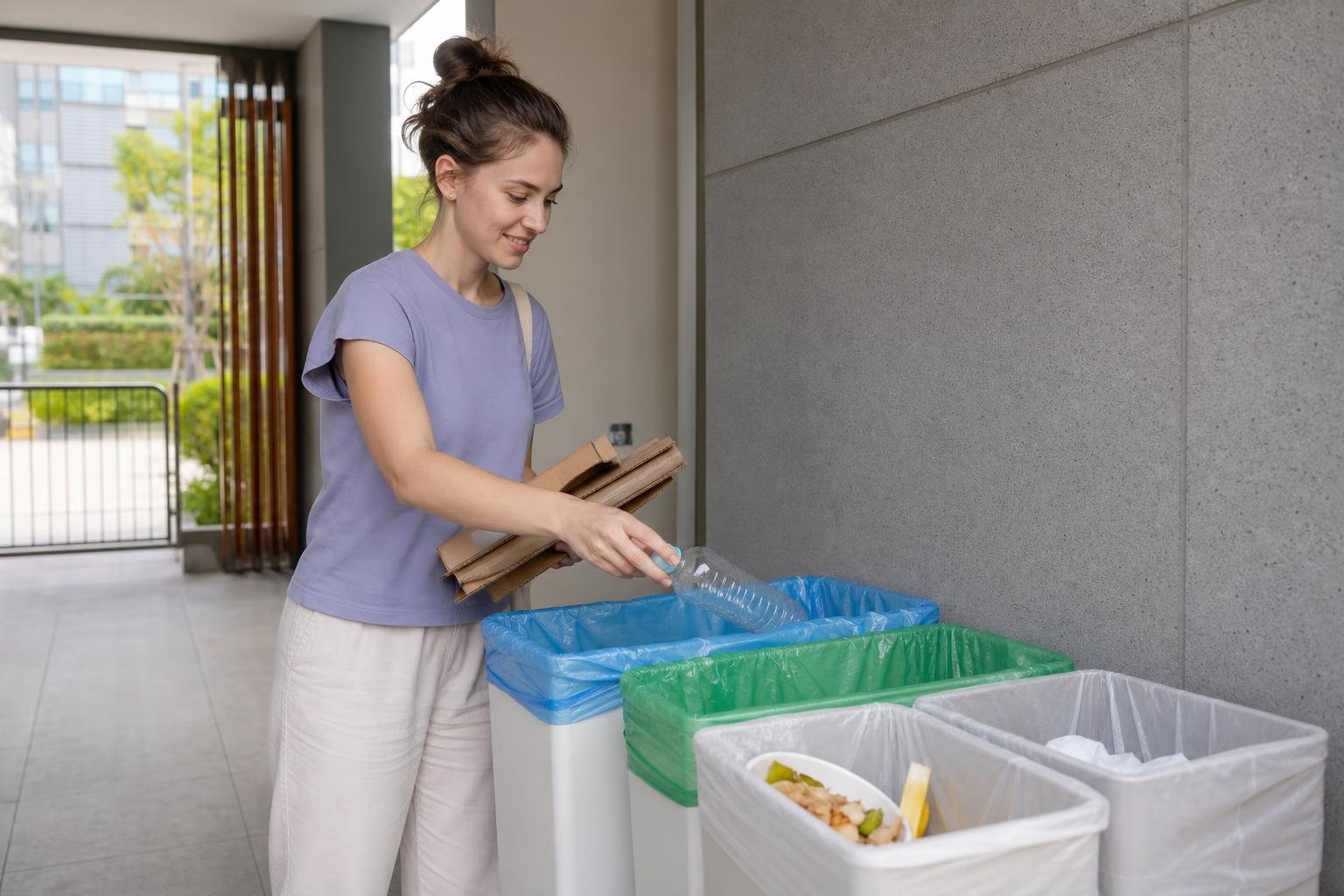
The safest way to sort waste in a Korean short-term rental is to follow your building’s posted instructions first. Recycling bins, food-waste systems, official garbage bags, and collection times can differ by city, district, and even building. Before you throw anything away, look for labels such as 재활용 (recyclables), 음식물쓰레기 (food waste), and 일반쓰레기 (general waste).
As a practical rule, put clean materials into the correct recycling stream, place only accepted food scraps in the designated food-waste system, and use the required local bag for ordinary trash when applicable. If the rental has no clear directions, ask your host for a photo of the garbage area and the disposal schedule. Local governments and buildings can use different operational methods.
Start with the four waste streams
- Recyclables (재활용): Clean bottles, cans, paper, plastic containers, and film packaging. Empty them, rinse when practical, and sort by the bin label.
- Food waste (음식물쓰레기): Accepted leftover food and preparation scraps, with all packaging and non-food items removed.
- General waste (일반쓰레기): Dirty, mixed, or non-recyclable household waste. Many areas require an official volume-rate bag, called a jongnyangje bag (종량제봉투).
- Special waste (별도수거 / 대형폐기물): Batteries, electronics, bulky items, sharp objects, and some hazardous household products. Do not put these into ordinary recycling unless there is a dedicated collection point.
Korea separates recyclable materials and uses volume-based charging for general waste and food waste, but the exact disposal method is locally operated. The Ministry of Environment’s land and waste information explains the broader waste-management framework.
Step 1: Find the waste area on your first day
Do not wait until checkout morning. Find the building’s garbage room, outdoor collection point, or shared utility area as soon as you arrive.
- Locate the collection area. It may be on the ground floor, in a parking area, along a side alley, or in a shared room.
- Read the Korean labels. Do not rely on bin colors alone; colors are not fully standardized between properties.
- Check the food-waste method. Your building may use a shared bin, an RFID machine, food-waste bags, or a tagged container.
- Check disposal times. Some properties have an always-open collection area, while others limit disposal to particular days or evening hours.
Seoul guidance notes that food-waste arrangements can differ by residence type and local schedule. See Seoul’s food-waste disposal guidance.
Hi, could you please send me a photo of the garbage area and tell me where to put food waste, recycling, and general trash? Also, do I need a specific garbage bag or access card?
This short message can prevent problems, especially when you are staying only a few nights.
Step 2: Keep the wrong items out of food waste
Food waste is often the easiest category to get wrong. Never drop a tied plastic takeaway bag full of scraps into a food-waste bin. Open the bag and put only accepted food material into the designated container or bag.
Items usually accepted as food waste
- Rice, noodles, bread, and ordinary leftovers
- Soft vegetable trimmings
- Fruit flesh and ordinary soft peels
- Small amounts of cooked meat or fish scraps with bones removed
- Wet leftovers after excess liquid has been drained
Items usually treated as general waste
- Meat and fish bones
- Shellfish, crab, and lobster shells
- Eggshells
- Fruit pits and hard nut shells
- Onion, garlic, ginger, and corn skins or husks
- Tea bags, coffee grounds, and medicinal-herb residue
- Toothpicks, chopsticks, foil, straws, bottle caps, plastic, paper, and other packaging
Seoul’s multilingual food-waste guidance specifically identifies hard bones, seafood shells, eggshells, hard fruit seeds, tea grounds, and non-food materials as items that should stay out of food-waste collection. It also advises residents to drain moisture and remove impurities. Read the Seoul Metropolitan Government guidance.
A simple delivery-food routine
- Scrape soft leftovers into the food-waste container.
- Put bones, shells, napkins, chopsticks, sauce packets, and plastic bags into general waste or the correct recycling stream.
- Rinse plastic containers if they are not greasy.
- Drain them briefly before recycling.
Example: fried chicken delivery. Chicken bones and used napkins go into general waste. Leftover pickled radish can go into food waste after draining and removing the container. A clean drink bottle can be recycled according to its label, while a greasy plastic tray belongs in general waste if it cannot be reasonably cleaned.
Step 3: Recycle by material, not just because it is plastic
A plastic item is not automatically recyclable. The useful test is whether it is empty, reasonably clean, and accepted in your building’s collection stream.
Plastic containers and trays
- Empty all contents.
- Rinse away food or product residue when practical.
- Remove clearly different materials when possible, such as a metal spring in a pump bottle.
- Put heavily greasy or contaminated items in general waste instead of contaminating an entire recycling bag.
Seoul’s sorting guide advises emptying and cleaning plastic containers and separating attachments made from other materials where possible. See Seoul’s recycling separation guidance.
Clear PET drink bottles
- Empty the bottle and rinse it if it held a sugary drink.
- Remove the label if possible.
- Crush the bottle to save space.
- Put the cap back on.
- Use a separate clear PET bin if your building provides one.
Seoul guidance separates clear beverage PET bottles from other plastic containers and recommends removing labels, flattening bottles, and replacing caps.
Cans and glass bottles
- Empty and rinse cans and glass bottles.
- Remove food scraps, cigarette butts, and easy-to-remove mixed materials.
- Keep broken drinking glasses, ceramic dishes, mirrors, and heat-resistant glass out of the glass-bottle recycling bin.
Ordinary cans and glass bottles are commonly recyclable once emptied and rinsed, but broken glass and ceramics follow separate local procedures.
Paper and delivery boxes
- Flatten cardboard boxes.
- Remove tape, labels, plastic liners, and metal staples where possible.
- Keep paper dry.
- Put greasy pizza boxes, heavily food-stained paper, receipts, tissues, and waterproof-coated paper in general waste.
Seoul’s guide instructs residents to remove non-paper materials from cardboard before flattening it, and identifies receipts and used tissues as non-recyclable paper items.
Plastic film and bags
Clean bread bags, snack bags, shopping bags, and other film packaging may go into a vinyl/film plastic stream (비닐류) if your building has one. If the film is greasy or has food stuck to it, use general waste instead.
Step 4: Use the correct bag for general waste
Many Korean neighborhoods require general household trash to be placed in an official paid volume-rate bag, commonly called a jongnyangje bag (종량제봉투). These bags are often sold at convenience stores, supermarkets, and local shops.
Do not assume an ordinary kitchen bag is acceptable. Your building may provide communal bags, or it may require bags issued for its district. Bag design, price, and pickup schedules are local matters.
Common general-waste items
- Dirty tissues and paper towels
- Food-soiled paper packaging
- Greasy plastic containers and wrap that cannot be cleaned
- Bones, shells, eggshells, and hard seeds
- Disposable chopsticks and wooden skewers
- Mixed-material items that cannot be separated
- Small broken household items, where local instructions permit standard-bag disposal
If you are unsure about an item, do not contaminate recycling. Use general waste only when the item is safe and small enough for that method, or check local guidance.
Step 5: Do not leave special waste behind
Batteries and small electronics
Use a dedicated battery collection box where available. Do not put batteries in with cans or plastic recycling. Seoul’s guidance directs household batteries to battery-specific collection points.
Broken glass, knives, and sharp items
Wrap sharp fragments securely in thick paper or place them in a rigid container. Follow your building or district’s instructions, and never place loose broken glass in a glass-bottle recycling bin.
Suitcases, bedding, appliances, and furniture
These items can require a bulky-waste sticker, booked collection, or a designated collection point. Never leave them beside the building bins unless the host has confirmed the procedure.
Five-minute checkout routine
- Empty the fridge.
- Separate food scraps from packaging.
- Drain food waste and use the building’s designated food-waste system.
- Rinse and dry recyclables that are easy to clean.
- Flatten cardboard and remove tape.
- Put general trash in the required municipal bag.
- Take batteries, electronics, and bulky items with you unless you have a confirmed disposal method.
- Do not leave loose bags in hallways, elevators, or outside the entrance.
If your checkout is early and the building limits disposal times, ask the host the day before. Do not assume a cleaner or the next guest will handle unsorted waste.
Useful Korean labels in a garbage room
- 재활용: Recyclables
- 일반쓰레기: General waste
- 음식물쓰레기: Food waste
- 종량제봉투: Official paid garbage bag
- 페트병 / 투명 페트병: PET bottles / clear PET bottles
- 플라스틱: Plastic containers
- 비닐류: Plastic film or vinyl packaging
- 캔: Cans
- 유리병: Glass bottles
- 종이류: Paper
- 폐건전지: Used batteries
- 대형폐기물: Bulky waste
Common mistakes to avoid
Putting all delivery packaging into recycling
Only clean containers are likely to be recyclable. Greasy trays, sauce-covered film, used napkins, and disposable cutlery often belong in general waste.
Treating all food-related waste as food waste
Bones, shells, eggshells, pits, tea bags, coffee grounds, and all packaging should stay out of food-waste containers.
Assuming every Korean building uses the same system
Collection locations, schedules, bags, and food-waste equipment can vary. Building instructions are more important than a generic rule.
Leaving bags beside a full bin
Do not leave overflow bags beside collection bins. This can cause odor, pests, and collection problems. Ask the host or building manager what to do instead.
FAQ
Do I need to wash every recyclable item?
No. Empty the item and remove residue that would contaminate other materials. A quick rinse is usually enough for a drink bottle or food container. If it is too greasy or difficult to clean, general waste is generally the safer option.
Can I put a tied plastic bag of food scraps into the food-waste bin?
Usually not. Open the bag, remove all packaging, and place only accepted food waste in the designated container or bag. Plastic bags and other foreign objects can interfere with food-waste processing.
What if my rental does not have a food-waste bin?
Do not improvise by putting food scraps in a public recycling bin. Ask the host whether the building uses food-waste bags, a shared container, or a nearby designated collection point.
What should I do with old cosmetics, medicine, or cleaning chemicals?
Do not assume they belong in recycling, food waste, or a standard garbage bag. Check local disposal instructions or ask the host. The Ministry of Environment provides location-based household waste separation information for many item types. See the official Ministry of Environment release.
Can I take recycling out whenever I want?
Only if the building’s recycling area is always open. Smaller residential buildings may have collection days or evening-only rules. Check posted notices or confirm with your host.
Final rule: building instructions come first
Use this guide to sort items by material, but treat your rental’s instructions as the final rule for where and when to dispose of them. For uncertain items, use the official household waste guidance and local information rather than guessing. The Ministry of Environment’s household waste separation resource provides location-based disposal guidance.
Related articles
- Korean Jjimjilbang First Visit Guide: Nudity, Etiquette, and What to Expect
- How to Use Luggage Lockers at Korean Subway and Train Stations
- How to Use a Korean Café Kiosk Without Speaking Korean
Information current as of: 2026-08-30
Sources and references
- Press Release
- Land & Waste
- SEOUL M! SOULSEOUL METROPOLITAN GOVERNMENTSeoul Mi
- Seoul Distributes “Outline of Food Waste Disposal Standard” in Ten Languages for Foreign Residents – Seoul Metropolitan Government
- 헷갈리는 분리배출 기준, 서울시가 알려드립니다! < 환경 | 서울특별시
- Press Release
- 2026 Seollal Holiday Information – Seoul Metropolitan Government