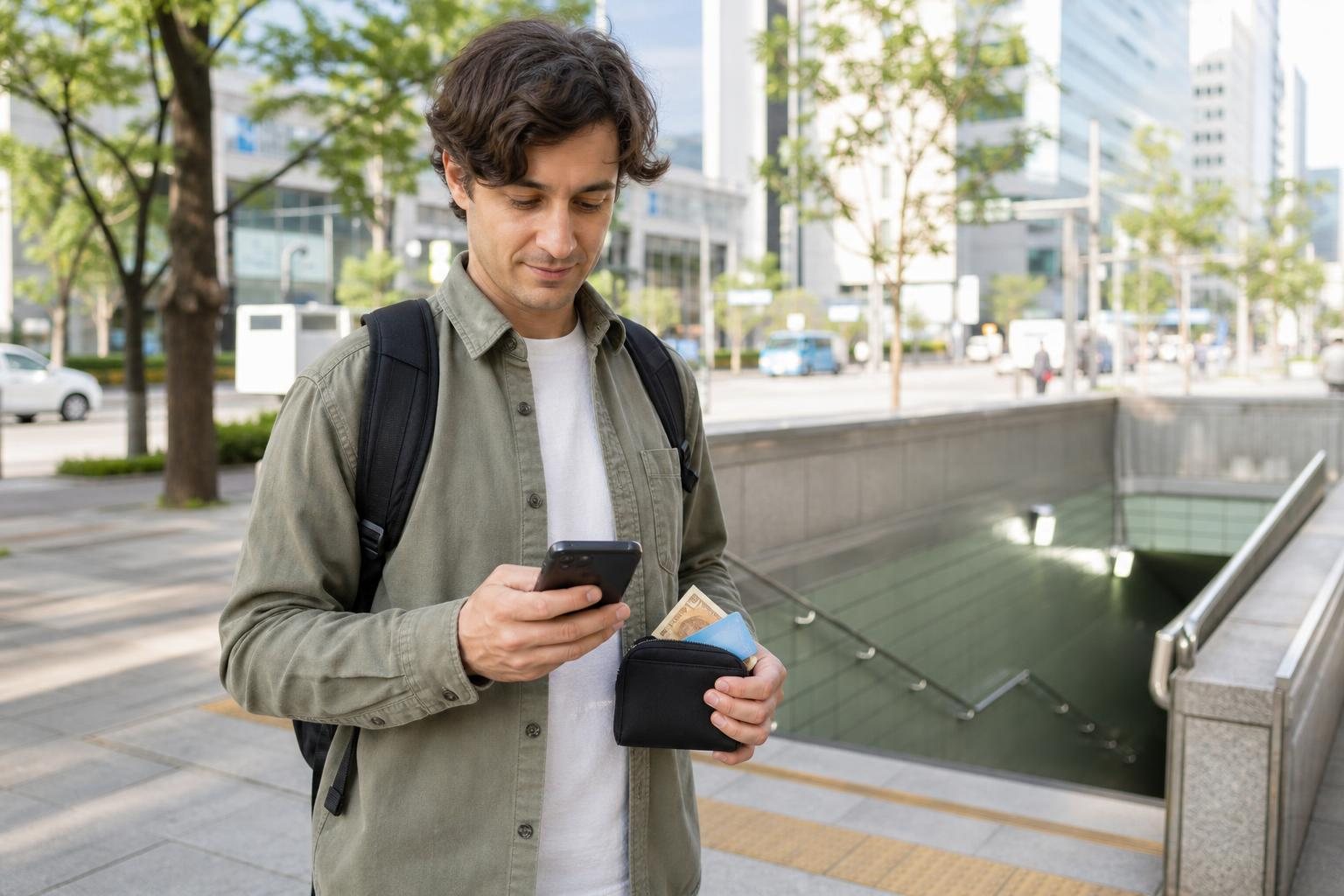
If you lose a wallet in Korea, start by identifying the card issuer: the bank or card company that issued your card. The Visa, Mastercard, American Express, or other logo on the card identifies a payment network, not necessarily the company that manages your account.
Your practical backup plan is to keep payment options physically separate from your everyday wallet. A separately stored backup card, a phone-based payment method that was set up in advance, and a small cash reserve can prevent one lost item from cutting off every way to pay.
Who to contact first
Check the bank or card-company name shown in your official banking app, on a statement, or in an original account email. That issuer is normally the best starting point for card-specific help.
- Card issuer: Your main route for account-specific support.
- Card network: A fallback when you cannot identify or locate the issuer.
- Mobile wallet provider: Relevant for accessing the wallet app or viewing the card shown there.
- Transit-card provider: Separate from the issuer of a bank card.
Visa says cardholders should generally contact the card issuer or bank for account-related support. Its support service can help when issuer contact information is unavailable. Visa Consumer Support
How to identify a missing card
1. Check the official banking or card app
Open the app you normally use for the card. Look for the issuer’s full name, the card nickname or product name, the last four digits, and a support section. Use support links inside the official app or the issuer’s own website rather than a number from an advertisement, search-result snippet, or social-media post.
2. Search original account emails
Search for card activation, account verification, statements, travel notices, or mobile-wallet setup emails. These messages can show the issuer’s official name, which may differ from the network logo printed on the physical card.
3. Review statements and transaction alerts
A recent statement, receipt, or transaction notification may show an issuer name and the last four digits. This can help distinguish between several cards that were in the same wallet.
4. Use the network logo only as a fallback
If you remember only the network, use that network’s official support page to find the appropriate help path. Visa notes that its lost- and stolen-card support can assist cardholders who cannot find issuer contact details. Visa lost or stolen card support
Build a secure card identification list
Create a private record before anything goes missing. Store it in a password manager or another access-controlled location, not in an unprotected notes app or photo album.
- Issuer name: The bank or card company shown in its official app.
- Card nickname: For example, “daily card” or “backup travel card.”
- Network: Visa, Mastercard, American Express, JCB, or another network.
- Last four digits only: Enough to distinguish cards without saving the full number.
- Official support route: The issuer’s app, bookmarked website, or verified support page.
- Location plan: Where the card is usually kept, such as a daily wallet, accommodation, or separate pouch.
- Recurring-payment reminder: A private list of services connected to the card for later review.
What not to save in that list
A card-identification list should help you recognize a card, not create another security problem. Do not keep a full card number, security code, PIN, password, one-time code, or passport scan alongside card details in an easily accessible document.
Backup payment options in Korea
Keep one card in a separate location
Store a backup card apart from the wallet you carry every day, such as in secure accommodation or a separate bag. Before relying on it, make sure you know the issuer and can access its official support route.
Set up a phone-based payment method in advance
If you already use a mobile wallet, it may be useful when the physical card is unavailable. Acceptance can vary by merchant, terminal, card issuer, device settings, and wallet service, so ask before ordering or checking out.
Carry a small separate cash reserve
A modest amount of cash stored separately may help with small purchases or when a preferred method is unavailable. Major international cards are used at many hotels, department stores, and general shops in Korea, but payment availability can still differ by merchant. Confirm the payment method before completing a purchase. VisitKorea: Korean Currency and Exchange Information
Keep a transit option apart where practical
A transportation card can help with local travel when it is kept separately and has enough stored value. VisitKorea explains that transportation cards can be used on participating transit systems and affiliated locations, and sufficient balance is needed for the full fare. VisitKorea: Tmoney and Cashbee transportation cards
A simple wallet-separation setup
- Daily wallet: One primary payment card and basic identification items.
- Phone: A mobile wallet already configured, if you use one.
- Separate location: One backup card and a small cash reserve.
- Private digital record: Issuer names, official support links, and last four digits.
- Transit plan: A separate transportation card or another practical way to pay for local travel.
The goal is not to carry more financial information. It is to avoid having every payment option depend on the same lost wallet.
Common mistakes to avoid
Confusing the network with the issuer
Visa or Mastercard usually identifies the payment network. The issuing bank or card company normally handles card-specific account support, so begin with the issuer when you know it.
Using an unverified support number
Do not rely on sponsored listings, informal posts, or unfamiliar messages for support contacts. Use the official app, the issuer’s verified website, or the official network support page.
Sharing sensitive details in an informal chat
Do not publish or send a full card number, security code, password, PIN, or one-time verification code through an informal channel.
Keeping all payment methods together
A backup card is not a backup if it disappears with the primary card.
Assuming every merchant accepts the same payment option
Card, mobile-wallet, cash, and transit-payment availability can differ by location. Check before you depend on a particular method.
FAQ
Is a Visa or Mastercard logo enough to identify my card issuer?
No. It identifies a payment network. Check your banking app, statement, welcome email, or official account page for the issuing bank or card company.
What if I do not remember which bank issued my card?
Check card-management apps, activation or statement emails, and recent transaction notifications. If you know only the network, use its official support page as a fallback.
Can I expect to pay by card everywhere in Korea?
No. Cards are widely used at many major businesses, but payment methods vary by merchant. Confirm what is accepted before making a purchase.
Should I save photos of both sides of my card?
No. A safer record includes the issuer name, card nickname, network, and last four digits only. Avoid saving full card details or security information in unsecured photos or notes.
What is a practical backup plan for a short stay?
Use a separately stored backup card, a phone-based payment method that was set up before your trip, and a small separate cash reserve. Check payment availability at the merchant because accepted methods differ by location.
Quick checklist
- Do you know the issuer of each card you carry?
- Have you saved the issuer’s official app or website?
- Can you identify each card by its last four digits?
- Is your backup payment method separate from your daily wallet?
- Have you avoided storing sensitive card information in an insecure note?
- Will you confirm payment availability before purchasing?
Related articles
- Seoul Subway Mistakes: How to Check the Right Direction, Transfer, and Exit
- Lost Passport in Korea Before a Flight: Embassy Contact and Replacement Checklist
- T-money Card Not Working? How to Check Balance and Fix Reader Errors
Professional immigration help
If you need help checking your Korean visa eligibility or preparing an immigration application, Darum Administrative Office is a Ministry of Justice-registered immigration application agency.
Immigration & Visa Consultation →
Information current as of: 2026-09-19
답글 남기기