Korea Life Guide · 한국생활 가이드

[카테고리:] 한국여행

  • Namdaemun Market Guide: What to Buy, Street Food, and How to Get There

    Namdaemun Market Guide: What to Buy, Street Food, and How to Get There

    Namdaemun Market is one of Seoul’s best places for practical shopping, small souvenirs, and casual Korean market food. Go with a simple goal—such as kitchenware, socks, bags, accessories, or gifts—then leave time to explore a food alley. For subway access, use Hoehyeon Station on Line 4 as your main reference point and walk toward the market.

    There is no single opening schedule for the entire market. Namdaemun is a large network of independently run shops, stalls, restaurants, and wholesale-oriented businesses, so each business may keep different hours or days. If you are visiting for one particular shop or food stall, check its current information shortly before you go.

    Why visit Namdaemun Market?

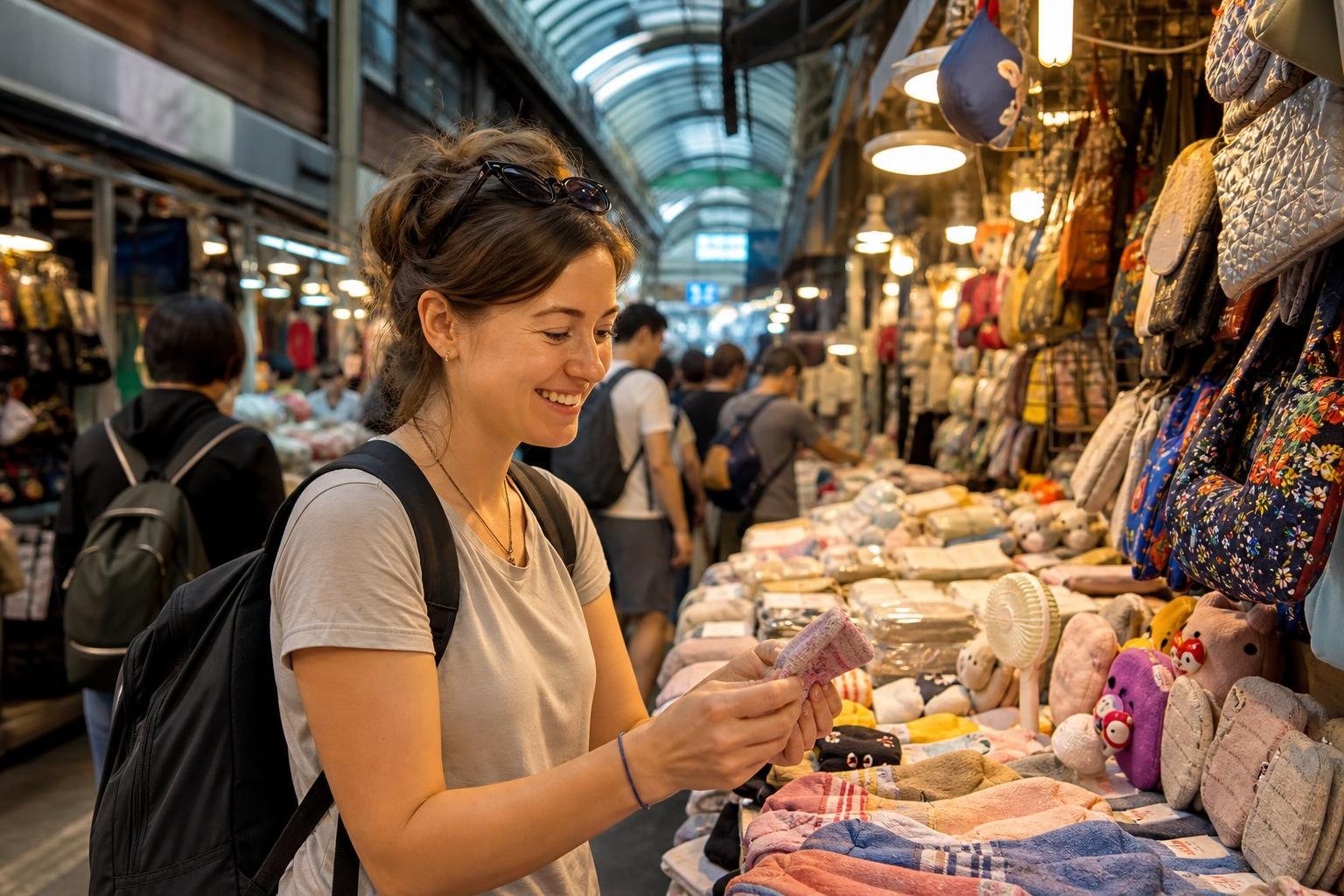
    Located in central Seoul near Sungnyemun Gate, Namdaemun Market is not a single indoor complex. It is made up of narrow lanes, storefronts, covered shopping sections, specialist vendors, and food alleys. The market is a useful alternative to a polished mall if you enjoy browsing a wide range of everyday goods. Visit Seoul’s market guide introduces it as a major shopping destination in the city.

    It works especially well for visitors who want useful purchases rather than only decorative souvenirs. Residents setting up a home in Korea may also find the household and kitchenware sections worth exploring.

    What to buy at Namdaemun Market

    The market carries a broad mix of retail and wholesale-style goods. Choose one or two categories before arriving; trying to see every lane at once can be tiring.

    Practical souvenirs and gifts

    For easy-to-pack gifts, look for small items that do not depend on exact clothing sizes:

    • Socks, pouches, coin purses, and hair accessories
    • Hats, scarves, gloves, and simple bags
    • Stationery and small gift items
    • Korean-style towels and bath accessories
    • Small kitchen tools, chopsticks, cups, or tableware

    Useful items are often easier to pack and more likely to be used after a trip. If you plan to take packaged food abroad, check your destination’s import rules before packing it.

    Kitchenware and household goods

    Official visitor information lists kitchenware, household goods, imported products, and everyday commodities among Namdaemun Market’s key product categories. VISITKOREA’s Namdaemun Market page also notes clothing, fashion accessories, bags, and glasses among the available goods.

    • Cooking utensils and storage containers
    • Serving dishes, cups, trays, and chopsticks
    • Lunch boxes and food-preparation tools
    • Cleaning supplies and simple home organizers

    Inspect fragile items before paying. Check for chips or cracks, and ask whether a seller can wrap an item securely for travel.

    Clothing, accessories, bags, and glasses

    Namdaemun can be useful for a practical purchase such as a cap, umbrella, tote bag, warm layer, or suitcase accessory. Quality, sizing, materials, and return arrangements vary considerably by shop, so examine seams, zippers, labels, and fit before deciding.

    Street food and food alleys to try

    Plan either a quick snack while browsing or a sit-down market meal. Food stalls can be compact, and seating arrangements differ from place to place.

    Vegetable hotteok

    Vegetable hotteok is one of the market’s well-known snacks. Unlike the sweet-filled hotteok many travelers expect, this version is filled with glass noodles and vegetables. It is served hot, so give it a moment to cool before eating. Visit Seoul’s Namdaemun food feature highlights this snack.

    Kalguksu Alley

    Namdaemun’s Kalguksu Alley is associated with kalguksu, hand-cut noodles served in broth. You may also find other simple market-style dishes nearby, including dumplings, cold noodles, and rice-based meals. Visit Seoul’s guide to Kalguksu Alley provides more context on the area.

    How to choose a food stall

    1. Read the menu before joining a line. Make sure there is something you want to eat.
    2. Check the serving style. Some places suit quick solo meals, while others are better for groups.
    3. Look for seating. A stall may be takeaway only.
    4. Ask about ingredients when needed. Dishes that look vegetarian may contain meat, seafood, egg, fish-based broth, or spicy seasonings.
    5. Order realistically. Narrow market lanes are not always convenient for eating while walking.

    How to get to Namdaemun Market

    By subway

    The simplest subway reference point is Hoehyeon Station on Seoul Subway Line 4. From there, follow signs and use a map app to walk toward Namdaemun Market. The Seoul Metropolitan Government’s visitor feature identifies the market as a short walk from several station exits.

    Because the market covers multiple streets, search for a specific destination rather than relying only on the general market pin. Your best entrance will differ depending on whether you want food, clothing, accessories, kitchenware, or luggage.

    From nearby central Seoul areas

    Namdaemun Market is close to Seoul Station, Sungnyemun Gate, and Myeong-dong. If you are already in one of these areas, use your preferred navigation app to select a walking route to the market section that matches your shopping goal.

    Useful map searches

    • Namdaemun Market food alley
    • Namdaemun Market kitchenware
    • Namdaemun Market accessories
    • Namdaemun Market glasses
    • Namdaemun Market luggage

    A more specific search can save time in a market that is much larger than it first appears.

    A simple first-time visit plan

    1. Start with one category. Choose souvenirs, kitchenware, clothing, bags, or food, and browse that area first.
    2. Compare before buying. Similar products may differ in material, finish, size, or included accessories. Check more than one shop.
    3. Take a food break. Choose a hotteok for a quick snack or look for kalguksu if you want a seated meal.
    4. Record shops you may return to. Take a photo of the storefront or note a nearby landmark. Many lanes look alike.

    Common mistakes to avoid

    Buying the first similar item you see

    The market’s variety is one of its strengths. Compare a few options before buying bags, kitchenware, glasses, clothing, or souvenirs.

    Assuming every seller accepts the same payment method

    Payment options can differ by shop. Confirm the accepted method with the seller before completing a purchase. Prices and payment arrangements may also vary by business, so check on site.

    Expecting a shopping-mall layout

    Namdaemun is a street market with specialist zones, not one neatly organized retail building. Wandering is part of the experience, but searching for your product category in a map app can reduce unnecessary walking.

    Relying on one general opening-hours listing

    Individual businesses set their own schedules. If one lane is quiet or closed, explore another section instead of assuming the entire market is unavailable.

    Namdaemun Market compared with Myeong-dong

    Namdaemun and Myeong-dong offer different shopping experiences. Myeong-dong is more focused on brand shopping and a busy central shopping-street atmosphere. Namdaemun is generally the better choice for browsing practical goods, specialist stalls, market food, and a less curated retail environment.

    Frequently asked questions

    Is Namdaemun Market good for souvenirs?

    Yes. It is particularly useful for practical souvenirs such as socks, accessories, stationery, pouches, small kitchen items, and Korean-style household goods.

    What food should I try at Namdaemun Market?

    Vegetable hotteok is a popular market snack. Kalguksu Alley is a good place to look for hand-cut noodle dishes and other casual market meals.

    Is Namdaemun Market easy to reach by subway?

    Yes. Hoehyeon Station on Line 4 is the most useful subway reference point, and the market is a short walk from the station area.

    What time does Namdaemun Market open?

    There is no single answer for the entire market. Shops, stalls, and restaurants operate independently, so check the specific business you want to visit shortly before going.

    Should I visit Namdaemun or Myeong-dong?

    Choose Namdaemun for practical goods, specialist shopping, and market food. Choose Myeong-dong if you are mainly looking for a brand-focused shopping street. Both can fit into a central Seoul itinerary.

    Related articles

    Information current as of: 2026-09-08

    Sources and references

  • Dongdaemun Night Shopping Guide: Areas, Transport, and Payment Tips

    Dongdaemun Night Shopping Guide: Areas, Transport, and Payment Tips

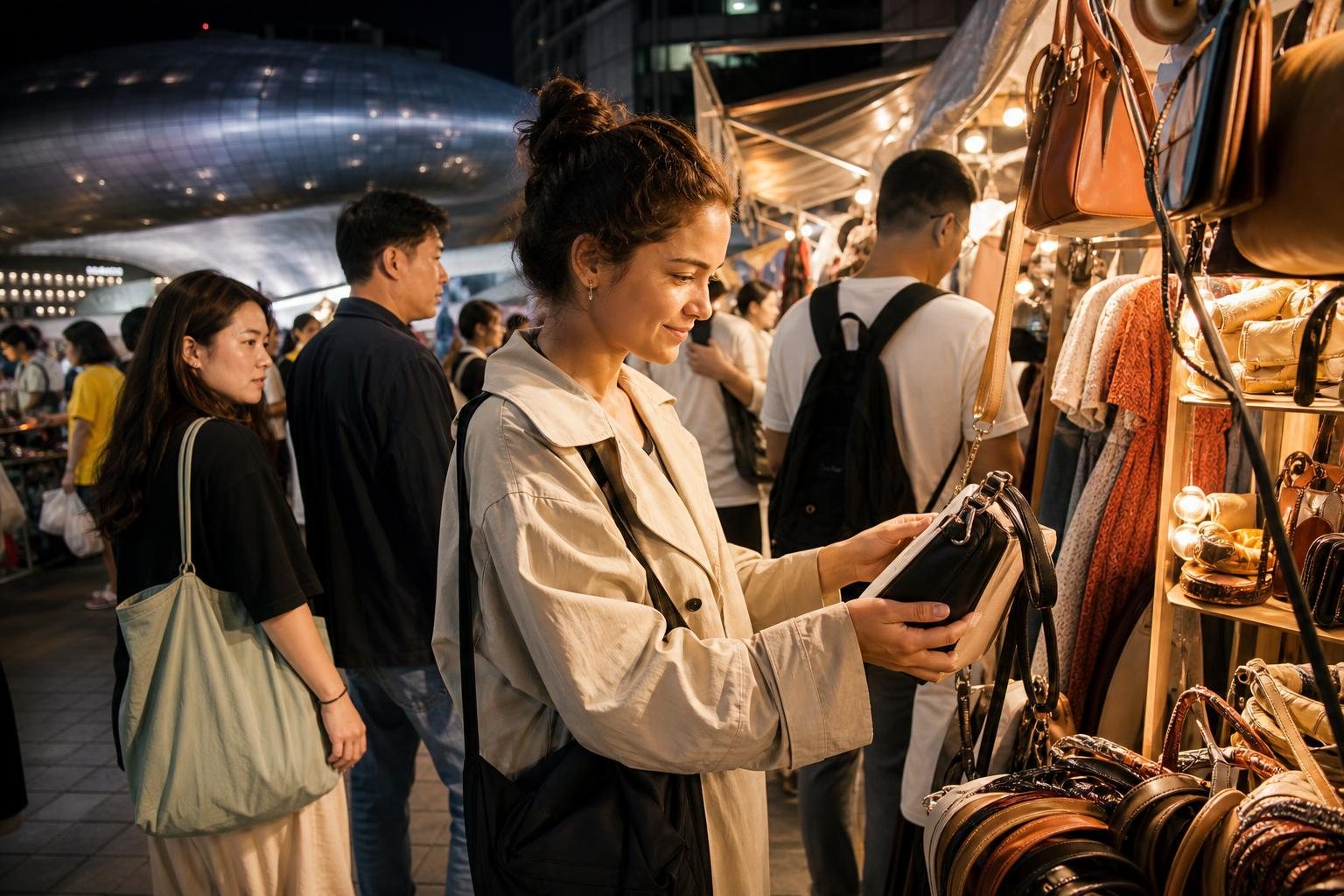
    Dongdaemun night shopping is not one market with one shared schedule. It is a large shopping district with fashion buildings, wholesale-oriented shops, traditional-market sections, specialist material stores, and outdoor stalls. The easiest way to enjoy it is to choose one goal first—trend fashion, accessories, fabric, or casual browsing—then navigate to the specific building or area.

    For many visitors, Dongdaemun History & Culture Park Station is the most convenient starting point for the fashion-focused side near Dongdaemun Design Plaza (DDP). For fabric and craft materials, Dongdaemun Shopping Complex and the older market side are usually a better fit. Check the current details for your exact destination before leaving, because opening arrangements, rest days, and payment methods vary by building and shop.

    Understand Dongdaemun before you go

    Think of Dongdaemun as a shopping neighborhood rather than a single mall. Seoul’s official tourism guide describes Dongdaemun Market as a large commercial district around Dongdaemun Gate, while the Korea Tourism Organization highlights its mix of traditional market shopping and modern retail complexes.

    The experience can change quickly from one building to the next. One may focus on ready-to-wear clothing, another on business buyers ordering stock, and another on fabric, trims, or DIY supplies. Outdoor stalls offer a more informal browsing experience.

    • Fashion buildings are useful for clothing, shoes, bags, and accessories.
    • Wholesale-oriented stores may have a faster, less service-focused shopping style.
    • Specialist market sections are better for materials, sewing supplies, and custom projects.
    • Outdoor stalls are best approached as discovery shopping, not as a guaranteed source for one exact item.

    Main Dongdaemun shopping areas

    Dongdaemun History & Culture Park and DDP side

    This is an easy starting zone for first-time visitors. It is close to major fashion buildings, DDP, and streets associated with the district’s evening shopping atmosphere. DDP is also a practical landmark for meeting companions and getting oriented.

    Choose this side if you want trend-focused fashion, indoor shopping buildings, street browsing, and a straightforward navigation point. The Korea Tourism Organization identifies DDP as one of Dongdaemun’s defining landmarks.

    The fashion mall cluster

    Large multi-floor buildings around central Dongdaemun sell clothing, footwear, bags, accessories, beauty items, and lifestyle goods. Although the buildings can look similar from outside, individual stores may serve very different customers. Some welcome single-item retail purchases, while others operate mainly with wholesale buyers in mind.

    The Korea Tourism Organization notes that Dongdaemun includes wholesale clothing buildings as well as specialist outlets. Browse with a simple comparison process:

    1. Walk through a full floor before buying the first item you like.
    2. Photograph the shop sign, floor, and unit number when you find a promising item.
    3. Ask whether your preferred size or color is available.
    4. Confirm the final total and payment method before the item is packed.
    5. Keep a receipt or transaction record until you have checked the purchase.

    Dongdaemun Shopping Complex for fabric and DIY supplies

    If you need materials rather than finished clothing, start with Dongdaemun Shopping Complex. Official tourism information lists fabric, garment-making materials, accessories, traditional clothing-related goods, bedding, curtains, and craft components among its product categories.

    This area is especially useful for fabric by length, buttons, zippers, ribbons, patches, jewelry-making parts, sewing materials, and hanbok-related fabrics or accessories. The layout can feel maze-like, so note the shop number when you find a store you may want to revisit.

    A useful phrase: “Can I take a photo of the shop number?”

    Outdoor tented stalls near DDP

    The outdoor stalls near DDP are widely known as the Yellow Tent Market. Official tourism information refers to this area as Dongdaemun Sebit Market and associates it with tented stalls selling items such as clothing, bags, and accessories.

    Selection can change quickly, so browse with flexibility. Before paying, inspect seams, zippers, lining, fasteners, and both sides of garments or bags. Ask about exchanges for defects, check whether you are receiving a display sample or a new item, and confirm the accepted payment method.

    How to check opening arrangements

    A common mistake is treating a search for “Dongdaemun opening hours” as an answer for the whole district. It is not. Individual malls, market sections, floors, and shops can follow different operating arrangements and rest days.

    Check the exact destination

    Before you leave, identify whether you are going to a fashion mall, Dongdaemun Shopping Complex, a specific store, an outdoor stall area, or a restaurant inside a building. Check that destination’s official channel, current map listing, or entrance notice. If one building is closed, another part of the district may still be active.

    Make a flexible route

    • Plan A: your priority building or shop
    • Plan B: a nearby fashion building or market street
    • Plan C: DDP, a café, or a walk through the area while you choose another destination

    Use older blog posts to understand the character of an area, but do not rely on them as final confirmation for a specific shop’s current schedule.

    Getting to Dongdaemun

    Use Dongdaemun History & Culture Park Station for the fashion side

    This station is a useful main pin for DDP and many fashion-oriented shopping buildings. Seoul’s official tourism guide identifies it as a convenient access point for Dongdaemun Market.

    In a map or navigation app, search for a specific destination instead of only searching “Dongdaemun.” Useful search terms include:

    • Dongdaemun History & Culture Park Station
    • Dongdaemun Design Plaza
    • Dongdaemun Shopping Complex
    • The exact name of your target mall or shop

    Use Dongdaemun Station for the older market side

    Dongdaemun Station can be more convenient for Dongdaemun Shopping Complex and nearby traditional-market areas. The Korea Tourism Organization lists the complex near this station.

    Navigation tips

    • Save your accommodation address in both Korean and English.
    • Save a map pin or route screenshots before leaving.
    • Use the building name, not only the neighborhood name, if taking a taxi.
    • Check the exit number in your map app and compare it with station signs.
    • Allow extra time for large road crossings and for finding the correct building entrance.

    Payment tips for foreign visitors

    Payment practices vary across Dongdaemun. Larger malls may have more standardized checkout systems, while smaller shops and outdoor stalls may handle payment differently. Do not assume that a foreign-issued card, contactless payment, mobile payment, or cash will be accepted by every seller.

    Ask before committing to a purchase

    Before trying on an item, taking it to the counter, or asking staff to pack it, use short questions:

    • “Card okay?”
    • “Cash only?”
    • “Can I pay by foreign card?”
    • “Can I pay by mobile payment?”

    Bring a backup option

    A practical setup is one physical card, a backup card stored separately, a small amount of Korean cash, and a payment app only if you already know it works on your device. The point is not to use one method everywhere; it is to avoid being unable to complete a purchase.

    Confirm the total and exchange policy

    For small independent shops, especially where prices are not clearly marked, confirm the total before paying. If you are buying several pieces, point to each item while the seller calculates. Seoul tourism information notes that fixed or displayed pricing has become more common in parts of the district, so do not assume bargaining is expected.

    Ask about returns or exchanges before payment. Exchange options may be limited for clothing, accessories, sale items, or purchases from small shops. If the answer is unclear, inspect the item carefully before paying.

    A useful phrase: “Exchange possible if there is a problem?”

    Simple shopping plans

    For trend fashion

    1. Arrive at Dongdaemun History & Culture Park Station.
    2. Choose one or two fashion buildings instead of trying to see everything.
    3. Browse a full floor before deciding.
    4. Photograph shop locations for comparison.
    5. Finish with outdoor stalls if you still want to browse.

    For fabric, accessories, or DIY materials

    1. Start at Dongdaemun Shopping Complex.
    2. Write down the material, color, quantity, or item type you need.
    3. Compare several shops before buying.
    4. Confirm how the material is measured or packaged.
    5. Keep small purchases organized if you buy components from several shops.

    For casual evening browsing

    1. Use DDP as a meeting point.
    2. Walk through the nearby fashion-mall streets.
    3. Browse tented stalls if they are operating.
    4. Buy an item because you genuinely want it, not only because the area feels exciting.

    Common mistakes to avoid

    • Trying to see everything: Pick one main purpose and one backup area.
    • Confusing wholesale with regular retail: A store may sell to individuals but still be organized for business buyers.
    • Forgetting where you saw an item: Save photos of signs, floor numbers, and unit numbers.
    • Paying before inspecting: Check for marks, missing parts, loose stitching, scratches, and mismatched sizes.
    • Relying on one payment method: Carry a backup and ask before the item is packaged.

    FAQ

    Is Dongdaemun night shopping suitable for first-time visitors to Seoul?

    Yes. Treat it as a neighborhood with several shopping zones, not one destination. Start near Dongdaemun History & Culture Park Station or DDP, choose one shopping goal, and keep a backup destination in mind.

    What is the best area for fabric and craft supplies?

    Dongdaemun Shopping Complex is a strong starting point for fabric, garment materials, accessories, and DIY components. Official tourism information lists fabrics, clothing materials, bedding, curtains, and accessories among its main categories.

    Is the Yellow Tent Market the same as Dongdaemun?

    No. It is one part of the wider Dongdaemun shopping district. It is commonly associated with Dongdaemun Sebit Market and outdoor tented stalls near the DDP area.

    Can I use a foreign credit card in Dongdaemun?

    Some businesses may accept cards, but accepted methods differ by building and seller. Ask before shopping, bring a backup payment option, and confirm the method before the item is packed.

    Should I bargain in Dongdaemun?

    Do not assume bargaining is expected. Prices may be displayed or treated as fixed in many stores. If you are buying multiple items, you can politely ask whether there is flexibility, then accept the answer without pressure.

    What should I save on my phone before going?

    Save the name of your target building, a map pin, your accommodation address, and photos of shop locations you may want to revisit. These small preparations make navigation much easier among similar-looking entrances and floors.

    Sources

    Related articles

    Information current as of: 2026-09-07

  • Dongmyo Flea Market Guide: What to Buy, How to Bargain, and How to Shop Smart

    Dongmyo Flea Market Guide: What to Buy, How to Bargain, and How to Shop Smart

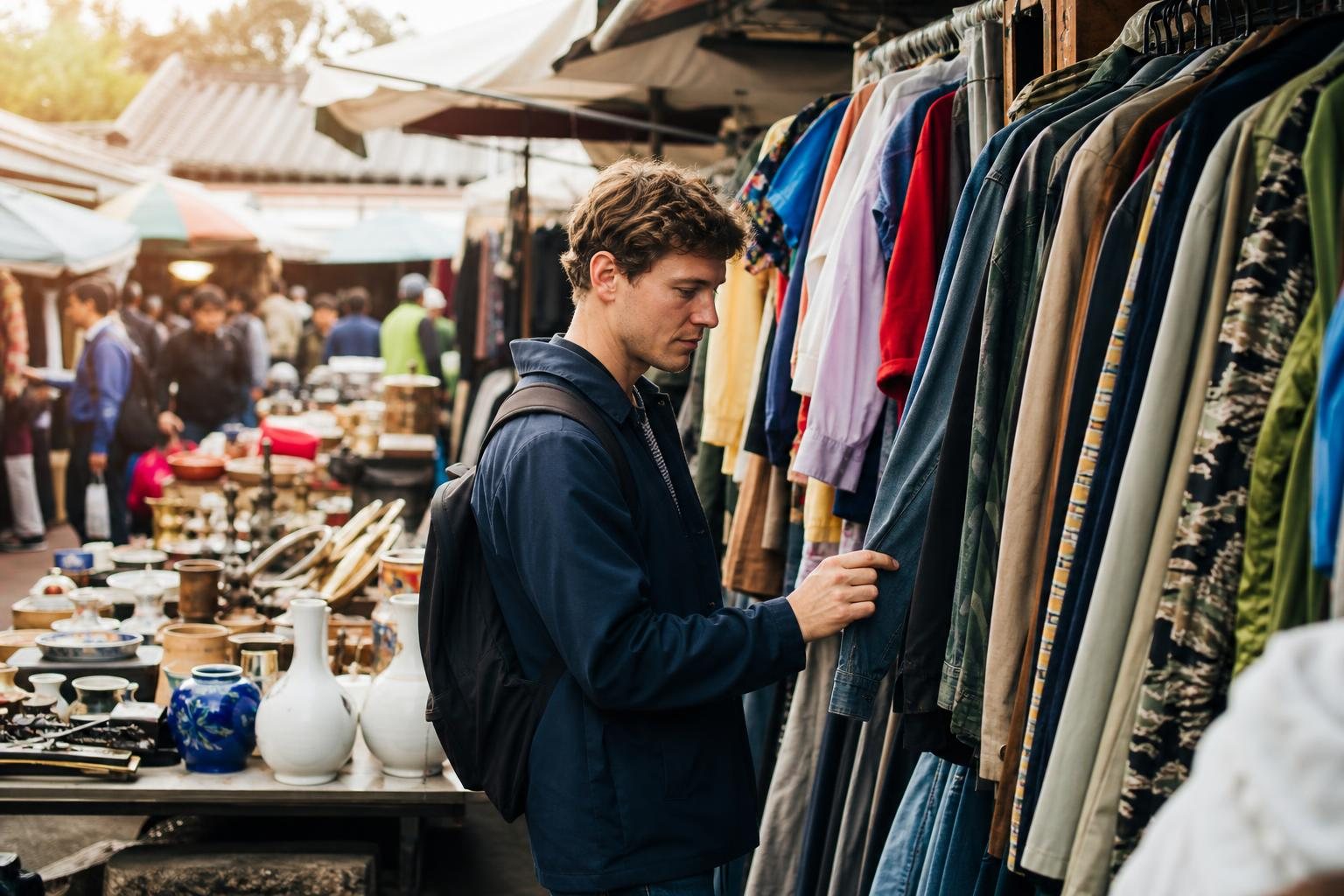
    Dongmyo Flea Market is best for patient treasure hunting rather than quick, polished shopping. Go with one or two item types in mind—such as vintage clothing, records, old books, cameras, tools, or unusual home objects—but leave room for unexpected finds. A smart approach is to walk through the area once without buying, compare similar items, and then return to the stalls that stood out.

    The market is a good fit if you enjoy searching through mixed second-hand goods and judging condition for yourself. For the best experience, inspect every item carefully, bargain calmly only when appropriate, and buy only what you can comfortably carry home.

    What makes Dongmyo Flea Market different?

    Dongmyo Flea Market is a second-hand shopping area in Jongno, Seoul, near Dongmyo Station. Unlike a curated vintage store, it is known for an unpredictable assortment of used goods. Seoul tourism information describes items including antiques, old books, records, cameras, clocks, jewelry, machines, tools, furniture, and household objects.

    That unpredictability is part of the appeal. You might find something memorable within minutes, or spend a long time looking through racks and boxes without finding the right item. Treat the visit as a browsing experience first and a shopping mission second.

    Seoul Metropolitan Government: Dongmyo Flea Market

    What to buy at Dongmyo

    Vintage clothing

    Dongmyo is widely associated with second-hand clothing. You may come across shirts, jackets, knitwear, workwear-inspired pieces, caps, and garments with an older Seoul street-market character.

    • Check for thinning fabric, stains, odors, loose seams, and missing buttons.
    • Look closely at cuffs, collars, underarms, pockets, and linings.
    • Do not rely only on the size label. Older and imported clothing can fit differently from current sizing.
    • If trying an item on is not possible, hold it against yourself or compare its measurements with clothing you already own.
    • Ask before unfolding tightly packed displays or removing items from hangers.

    Buying tip: Choose a garment because its fit and condition work for you, not simply because it looks vintage.

    Records, books, cameras, and collectibles

    Dongmyo can reward visitors who enjoy physical media and objects with a history. Official Seoul information specifically includes old books, records, cameras, tools, and other collected items among the goods found in the area.

    • Records: Look for warping, deep scratches, mold, and damaged sleeves.
    • Books and magazines: Check for missing pages, water damage, heavy yellowing, and writing inside.
    • Cameras: Treat untested film or electronic cameras as display pieces unless key functions can be demonstrated.
    • Watches and electronics: Assume repairs may be needed unless you can inspect and test them carefully.
    • Decorative antiques: Check for cracks, repairs, loose parts, and signs that an item may be a reproduction.

    If authenticity, working condition, or collectibility matters a great deal, use Dongmyo mainly for browsing, comparing, and asking questions rather than making an immediate impulse purchase.

    Seoul Metropolitan Government: Dongmyo Flea Market information

    Homeware, tools, and unexpected objects

    Part of Dongmyo’s charm is finding objects that are difficult to find in modern chain stores: old kitchenware, frames, containers, lighting, small furniture, hardware, figurines, and everyday objects from another era. Nearby vintage and antique shops also carry furniture, lighting, industrial-style objects, and LP records from Korea and abroad.

    These can be especially appealing for residents who can transport items safely. If you are visiting Seoul, think about luggage space, fragility, and whether the item will travel well before buying it.

    Visit Seoul: Manmulsangdan Dongmyo Vintage Antique Shop

    How to bargain without making it awkward

    Bargaining works best when it is calm, brief, and respectful. It is not expected at every stall, and some sellers may prefer to keep the stated price.

    1. Inspect the item first. Do not negotiate before deciding that you genuinely want it.
    2. Ask for the price clearly. If there is no label, point politely and ask.
    3. Set your own limit. Decide the maximum you are comfortable paying before the conversation starts.
    4. Make one reasonable counteroffer. A modest request is generally better than an extreme low offer.
    5. Accept the answer gracefully. If the seller declines, either buy at the stated price or thank them and move on.

    Useful Korean phrases

    • 얼마예요? (Eolmayeyo?) — How much is it?
    • 조금 깎아 주실 수 있어요? (Jogeum kkakka jusil su isseoyo?) — Could you lower it a little?
    • 이걸로 할게요. (I geollo halgeyo.) — I’ll take this.
    • 감사합니다. (Gamsahamnida.) — Thank you.

    You do not need perfect Korean. A polite tone, clear gestures, and patience are more useful than memorizing many phrases.

    Bargaining mistakes to avoid

    • Do not negotiate aggressively over a low-cost item.
    • Do not ask for a discount after the seller has packed the item.
    • Do not describe an item as worthless simply to lower the price.
    • Do not compare every item with online resale listings in front of the seller.
    • Do not assume that a discount is expected.

    When to visit: choose your goal

    There is no single best moment for every visitor. The experience can change with crowd levels, weather, vendor setup, and whatever items happen to be available. Instead of chasing a perfect time, plan around the kind of visit you want.

    For more focused shopping

    Allow enough time for a full first pass before you purchase anything. Seeing several stalls helps you understand the range and condition of similar items, reducing the chance of buying the first thing you see.

    For slower browsing

    Do not schedule the visit immediately before another reservation or attraction. Dongmyo rewards wandering, and interesting items can be mixed into crowded racks, stacked shelves, and tables that need careful searching.

    For a more comfortable conversation

    If you want to ask about an item or make a counteroffer, speak with the seller when they are not helping several customers at once. A short, direct conversation is usually easier than trying to negotiate in a crowd.

    For photography and atmosphere

    Ask before taking close-up photographs of vendors, merchandise, or transactions. Dongmyo is a working market for sellers, not only a backdrop for social media.

    A practical Dongmyo shopping plan

    1. Start with a short wish list

    Choose no more than two categories. For example:

    • A vintage jacket
    • A Korean-language magazine or old book
    • A record
    • A compact home object
    • A small souvenir with character

    A short list gives your visit some focus while leaving room for spontaneous finds.

    2. Do a no-buy first lap

    Use your first walk to notice which stalls seem to focus on clothing, media, tools, or antiques. Compare the general condition of similar items, see whether your category appears in several places, and note vendors who seem knowledgeable about a particular type of object.

    3. Inspect before you negotiate

    Condition matters more than appearance. A faded label may add character, but a broken zipper, severe mildew smell, missing component, or warped record may make an item a poor choice.

    4. Buy what you can carry

    For travelers, compact and durable purchases are often easiest: a cap, scarf, shirt, small print, book, postcard-sized artwork, or lightweight record sleeve. Large furniture, fragile goods, and untested electronics require more planning.

    5. Keep expectations flexible

    Dongmyo is not the place to demand a specific brand, color, size, or collectible model. If you need an exact item in reliable condition, a specialist shop may be a better match. If you enjoy the search itself, Dongmyo can be much more memorable.

    Dongmyo Flea Market vs. curated vintage shops

    Choose Dongmyo if you enjoy digging through mixed racks, discovering unexpected records or books, and assessing an item’s condition on your own. It is also a good choice for unusual souvenirs and one-of-a-kind home objects.

    Choose a curated vintage shop if you want sorted sizes, clearer presentation, a particular title or genre, more consistent condition information, or specialist guidance about provenance and restoration.

    Important things to remember

    • Inventory changes constantly, so avoid planning around one exact item.
    • Used goods can have wear, repairs, odors, missing parts, or unknown histories.
    • Check clothing, media, and mechanical items carefully before paying.
    • Payment methods and purchase conditions can vary by stall, so confirm directly with the seller.
    • If you are unsure, walk away and return after another lap. Extra thinking time often leads to a better decision.

    FAQ

    Is Dongmyo Flea Market good for first-time visitors to Seoul?

    Yes, especially for visitors who enjoy second-hand shopping, vintage fashion, old media, and street-market atmosphere. It is less suitable for people looking for a polished, mall-like shopping experience.

    Can I find authentic vintage items?

    You may find genuinely old and interesting pieces, but authenticity and condition vary. Inspect carefully and do not assume that every old-looking item is rare or collectible.

    Is bargaining required?

    No. You can ask politely, but a seller may keep the original price. Decide based on the condition of the item and how much you personally want it.

    What is the safest type of item to buy?

    Clothing and small decorative objects are often easier to inspect than complex electronics or mechanical items. Whatever you buy, check its condition closely before paying.

    Is Dongmyo only for clothes?

    No. Official tourism information describes a broader selection that can include antiques, records, books, cameras, tools, furniture, household goods, and collectible objects.

    Related articles

    Information current as of: 2026-09-06

    Sources and references

  • Korean Restaurant Table Etiquette: A First-Time Visitor’s Guide

    Korean Restaurant Table Etiquette: A First-Time Visitor’s Guide

    The key rules are simple: use a spoon for rice and soup, use chopsticks for meat and side dishes, and keep your rice and soup bowls on the table. When dishes are shared, take a modest portion and follow the pace of the people dining with you.

    If you are eating with older Koreans, wait for the eldest person to begin before you start. You do not need perfect chopstick skills or formal manners to enjoy the meal; considerate behavior matters more than performing every custom perfectly.

    The etiquette that matters most

    Korean restaurant meals can be relaxed, especially among friends, but a few habits are useful almost everywhere. Korean meals commonly include both a spoon and chopsticks, so using a spoon is normal—not a failure of chopstick technique. VISITKOREA and Visit Seoul describe these basic dining customs.

    • Use a spoon for rice, soup, stew, and other soft foods.
    • Use chopsticks for meat, vegetables, noodles, and side dishes.
    • Keep rice and soup bowls on the table rather than lifting them.
    • Take shared food carefully and avoid taking more than you will eat.
    • When dining with an older person, wait for them to begin.

    Understand the place setting

    A typical meal may include rice, soup or stew, a main dish, and several small shared side dishes called banchan. A rice-and-soup meal served with multiple side dishes is often called baekban. VISITKOREA’s guide to baekban explains this style of set meal.

    What each utensil is for

    • Spoon: rice, soup, stew, and bibimbap.
    • Chopsticks: grilled meat, vegetables, noodles, and banchan.
    • Kitchen scissors: cutting large pieces of grilled meat, kimchi, or noodles when they are provided at the table.
    • Tongs: handling raw meat at Korean barbecue.

    A helpful rule for beginners is: spoon for rice and liquid dishes, chopsticks for solid foods. Traditional etiquette also advises against holding both spoon and chopsticks in one hand while eating. FACTS: KOREA outlines this utensil custom.

    Five rules to remember

    1. Keep bowls on the table

    In Korean dining etiquette, rice and soup bowls generally stay on the table. Scoop rice with your spoon instead of lifting the bowl toward your mouth. If you forget once, do not worry—simply continue naturally.

    2. Never stand chopsticks upright in rice

    Do not leave chopsticks or a spoon standing vertically in a bowl of rice. This resembles food offerings connected with memorial or funeral rites. Put utensils on the table, a utensil rest, or the place provided by the restaurant. Visit Seoul lists this as an etiquette point to avoid.

    3. Let an older diner begin first

    With relatives, colleagues, teachers, or older acquaintances, wait until the eldest person starts eating. At a casual meal with friends of a similar age, follow the table’s natural pace instead of waiting for a formal signal.

    4. Take shared dishes with care

    Banchan is usually placed in the middle for everyone. Take a small, reasonable amount at first. Use serving spoons, tongs, or separate chopsticks when they are available. If none are provided, observe the group and avoid double-dipping.

    5. Keep utensil use calm

    Avoid banging metal chopsticks on bowls, waving them around, or using them to spear food when another utensil works. These details are less important than being considerate, but they help make a shared table more comfortable.

    Korean barbecue: a practical approach

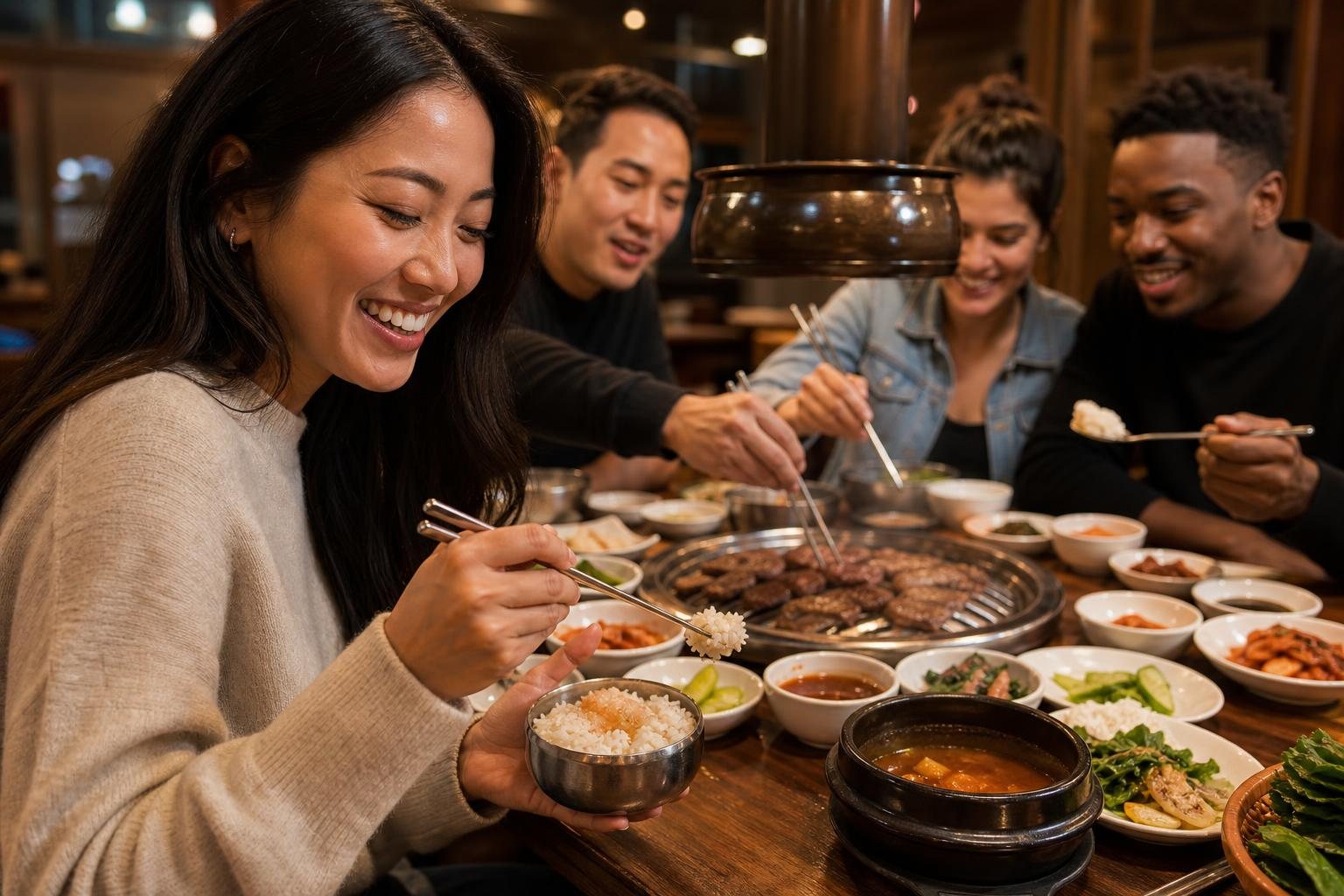
    Korean barbecue is interactive: meat, a grill, sauces, lettuce leaves, side dishes, tongs, and sometimes scissors may all be on the table. There is no single rule about who cooks. In some restaurants, staff grill or assist and tell diners when the meat is ready. VISITKOREA notes that staff service is available at some barbecue restaurants.

    If your group is cooking

    1. Use the provided tongs for raw meat.
    2. Do not overcrowd the grill.
    3. Cut large pieces with the scissors only when that is how the table is set up.
    4. Keep cooked meat separate from raw meat where practical.
    5. Let the most experienced diner lead at first, or ask staff for help.

    Making a lettuce wrap

    A ssam is a lettuce or perilla-leaf wrap, often filled with grilled meat, rice, sauce, or kimchi. It is traditionally eaten in one bite, so make it small enough to manage neatly. A smaller wrap is completely fine and is usually easier for first-time visitors.

    Restaurant habits that may surprise you

    Side-dish refills

    Many restaurants serve banchan with the meal, and extra water or side dishes may be available at no extra charge. However, refill rules vary by restaurant; some have self-service stations, limits, or exclusions for certain items. Check a table sign, look for a self-service area, or ask staff before assuming a refill is available.

    Call bells and utensil drawers

    Some tables have a service call button built into the tabletop or near the wall. Press it once when you need assistance. Spoons, chopsticks, napkins, and tissues may also be stored in a drawer under the table. These arrangements are common but not universal. VISITKOREA describes both call bells and table drawers in Korean dining settings.

    Tipping

    Tipping is generally not customary in ordinary Korean restaurants. Visit Seoul notes that tipping is not customary, while VISITKOREA explains that common service requests such as water or side dishes generally do not bring an extra charge. Pay the listed total unless a service charge is clearly shown on the bill.

    A simple first-visit checklist

    1. Follow the staff’s seating instructions and check how the restaurant handles ordering.
    2. Look for utensils in a table drawer if they are not already on the table.
    3. Wait briefly for an older diner to begin if you are eating with one.
    4. Use your spoon for rice and soup; use chopsticks for meat and banchan.
    5. Take small portions from shared dishes before taking more.
    6. At barbecue, use tongs for raw meat and ask for help if you are unsure.
    7. Check whether payment is made at the table or at a counter near the exit.

    Common mistakes to avoid

    • Lifting the rice bowl: leave it on the table and use your spoon.
    • Sticking chopsticks into rice: rest them flat instead.
    • Taking too much banchan: shared dishes are for the whole table, so start small.
    • Assuming every restaurant has the same system: ordering, water, refills, grilling, and payment practices differ by venue.
    • Forcing yourself to finish unfamiliar food: avoid waste, but take small tastes first—especially with spicy, fermented, or salted dishes.

    The goal is not to copy every movement of local diners. Use the spoon and chopsticks in the usual way, share thoughtfully, and follow the restaurant’s setup.

    Useful Korean dining phrases

    • 잘 먹겠습니다 (jal meokgesseumnida): “I will enjoy the meal.”
    • 잘 먹었습니다 (jal meogeosseumnida): “Thank you, I enjoyed the meal.”
    • 여기요 (yeogiyo): “Excuse me / Over here, please.”
    • 물 주세요 (mul juseyo): “Water, please.”
    • 이거 더 주세요 (igeo deo juseyo): “More of this, please.”
    • 계산할게요 (gyesanhalkkeyo): “I’d like to pay.”

    FAQ

    Is it rude to ask for a fork?

    No. Many restaurants can provide one, particularly in tourist areas and modern casual restaurants. Still, use the spoon for rice and soup first; it is a standard Korean utensil.

    Can I eat banchan in any order?

    Yes. Korean meals are meant to be combined according to your taste. Try rice with different side dishes, soup, meat, and sauces as you like.

    Must I eat a lettuce wrap in one bite?

    That is the traditional approach, but do not make a wrap so large that it is difficult to eat. A small, neat ssam is a better choice.

    Should I use two hands when receiving a drink or dish?

    Using two hands is a polite gesture, especially with an older person or in a formal work or family meal. At a relaxed meal with friends, ordinary behavior is usually fine.

    Can I eat alone at a Korean restaurant?

    Often, yes. However, some barbecue and group-oriented restaurants may have minimum orders or may be less convenient for solo diners. Check the menu or ask the restaurant before ordering.

    Final takeaway

    For a first Korean restaurant visit, remember: spoon for rice and soup, chopsticks for side dishes, bowls stay on the table, and shared food deserves shared consideration. Follow the people at your table and the restaurant’s own system, and you will be well prepared.

    Related articles

    Information current as of: 2026-09-01

    Sources and references

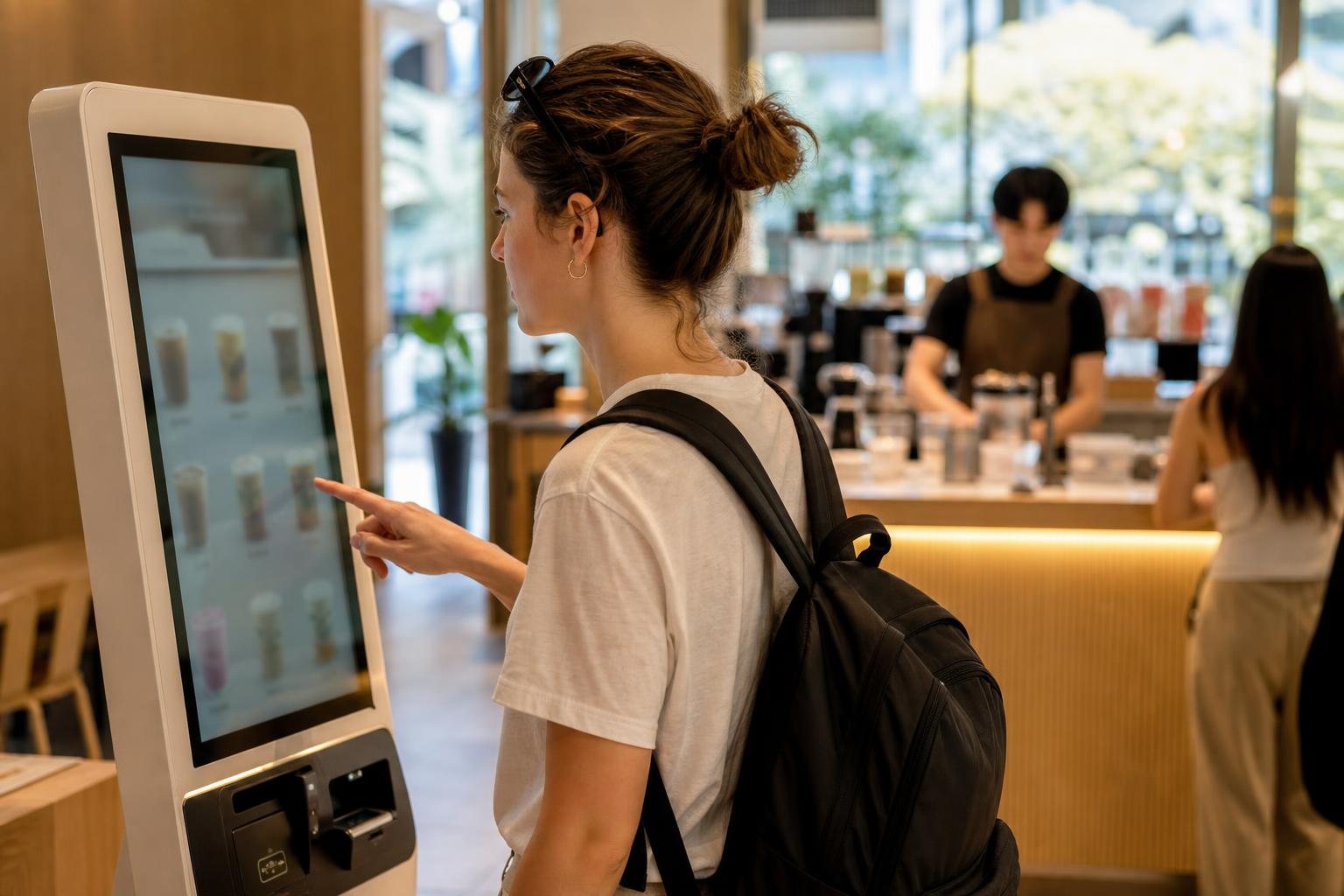
  • How to Order at a Korean Bakery Café: Trays, Tongs, Drinks, and Checkout

    How to Order at a Korean Bakery Café: Trays, Tongs, Drinks, and Checkout

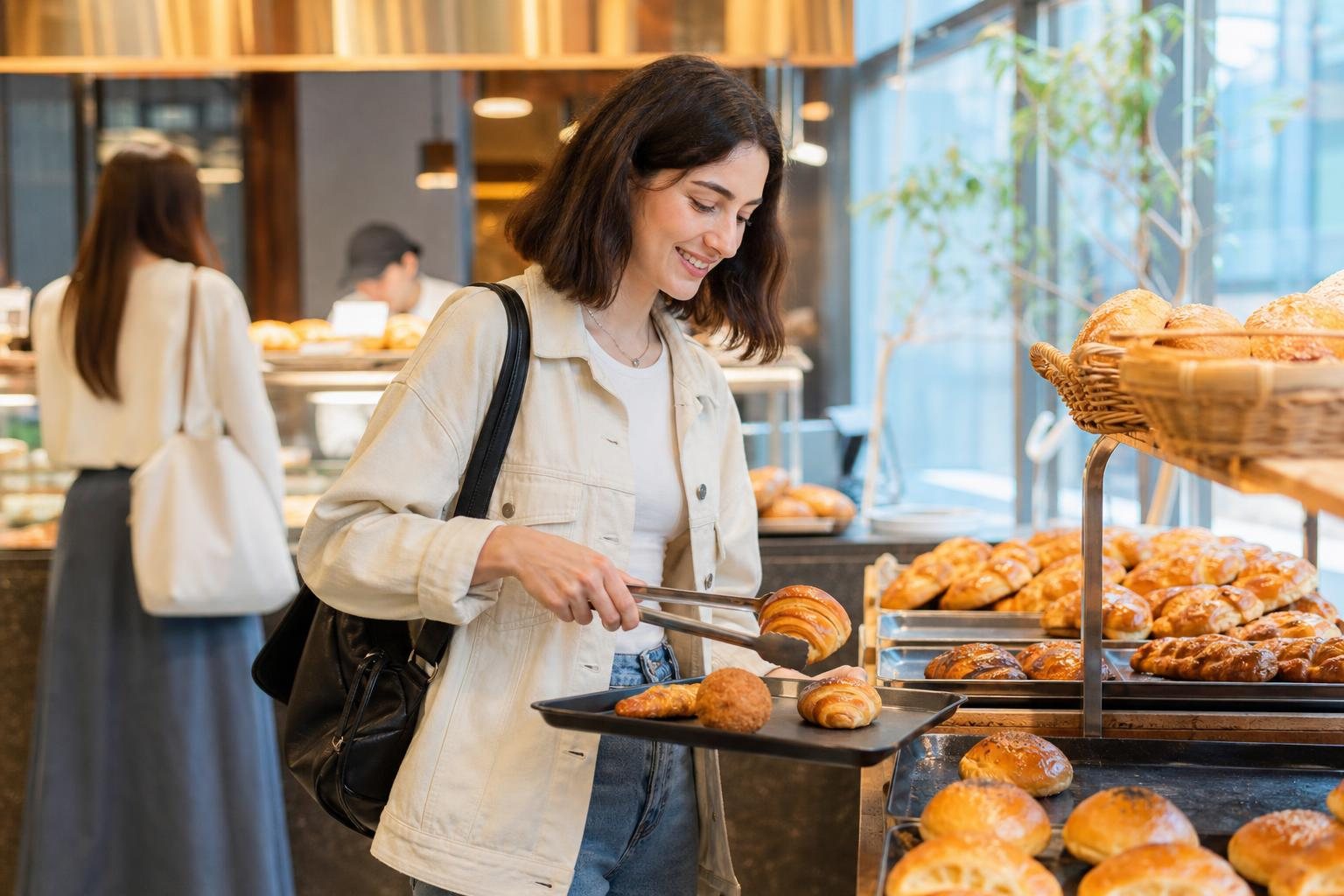
    At many Korean bakery cafés, the usual process is to take a tray and tongs, choose your bread or pastries, then bring the tray to the cashier to order drinks and pay. Drinks are often collected at a separate pickup counter, and reusable trays and dishes are commonly returned to a marked self-service station when you finish.

    The exact system is different at every café. The easiest rule is to follow the signs and the line: look for a tray station, cashier or kiosk, drink pickup area, and tray-return station before you order.

    The usual ordering flow

    1. Take a tray and tongs

    Near the entrance or bread display, you may find stacked trays, tongs, paper liners, small bags, or hand sanitizer. Take one tray and one pair of tongs, then use the tongs for unpackaged bread, pastries, cookies, or sandwiches.

    Do not handle open display items with your hands. If an item is behind glass, difficult to pick up, or individually wrapped in an awkward way, point to it and ask a staff member for help.

    2. Choose pastries before joining the payment line

    It is normal to browse the display before going to the counter. Put heavier breads on the tray first and delicate, cream-filled, glazed, or powdered items last.

    • Use the tongs for each open item.
    • Keep messy or fragile pastries separate when possible.
    • Once an item is on your tray, do not put it back on the display.
    • If you change your mind, ask the cashier whether the item can be removed or look for a designated return area.

    3. Order drinks and pay

    In many bakery cafés, you order drinks after the cashier scans the items on your tray. You may receive a receipt, order number, or vibrating pager. Keep the receipt until you have collected your drinks.

    Some cafés use a touchscreen kiosk for drink orders and payment. Others may have a staffed register, table QR ordering for additional items, or a different sequence. Check the signs rather than assuming that every bakery uses the same system.

    What to say at the counter

    You do not need perfect Korean. Pointing at a menu or display item and using a short English request is often helpful.

    “One iced Americano, please. For here.”

    Staff may ask whether you want your drink hot or iced, what size you want, whether it is for here or to go, whether you need a bag, or whether you would like an item warmed.

    • For here: you plan to eat or drink in the café.
    • To go or Takeout, please: you are leaving with the order.
    • Could you warm this up, please?
    • Can you cut this?
    • Could I have an extra plate?
    • Does this contain nuts?

    If you have a serious food allergy, do not assume an item is nut-free or free from cross-contact. Bakery kitchens may handle several allergens, and staff may not be able to guarantee separation.

    Payment and tipping

    Korea is card-friendly. The Korea Tourism Organization says major international cards can be used at most Korean stores, though carrying some Korean won or another payment option is sensible, especially outside large chains or tourist-oriented areas. VISITKOREA: Shopping in Korea

    Tipping is generally not customary in Korea. Do not add a tip unless the café presents a clear option or instruction. Visit Seoul: Etiquette

    Collecting your order

    After paying, move away from the register so the next customer can order. Look for signs such as “Pickup,” “Drinks,” “Order Pickup,” or “Self-service.” Your drink may be called by order number or drink name, or a pager may vibrate or light up.

    Pastries are often handed to you at checkout, while drinks may be collected separately. If you receive a pager, keep it with you and bring it to the pickup counter when it signals.

    Seating and cleanup

    Check seating rules before settling in

    An empty table may not always be immediately available. Check posted rules for one-drink-per-person policies, minimum orders, time limits, no-laptop zones, outside-food restrictions, or access to terraces and upper floors.

    In most cases, order first and then choose a seat. In a crowded café, one person in a group can check seating while another waits in the ordering line.

    Return trays, cups, and dishes

    Many Korean bakery cafés have a self-return station. Before leaving, look for “Return,” “Tray Return,” or “Self-service” signs.

    1. Discard leftovers and napkins in the appropriate bin, if available.
    2. Separate recycling if the bins are labeled for it.
    3. Return trays, plates, cups, and cutlery to the designated station.
    4. Follow staff instructions if the café asks customers to leave dishes at the table.

    If you cannot find the station, watch nearby customers or ask, “Where do I return this?”

    Common mistakes to avoid

    • Using your hands for open pastries: use the provided tongs.
    • Sitting down before checking the system: some cafés separate bread selection, drink ordering, payment, and pickup.
    • Not stating hot or iced: say your preference clearly.
    • Blocking the pickup counter: collect your drink, then step aside to add lids, straws, napkins, or sugar.
    • Leaving reusable trays behind: check for a return station before you leave.
    • Assuming every café works the same way: chains, large destination cafés, and small independent bakeries can use very different systems.

    Simple example

    If you want two pastries and an iced latte to enjoy inside, your visit may look like this:

    1. Take a tray and tongs.
    2. Select two pastries.
    3. Bring the tray to the cashier.
    4. Say, “One iced latte, for here, please.”
    5. Pay and keep the receipt or pager.
    6. Take your pastries to a table or wait near the pickup area.
    7. Collect the latte when your number is called or the pager vibrates.
    8. Return your tray and dishes when you finish.

    FAQ

    Do I have to buy a drink at a Korean bakery café?

    Not always. However, some cafés have a one-drink-per-person or minimum-order policy for seated customers. Read the posted rules before taking a table.

    Can I share one pastry with another person?

    Usually, yes, unless the café has a specific minimum-order policy. In a crowded café with limited seating, follow the shop’s rules and be considerate of other customers.

    Can staff heat bread or pastries?

    Often they can warm sandwiches, savory pastries, or some breads on request. Not every item is suitable for heating, so ask before paying or at the counter.

    Can I pay with a foreign credit card?

    Often yes, particularly at larger cafés and chains. The Korea Tourism Organization notes that major international cards are usable at most Korean stores, but a backup payment method or some cash is still useful. VISITKOREA: Shopping in Korea

    Should I tip café staff?

    Usually no. Tipping is not customary in Korea. Visit Seoul: Etiquette

    What if I cannot read the menu?

    Use menu photos, point to the display, or use a translation app. Keep your request simple: name the drink, say hot or iced, choose a size if needed, and say whether it is for here or to go.

    Final tip

    The most reliable approach is to copy the café’s own flow. If you see trays and tongs, use them to choose bread; then order drinks, pay, collect your order, and return reusable items as the signs direct. After one visit, the process is usually straightforward.

    Related articles

    Information current as of: 2026-08-31

    Sources and references

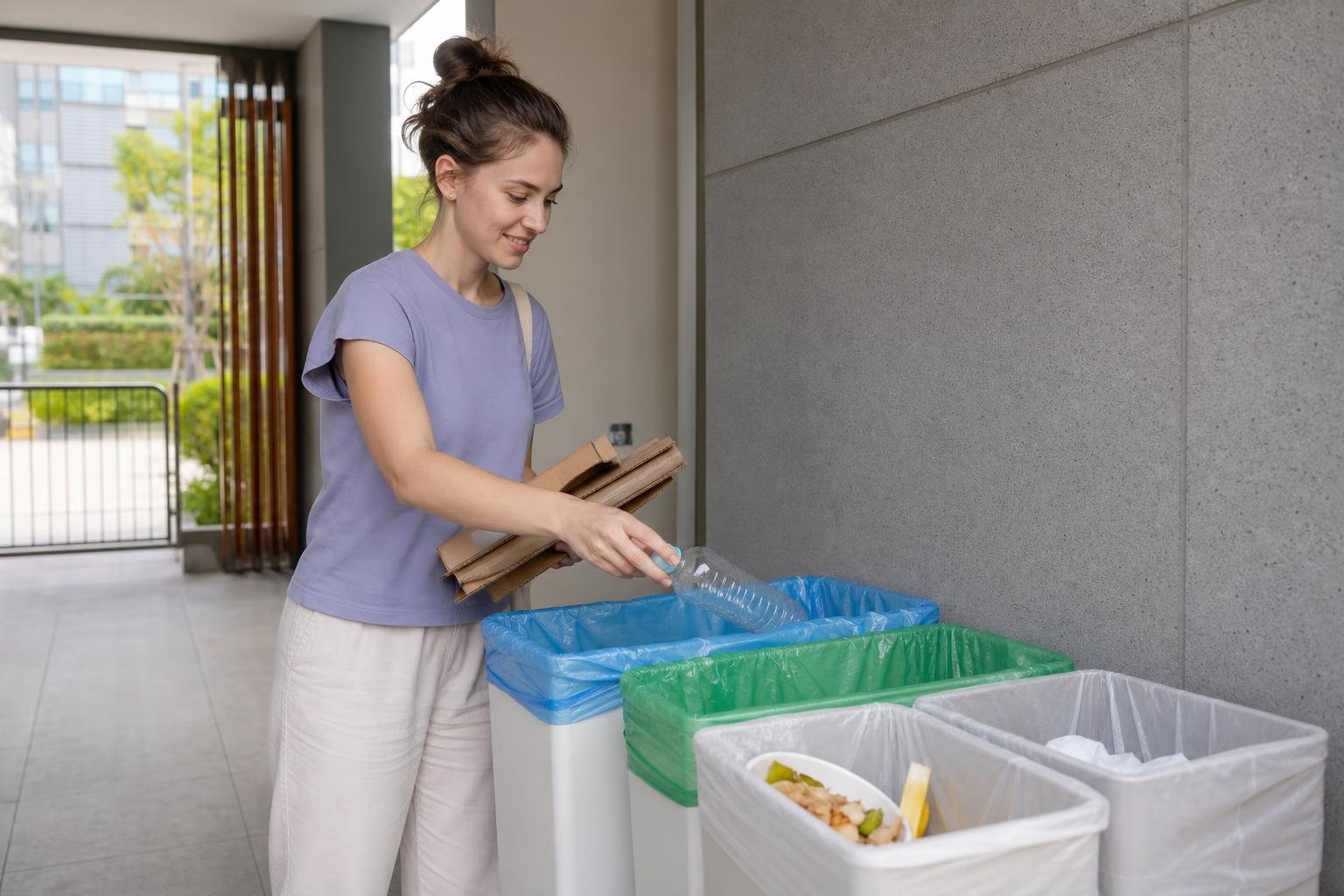
  • How to Separate Recycling in a Korean Short-Term Rental

    How to Separate Recycling in a Korean Short-Term Rental

    The safest way to sort waste in a Korean short-term rental is to follow your building’s posted instructions first. Recycling bins, food-waste systems, official garbage bags, and collection times can differ by city, district, and even building. Before you throw anything away, look for labels such as 재활용 (recyclables), 음식물쓰레기 (food waste), and 일반쓰레기 (general waste).

    As a practical rule, put clean materials into the correct recycling stream, place only accepted food scraps in the designated food-waste system, and use the required local bag for ordinary trash when applicable. If the rental has no clear directions, ask your host for a photo of the garbage area and the disposal schedule. Local governments and buildings can use different operational methods.

    Start with the four waste streams

    • Recyclables (재활용): Clean bottles, cans, paper, plastic containers, and film packaging. Empty them, rinse when practical, and sort by the bin label.
    • Food waste (음식물쓰레기): Accepted leftover food and preparation scraps, with all packaging and non-food items removed.
    • General waste (일반쓰레기): Dirty, mixed, or non-recyclable household waste. Many areas require an official volume-rate bag, called a jongnyangje bag (종량제봉투).
    • Special waste (별도수거 / 대형폐기물): Batteries, electronics, bulky items, sharp objects, and some hazardous household products. Do not put these into ordinary recycling unless there is a dedicated collection point.

    Korea separates recyclable materials and uses volume-based charging for general waste and food waste, but the exact disposal method is locally operated. The Ministry of Environment’s land and waste information explains the broader waste-management framework.

    Step 1: Find the waste area on your first day

    Do not wait until checkout morning. Find the building’s garbage room, outdoor collection point, or shared utility area as soon as you arrive.

    1. Locate the collection area. It may be on the ground floor, in a parking area, along a side alley, or in a shared room.
    2. Read the Korean labels. Do not rely on bin colors alone; colors are not fully standardized between properties.
    3. Check the food-waste method. Your building may use a shared bin, an RFID machine, food-waste bags, or a tagged container.
    4. Check disposal times. Some properties have an always-open collection area, while others limit disposal to particular days or evening hours.

    Seoul guidance notes that food-waste arrangements can differ by residence type and local schedule. See Seoul’s food-waste disposal guidance.

    Hi, could you please send me a photo of the garbage area and tell me where to put food waste, recycling, and general trash? Also, do I need a specific garbage bag or access card?

    This short message can prevent problems, especially when you are staying only a few nights.

    Step 2: Keep the wrong items out of food waste

    Food waste is often the easiest category to get wrong. Never drop a tied plastic takeaway bag full of scraps into a food-waste bin. Open the bag and put only accepted food material into the designated container or bag.

    Items usually accepted as food waste

    • Rice, noodles, bread, and ordinary leftovers
    • Soft vegetable trimmings
    • Fruit flesh and ordinary soft peels
    • Small amounts of cooked meat or fish scraps with bones removed
    • Wet leftovers after excess liquid has been drained

    Items usually treated as general waste

    • Meat and fish bones
    • Shellfish, crab, and lobster shells
    • Eggshells
    • Fruit pits and hard nut shells
    • Onion, garlic, ginger, and corn skins or husks
    • Tea bags, coffee grounds, and medicinal-herb residue
    • Toothpicks, chopsticks, foil, straws, bottle caps, plastic, paper, and other packaging

    Seoul’s multilingual food-waste guidance specifically identifies hard bones, seafood shells, eggshells, hard fruit seeds, tea grounds, and non-food materials as items that should stay out of food-waste collection. It also advises residents to drain moisture and remove impurities. Read the Seoul Metropolitan Government guidance.

    A simple delivery-food routine

    1. Scrape soft leftovers into the food-waste container.
    2. Put bones, shells, napkins, chopsticks, sauce packets, and plastic bags into general waste or the correct recycling stream.
    3. Rinse plastic containers if they are not greasy.
    4. Drain them briefly before recycling.

    Example: fried chicken delivery. Chicken bones and used napkins go into general waste. Leftover pickled radish can go into food waste after draining and removing the container. A clean drink bottle can be recycled according to its label, while a greasy plastic tray belongs in general waste if it cannot be reasonably cleaned.

    Step 3: Recycle by material, not just because it is plastic

    A plastic item is not automatically recyclable. The useful test is whether it is empty, reasonably clean, and accepted in your building’s collection stream.

    Plastic containers and trays

    • Empty all contents.
    • Rinse away food or product residue when practical.
    • Remove clearly different materials when possible, such as a metal spring in a pump bottle.
    • Put heavily greasy or contaminated items in general waste instead of contaminating an entire recycling bag.

    Seoul’s sorting guide advises emptying and cleaning plastic containers and separating attachments made from other materials where possible. See Seoul’s recycling separation guidance.

    Clear PET drink bottles

    1. Empty the bottle and rinse it if it held a sugary drink.
    2. Remove the label if possible.
    3. Crush the bottle to save space.
    4. Put the cap back on.
    5. Use a separate clear PET bin if your building provides one.

    Seoul guidance separates clear beverage PET bottles from other plastic containers and recommends removing labels, flattening bottles, and replacing caps.

    Cans and glass bottles

    • Empty and rinse cans and glass bottles.
    • Remove food scraps, cigarette butts, and easy-to-remove mixed materials.
    • Keep broken drinking glasses, ceramic dishes, mirrors, and heat-resistant glass out of the glass-bottle recycling bin.

    Ordinary cans and glass bottles are commonly recyclable once emptied and rinsed, but broken glass and ceramics follow separate local procedures.

    Paper and delivery boxes

    • Flatten cardboard boxes.
    • Remove tape, labels, plastic liners, and metal staples where possible.
    • Keep paper dry.
    • Put greasy pizza boxes, heavily food-stained paper, receipts, tissues, and waterproof-coated paper in general waste.

    Seoul’s guide instructs residents to remove non-paper materials from cardboard before flattening it, and identifies receipts and used tissues as non-recyclable paper items.

    Plastic film and bags

    Clean bread bags, snack bags, shopping bags, and other film packaging may go into a vinyl/film plastic stream (비닐류) if your building has one. If the film is greasy or has food stuck to it, use general waste instead.

    Step 4: Use the correct bag for general waste

    Many Korean neighborhoods require general household trash to be placed in an official paid volume-rate bag, commonly called a jongnyangje bag (종량제봉투). These bags are often sold at convenience stores, supermarkets, and local shops.

    Do not assume an ordinary kitchen bag is acceptable. Your building may provide communal bags, or it may require bags issued for its district. Bag design, price, and pickup schedules are local matters.

    Common general-waste items

    • Dirty tissues and paper towels
    • Food-soiled paper packaging
    • Greasy plastic containers and wrap that cannot be cleaned
    • Bones, shells, eggshells, and hard seeds
    • Disposable chopsticks and wooden skewers
    • Mixed-material items that cannot be separated
    • Small broken household items, where local instructions permit standard-bag disposal

    If you are unsure about an item, do not contaminate recycling. Use general waste only when the item is safe and small enough for that method, or check local guidance.

    Step 5: Do not leave special waste behind

    Batteries and small electronics

    Use a dedicated battery collection box where available. Do not put batteries in with cans or plastic recycling. Seoul’s guidance directs household batteries to battery-specific collection points.

    Broken glass, knives, and sharp items

    Wrap sharp fragments securely in thick paper or place them in a rigid container. Follow your building or district’s instructions, and never place loose broken glass in a glass-bottle recycling bin.

    Suitcases, bedding, appliances, and furniture

    These items can require a bulky-waste sticker, booked collection, or a designated collection point. Never leave them beside the building bins unless the host has confirmed the procedure.

    Five-minute checkout routine

    1. Empty the fridge.
    2. Separate food scraps from packaging.
    3. Drain food waste and use the building’s designated food-waste system.
    4. Rinse and dry recyclables that are easy to clean.
    5. Flatten cardboard and remove tape.
    6. Put general trash in the required municipal bag.
    7. Take batteries, electronics, and bulky items with you unless you have a confirmed disposal method.
    8. Do not leave loose bags in hallways, elevators, or outside the entrance.

    If your checkout is early and the building limits disposal times, ask the host the day before. Do not assume a cleaner or the next guest will handle unsorted waste.

    Useful Korean labels in a garbage room

    • 재활용: Recyclables
    • 일반쓰레기: General waste
    • 음식물쓰레기: Food waste
    • 종량제봉투: Official paid garbage bag
    • 페트병 / 투명 페트병: PET bottles / clear PET bottles
    • 플라스틱: Plastic containers
    • 비닐류: Plastic film or vinyl packaging
    • 캔: Cans
    • 유리병: Glass bottles
    • 종이류: Paper
    • 폐건전지: Used batteries
    • 대형폐기물: Bulky waste

    Common mistakes to avoid

    Putting all delivery packaging into recycling

    Only clean containers are likely to be recyclable. Greasy trays, sauce-covered film, used napkins, and disposable cutlery often belong in general waste.

    Treating all food-related waste as food waste

    Bones, shells, eggshells, pits, tea bags, coffee grounds, and all packaging should stay out of food-waste containers.

    Assuming every Korean building uses the same system

    Collection locations, schedules, bags, and food-waste equipment can vary. Building instructions are more important than a generic rule.

    Leaving bags beside a full bin

    Do not leave overflow bags beside collection bins. This can cause odor, pests, and collection problems. Ask the host or building manager what to do instead.

    FAQ

    Do I need to wash every recyclable item?

    No. Empty the item and remove residue that would contaminate other materials. A quick rinse is usually enough for a drink bottle or food container. If it is too greasy or difficult to clean, general waste is generally the safer option.

    Can I put a tied plastic bag of food scraps into the food-waste bin?

    Usually not. Open the bag, remove all packaging, and place only accepted food waste in the designated container or bag. Plastic bags and other foreign objects can interfere with food-waste processing.

    What if my rental does not have a food-waste bin?

    Do not improvise by putting food scraps in a public recycling bin. Ask the host whether the building uses food-waste bags, a shared container, or a nearby designated collection point.

    What should I do with old cosmetics, medicine, or cleaning chemicals?

    Do not assume they belong in recycling, food waste, or a standard garbage bag. Check local disposal instructions or ask the host. The Ministry of Environment provides location-based household waste separation information for many item types. See the official Ministry of Environment release.

    Can I take recycling out whenever I want?

    Only if the building’s recycling area is always open. Smaller residential buildings may have collection days or evening-only rules. Check posted notices or confirm with your host.

    Final rule: building instructions come first

    Use this guide to sort items by material, but treat your rental’s instructions as the final rule for where and when to dispose of them. For uncertain items, use the official household waste guidance and local information rather than guessing. The Ministry of Environment’s household waste separation resource provides location-based disposal guidance.

    Related articles

    Information current as of: 2026-08-30

    Sources and references

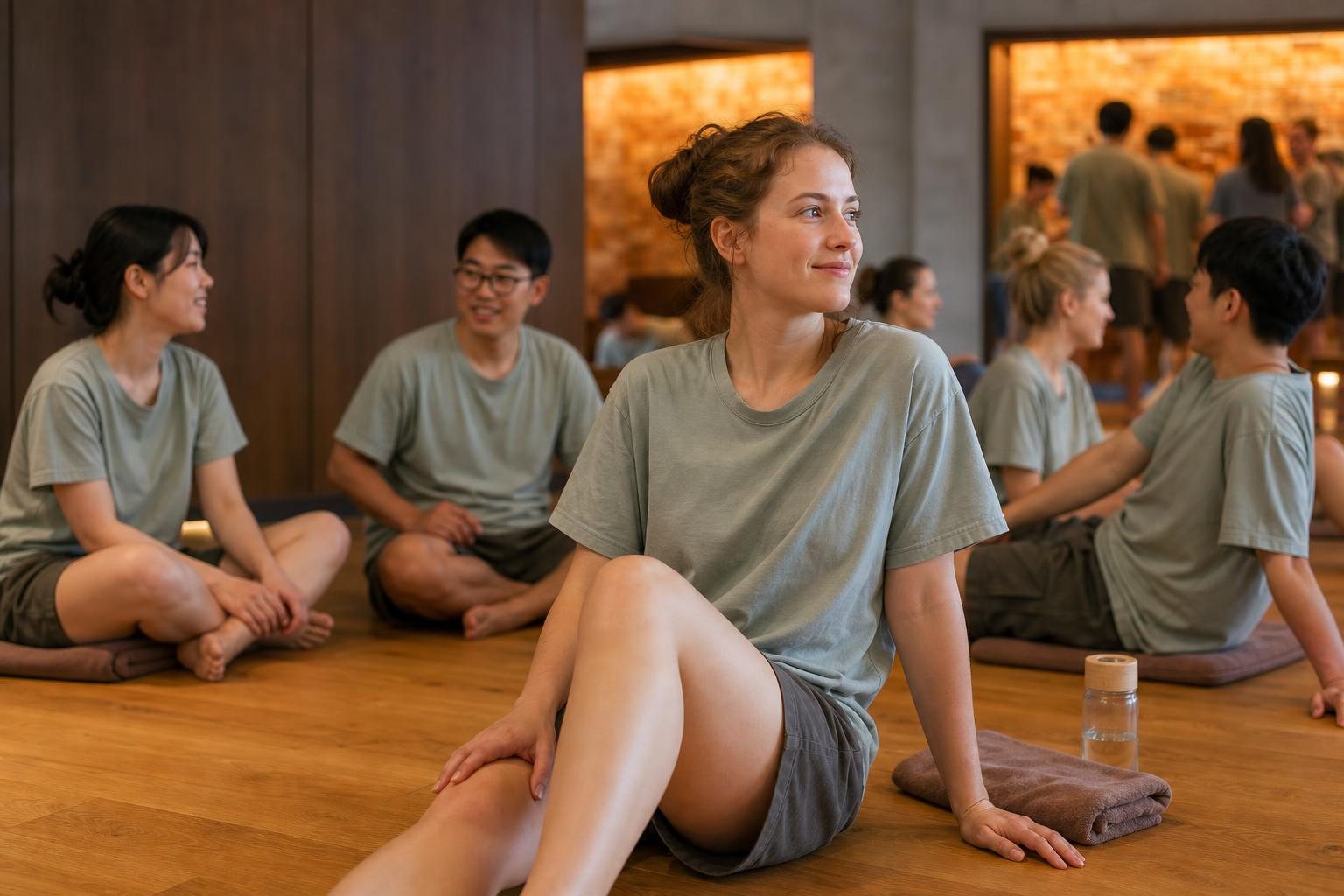
  • Korean Jjimjilbang First Visit Guide: Nudity, Etiquette, and What to Expect

    Korean Jjimjilbang First Visit Guide: Nudity, Etiquette, and What to Expect

    A Korean jjimjilbang is more than a sauna: it commonly includes a gender-separated wet bath area, plus clothed shared lounges, heated rooms, snacks, and rest spaces. The most important first-time rule is simple: in the wet bathing area, guests generally do not wear swimsuits and should wash thoroughly before entering a shared pool.

    After that, the routine is straightforward: check in, store your shoes and belongings, use the bath area if you wish, change into the clothing provided for the shared jjimjilbang area, and pay for any extras before leaving. Exact prices, hours, overnight access, tattoo rules, and amenities vary by venue, so confirm them directly before you go.

    What a jjimjilbang is

    A typical jjimjilbang has two distinct areas:

    • Bathhouse and changing area: Gender-separated spaces with showers, hot and cold pools, and sometimes steam or sauna rooms. This is normally the nude area.
    • Shared jjimjilbang area: A mixed-gender lounge and heated-room area where guests wear the T-shirt-and-shorts set supplied by the venue.

    The Korea Tourism Organization describes jjimjilbangs as facilities where visitors receive a locker key and usually sauna clothing, then use communal relaxation spaces and sauna rooms. Facilities and available amenities can differ substantially by location. Korea Tourism Organization guidance

    Some places are large, all-day complexes with cafeterias and rest areas. Others are neighborhood bathhouses focused mainly on washing and soaking. Korean law regulates businesses that provide water-bathing and heat-based sweating facilities, including hygiene and safety management requirements; individual business policies still vary. National Law Information Center

    Your first jjimjilbang visit: step by step

    1. Check in and confirm what admission includes

    Tell the front desk whether you want bathhouse access only, full jjimjilbang access, or an optional service such as a body scrub. Depending on the venue, you may receive a shoe-locker key, a clothing-locker key or wristband, towels, and a uniform.

    Before paying, ask these practical questions:

    • What is the last admission time?
    • What time must guests leave?
    • Is the shared sauna and lounge area included?
    • Does the key or wristband record food and service purchases?
    • Are there extra charges for longer stays or overnight use?

    Older Korea Tourism Organization guidance notes that long stays may involve an additional fee and that blankets may not be provided even where sleeping rooms exist. Treat this as a reason to check the venue’s current rules, not as a universal policy. Korea Tourism Organization guidance

    2. Store shoes, valuables, and your phone

    Many facilities use a shoe locker near the entrance and a separate clothing locker in the gender-separated changing area. Keep the key secure on your wrist.

    Leave phones, cameras, wallets, jewelry, and other valuables in your locker. Never take photos or record video in changing rooms or bath areas.

    3. Know the nudity rule

    In a traditional Korean wet bath area, guests are normally naked. The provided uniform is for the clothed, shared jjimjilbang area, not for shower stations or soaking pools.

    If communal nudity makes you uncomfortable, ask before paying whether you can access only the clothed lounge and heated-room section. Do not assume that a swimsuit will be accepted in the wet bath area.

    4. Wash before using a shared pool

    This is the central etiquette rule: wash your body before entering a communal bath.

    1. Rinse your body at a shower station.
    2. Use soap and shampoo.
    3. Rinse away all soap completely.
    4. Enter a shared bath or pool only after washing.

    Showering before entering shared hot water helps reduce contamination. The U.S. Centers for Disease Control and Prevention also advises guests not to swallow hot-tub water and to stay out of communal hot water if they have diarrhea. CDC: Staying Healthy in Hot Tubs

    5. Start slowly in pools and hot rooms

    Your first visit is not an endurance challenge. Begin with a short soak or a lower-temperature room, cool down, drink water, and decide whether you feel comfortable continuing.

    Korea Tourism Organization materials have described sauna rooms at roughly 40°C to 80°C, but actual temperatures and room types depend on the facility. Korea Tourism Organization guidance

    Leave immediately if you feel dizzy, nauseated, weak, short of breath, or unusually uncomfortable.

    6. Change into the provided clothes for the shared area

    When you finish in the bath area, dry off and put on the T-shirt and shorts supplied by the venue. You can then use the common lounges, snack area, rest spaces, and shared heated rooms.

    This is usually the part of the facility that couples and mixed-gender groups can enjoy together. Bathing and changing spaces remain gender-separated. Korea Tourism Organization guidance

    7. Settle extra charges before leaving

    Food, drinks, massages, body scrubs, and other treatments may cost extra. Some venues charge these purchases to your wristband or locker key, while others require payment when ordering.

    Before leaving, return any rented items if required, settle your balance, collect your shoes, and check your locker carefully.

    Etiquette that prevents awkward moments

    • Keep the bath area private and quiet. Avoid loud conversation, video calls, and staring at other guests.
    • Keep food out of wet areas. Eat and drink only where the venue permits it.
    • Do not spread belongings across sleeping spaces. Follow quiet-hour, gender-specific room, and rest-area signs.
    • Ask before booking a body scrub. It can be vigorous, is typically done in the nude bathing area, and may require a reservation or separate payment.

    Roasted eggs and sweet rice drink are classic jjimjilbang snacks, although menus vary. Larger venues may also serve full meals and other snacks. VisitKorea: Jjimjilbang food and culture

    What to bring

    Helpful items

    • A payment card or a small amount of cash
    • A hair tie, brush, and personal skincare items
    • A glasses case or contact-lens case, if needed
    • A small bag for wet items after your visit

    Do not assume these are included

    Shampoo, conditioner, body wash, razors, larger towels, and blankets may be sold or rented separately rather than included with admission. Korea Tourism Organization guidance notes that bath products may not be provided, though single-use products may be available for purchase. Korea Tourism Organization guidance

    Best left in the locker

    • Phone and camera
    • Jewelry and valuables
    • Large luggage

    If you have luggage, ask whether storage is available. Do not leave suitcases in walkways or changing-room areas.

    Health and safety precautions

    A jjimjilbang is for relaxation, not medical treatment. Do not use sauna or hot-water bathing as a substitute for medical care or as a way to treat illness.

    • Avoid alcohol before and during hot-water or sauna use. The CDC specifically advises against drinking alcohol before or while using hot tubs.
    • Consider speaking with a qualified healthcare professional before using hot rooms if you are pregnant; have heart, blood-pressure, kidney, breathing, or heat-tolerance concerns; take medication that affects hydration or body temperature; or are recovering from illness.
    • Skip shared pools and hot rooms if you have diarrhea, a fever, an open wound, or a contagious skin condition.
    • Drink water, avoid swallowing pool water, and leave if you feel unwell or the facility appears poorly maintained.

    Heat exposure and dehydration can increase health risks, particularly for people with certain chronic conditions. CDC: About Heat and Your Health CDC: Staying Healthy in Hot Tubs

    Useful Korean phrases

    • Jjimjilbang juseyo. — Jjimjilbang, please.
    • Mogyokman halgeyo. — Bath only, please.
    • Jjimjilbang kkaji dwaeyo? — Does this include the jjimjilbang area?
    • Kadeu dwaeyo? — Can I pay by card?
    • Yeong-eo haneun bun isseoyo? — Is there someone who speaks English?
    • Igeo eolmayeyo? — How much is this?
    • Sesin eotteoke yeyakhaeyo? — How do I book a body scrub?

    Showing these phrases on your phone is fine at check-in, but keep your phone out of the wet bathing area.

    Frequently asked questions

    Do I need to speak Korean?

    No. Some larger facilities, especially in tourist areas, may have English signs or staff who can communicate basic information. A translation app can help with questions about fees, tattoo policies, treatments, and overnight access.

    Can couples go together?

    Usually yes in clothed common lounges and heated rooms, if the facility has them. Couples cannot use the gender-separated bath and locker areas together.

    Do I wear underwear under the jjimjilbang uniform?

    Practices vary. The essential distinction is that the uniform is for clothed shared spaces, while the wet bath area follows the venue’s nude-bathing custom. Follow posted instructions or ask staff discreetly if unsure.

    Are tattoos allowed?

    There is no single nationwide answer. A facility may allow tattoos, restrict them, or have its own conditions. Contact the specific venue before visiting instead of relying on older travel posts.

    Can I sleep overnight at a jjimjilbang?

    Possibly, but never assume it. Some venues do not operate overnight, restrict late entry, limit sleeping areas, or charge extra. Confirm the rule directly with the facility on the day you plan to visit.

    Is a jjimjilbang suitable for children?

    Venue policies vary by age, supervision requirements, and access to particular rooms. A parent or guardian should check with the facility before visiting.

    The simple rule to remember

    Shower first → use the bath area nude if you choose → change into the provided uniform → enjoy the shared sauna and lounge areas → pay for extras before leaving.

    If you are uncertain about a rule, ask at the front desk before entering. A quick question is much better than making an uncomfortable assumption.

    Related articles

    Information current as of: 2026-08-28

    Sources and references

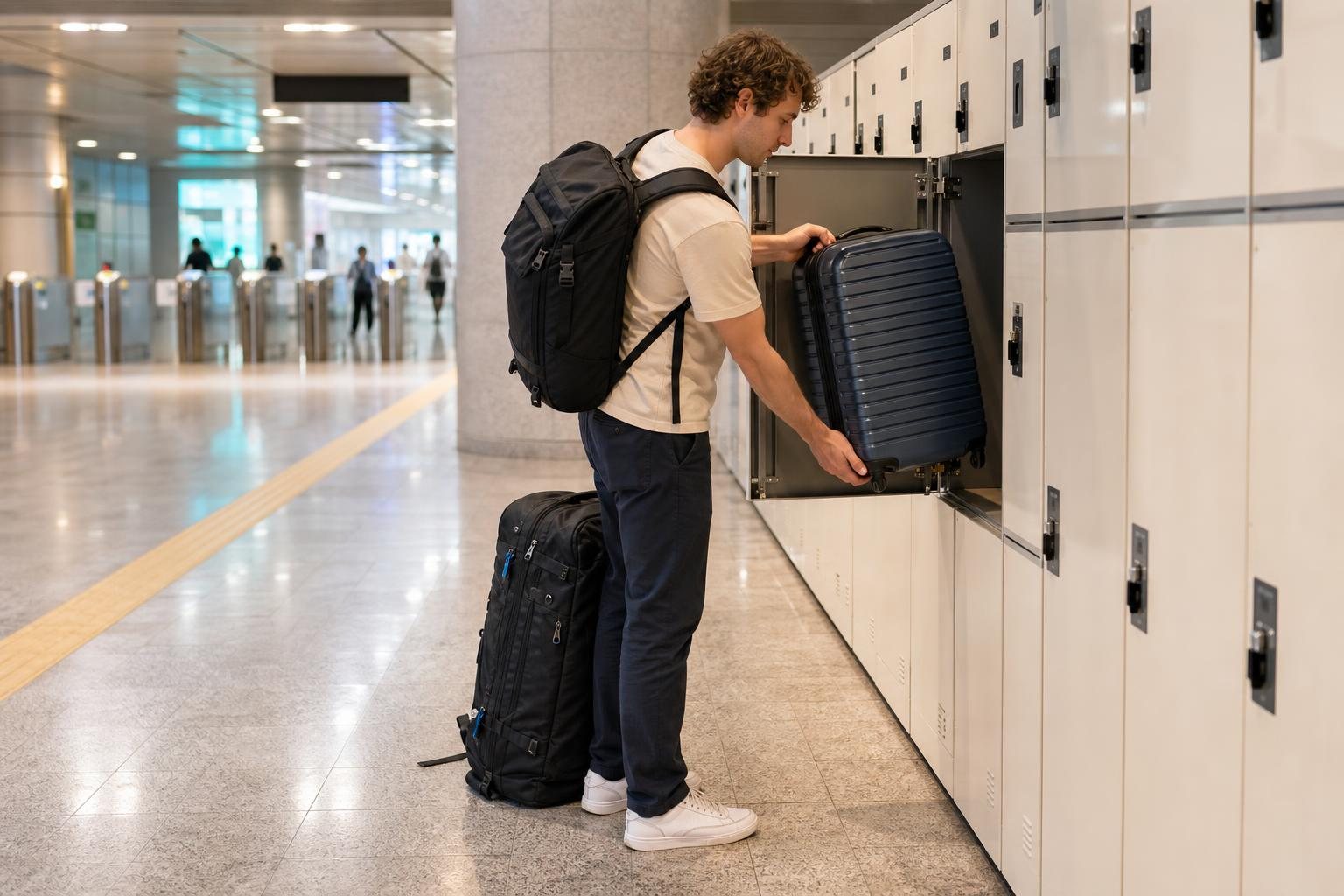
  • How to Use Luggage Lockers at Korean Subway and Train Stations

    How to Use Luggage Lockers at Korean Subway and Train Stations

    Korean station “coin lockers” are usually electronic self-service luggage lockers rather than old machines that accept coins only. At a subway or train station, choose an empty locker, follow the screen instructions, pay using an accepted method, close the door, and keep the locker number and retrieval details.

    The key is to check the locker’s location, size, payment options, and pickup hours before you store your bag. Rules and prices vary by station and operator, so do not assume that cash, a foreign credit card, a transport card, or a particular app will work everywhere.

    Find a locker at the right place

    Look for signs such as 물품보관함 (mulpum bogwanham, luggage/storage locker), 보관함 (bogwanham, locker), or 짐보관 (jim bogwan, luggage storage). Locker banks may be near exits, concourses, transfer passages, waiting areas, or ticket gates.

    At Korail and KTX stations, check the station facilities information or ask at the information desk. Korail station pages list locker facilities at selected stations, but the exact location and availability are station-specific. Korail station information

    Choose the correct side of the gates

    • If you will leave the station to sightsee, a locker in the public concourse or near an exit is usually easiest.
    • If a locker is inside the paid subway area, you may need to pass through the gates again to collect your luggage.
    • At a large station, take a photo of the locker bank and a nearby exit sign. Stations can have several buildings, concourses, and exits.

    This prevents a common mistake: leaving a bag in a locker that is inconvenient or impossible to reach when you return.

    How to use a Korean station locker

    1. Check the size. Open the door and make sure your bag fits without forcing it. A rigid suitcase may need more room than its label suggests.
    2. Start on the touchscreen. Select an option such as Store, Deposit, or Keep Luggage. The wording differs by operator.
    3. Choose a locker and review the fee. Confirm the starting period, extra-time charges, maximum storage period, and payment methods shown on that machine.
    4. Pay using an accepted method. Depending on the operator, options may include a transportation card, Korean payment card, cash, QR-based payment, or another displayed method.
    5. Place your belongings inside and close the door firmly.
    6. Save the retrieval information immediately. This may be a locker number, PIN, receipt code, QR code, transportation card, or app record.

    Many lockers have multilingual instructions, but language and payment support are not identical at every location. The Korea Tourism Organization notes that lockers are common at subway stations and that the available payment and operating methods vary. VISITKOREA subway guide

    Do not rely on memory alone. Keep the receipt until you have collected your bag, and take a photo of the locker area if possible.

    Choose a locker size that fits

    For Seoul’s T-Locker network, Seoul publishes the following approximate internal dimensions. Other locker operators may use different sizes.

    • Small: about 50 × 30 × 60 cm; suitable for a daypack, handbag, or small shopping bags.
    • Medium: about 50 × 45 × 60 cm; may suit a cabin-size bag or compact suitcase, depending on its shape.
    • Large: about 50 × 90 × 60 cm; intended for a larger suitcase or several soft bags.

    If you have a rigid 24–28 inch suitcase, look for a large locker first. Never force a door shut. If the bag does not fit, try another locker bank or a staffed luggage-storage service. Seoul Metropolitan Government: Subway Storage Facilities

    Prices and access hours: check the machine first

    There is no nationwide locker price in Korea. Charges depend on the city, station, provider, locker size, storage duration, and sometimes the day of the week.

    As a Seoul reference, the published T-Locker service uses a four-hour base period, followed by hourly charges. The Seoul Metropolitan Government page lists weekday base prices of ₩2,200 for small, ₩3,300 for medium, and ₩4,400 for large lockers; it also lists higher weekend base prices and size-based hourly charges. These figures apply to the listed T-Locker service only, not automatically to lockers at every Korean station. Confirm the displayed price before paying.

    Seoul’s published T-Locker information also lists access from 5:00 AM to midnight, including weekends and holidays. Storage and retrieval are unavailable outside those access hours. Other operators can have different rules, so check the notice on the locker itself. Check Seoul’s published T-Locker details

    Can you leave luggage overnight?

    Possibly, but do not assume it is practical. Check the maximum storage period, overnight charges, and whether the station or locker area will be open when you need your bag. If you need early-morning or late-night collection, a locker with restricted station access may not be suitable.

    Using T-Locker in Seoul

    T-Locker is a major Seoul subway locker network. Seoul’s published guide describes small, medium, and large lockers and says its app can be used to check availability. However, the city notes that the app is currently available only in Korean.

    • Use the app only as a helpful availability check, not as your only plan.
    • Read the physical locker’s instructions, fee notice, and retrieval rules before payment.
    • During holidays, weekends, concert days, and hotel check-in or check-out times, prepare a backup station or luggage-storage option.

    When a staffed luggage service is a better choice

    A self-service locker is usually best for a few hours and one manageable bag. Consider a staffed service if you have oversized luggage, several bags, a bag that will not fit, or a need for same-day delivery.

    Seoul’s published guide identifies T-Luggage as a staffed storage and same-day delivery service at selected locations, including Seoul Station, Hongik University Station, Jamsil Station, Myeong-dong Station, Gimpo International Airport Station, and Jongno 3-ga Station. Fees, service locations, desk hours, and delivery rules can change, so verify the current details before visiting. Seoul storage and T-Luggage information

    What not to put in a locker

    A station locker is convenient, but it is not appropriate for irreplaceable or essential items. Keep these with you:

    • Passport, residence card, and travel documents
    • Cash, jewelry, and other valuables
    • Laptop, camera, and expensive electronics
    • Prescription medicine needed that day
    • Perishable food
    • Flammable, explosive, toxic, illegal, or dangerous items

    Seoul’s T-Locker guidance states that compensation for damage caused by company error is limited under its terms, up to ₩100,000 subject to confirmation. That is another reason not to store essential documents or high-value belongings. Seoul T-Locker terms summary

    Common problems and practical solutions

    All large lockers are full

    1. Check another locker bank in the same station.
    2. Check the opposite side of the station or a different exit.
    3. Try a nearby connected subway station.
    4. Ask your hotel whether it can hold luggage.
    5. Use a staffed luggage service where available.

    Never leave bags unattended beside a locker bank.

    You forgot the locker number or PIN

    Check your receipt, photos, screenshots, card transaction history, and any locker-app notification. Then contact the operator using the information displayed on the locker machine. Seoul lists T-Locker customer contact numbers as +82-2-1877-1265 and +82-2-1670-4302, with Korean-language support listed from 6:00 AM to midnight. Assistance can take time, and user-caused problems may involve a service fee. Seoul locker customer-support information

    Your rental time has expired

    Return as soon as possible. Extra charges may apply, and unclaimed items can be handled under the operator’s terms. Seoul states that expired T-Locker storage may be kept for up to one month and may then be donated or discarded if no extension is requested. Seoul storage facility terms

    The screen is only in Korean

    Look for a language button marked English, EN, or 언어. If no English option is available, use a camera translation app carefully and double-check the price, locker number, and collection instructions. Station staff may be able to direct you to another locker area. For multilingual travel assistance, the Korea Travel Hotline is 1330 within Korea or +82-2-1330 from abroad. VISITKOREA travel assistance information

    FAQ

    Are these really coin lockers?

    Usually not in the traditional sense. “Coin locker” remains a common phrase, but many Korean station lockers are electronic. Accepted payments and retrieval methods vary by operator. VISITKOREA subway guide

    Can I pay with a foreign credit card?

    Do not assume that you can. Card acceptance depends on the machine and payment network. Check the payment icons before you begin, and carry a transportation card or another backup payment option where possible.

    Are lockers available at every station?

    No. Lockers are common at major subway and rail stations, but they are not guaranteed at every station. Large lockers can be limited, and rail-station facilities should be checked station by station. VISITKOREA subway information Korail station facilities

    Can I store my passport or laptop?

    You may be able to place them in a locker physically, but you should not. Keep identification, money, essential medication, travel documents, and high-value electronics with you.

    Quick checklist before you walk away

    • Confirm that the locker is on the correct side of the ticket gates.
    • Make sure the door is fully locked.
    • Keep your passport, wallet, medicine, and valuable electronics with you.
    • Save the locker number, receipt, PIN, card, QR code, or app record.
    • Check the pickup deadline and station access hours.
    • Photograph the locker bank location and a nearby exit sign.

    Related articles

    Information current as of: 2026-08-29

    Sources and references

  • How to Use a Korean Café Kiosk Without Speaking Korean

    How to Use a Korean Café Kiosk Without Speaking Korean

    You can order at most Korean self-service café kiosks without speaking Korean. The simplest routine is: choose English if it is available, select a drink, choose hot or iced, keep default options if unsure, choose dine-in or takeaway, pay, and save your order number.

    If the screen is only in Korean, product photos and a few key words are usually enough. Before paying, check the drink, temperature, quantity, and whether you selected 매장 (for here) or 포장 (to go).

    What kind of café kiosk will you find?

    This guide is for cafés where you order and pay on a touchscreen instead of speaking to a cashier. The final confirmation screen on the kiosk is the best guide because menus, languages, payment methods, and pickup procedures vary by café.

    • Staffed café with a kiosk: Staff make the drink after you pay. Wait for an order number, drink name, or pickup call.
    • Unmanned or robot café: Order on the kiosk and collect the drink from a pickup area or machine. Staff assistance may be limited.

    The quickest 7-step ordering routine

    1. Check for English first

    Look around the corners or lower edge of the screen for English, EN, a globe icon, or 언어 (language). Select English immediately if it is offered. Not every kiosk has it.

    2. Choose a drink category

    Common categories include coffee, tea, smoothies, ade, desserts, and bakery items. For a first order, choose a familiar drink with a clear photo, such as an Americano, café latte, or iced tea.

    • 커피: coffee
    • 음료: beverages
    • 티 / 차: tea
    • 에이드: sparkling fruit drink
    • 스무디: smoothie
    • 디카페인: decaf
    • 디저트: dessert
    • 베이커리: bakery

    3. Choose hot or iced carefully

    Temperature is one of the easiest details to miss. 아이스 means iced; 따뜻한 or 핫 means hot. In many cafés, hot and iced versions are separate products and may have different sizes, prices, or options.

    • For cold coffee, choose 아이스 아메리카노.
    • For hot coffee, choose 아메리카노 or select Hot.

    4. Keep customization simple unless you need it

    The next screen may offer size, sweetness, milk, espresso shots, syrup, whipped cream, or ice choices. If you are unsure, leave the default selection; it is usually the standard recipe.

    • 사이즈: size
    • 샷 추가: add espresso shot
    • 시럽 추가: add syrup
    • 휘핑크림: whipped cream
    • 우유 변경: change milk
    • 얼음 적게: less ice
    • 당도: sweetness level

    Important: 얼음 적게 means less ice, but it does not necessarily mean more drink. Some cafés keep the recipe amount the same and leave extra space in the cup.

    5. Select for here or to go

    Choose 매장 or 매장 이용 if you will stay in the café. Choose 포장 or 테이크아웃 if you will take the drink away. Some kiosks use HERE and TAKE OUT even if the rest of the screen is in Korean.

    6. Review the cart before payment

    Look for 장바구니 (cart), 주문내역 (order details), 수량 (quantity), 총 금액 (total), 주문하기 (place order), and 결제하기 (pay).

    1. Confirm the drink name.
    2. Confirm hot or iced.
    3. Confirm the quantity.
    4. Confirm dine-in or takeaway.
    5. Check that no extra shot, syrup, or size upgrade was added accidentally.

    7. Pay and wait for pickup

    At payment, you may see 카드 결제 (card payment), 현금 결제 (cash payment), 간편결제 (mobile/easy payment), 영수증 (receipt), and 주문번호 (order number).

    Major international cards are broadly accepted in Korea, but a particular café or kiosk may have its own restrictions. Bring a backup payment method and some cash rather than relying on one card alone. VISITKOREA: Shopping in Korea

    • Follow the screen’s instruction to insert, tap, or remove your card.
    • Keep the receipt or photograph the confirmation screen if appropriate.
    • Note the order number and check the pickup counter, display board, or kiosk screen.

    Useful Korean words for café kiosks

    • 아메리카노: Americano
    • 카페라떼: café latte
    • 바닐라 라떼: vanilla latte
    • 아이스: iced
    • 디카페인: decaf
    • 포장: to go
    • 매장: for here
    • 결제: payment
    • 주문번호: order number
    • 영수증: receipt
    • 픽업: pickup
    • 취소: cancel

    Example: one iced Americano to go

    1. Tap 커피 (coffee).
    2. Tap 아이스 아메리카노 (iced Americano).
    3. Leave size and ice at the default setting unless you have a preference.
    4. Tap 포장 (to go).
    5. Make sure the quantity is 1.
    6. Tap 결제하기 (pay).
    7. Choose card payment and follow the card-reader instructions.
    8. Check your receipt for 주문번호 and wait at the pickup area.

    If there is no English option

    Use photos, icons, and prices

    Most menu tiles show a product photo, price, and sometimes a hot or iced icon. Choose a familiar-looking item first. The following option screen may have clearer pictures than the main menu.

    Translate before you reach the front of the line

    If you use a translation app, step aside first, translate the key menu choices, then return to the kiosk. Avoid trying to translate every screen while people are waiting behind you.

    Ask for help in the simplest way

    If staff are present, show this sentence on your phone: “Could you help me order one iced Americano to go?”

    You can also point to the screen and say 아이스 아메리카노 하나요, meaning “One iced Americano, please.” Pointing to the item is completely acceptable.

    Common mistakes and what to do

    Wrong temperature

    Check for 아이스, ICE, HOT, or a cup image with ice before payment. Hot and iced drinks may be listed as separate items.

    Wrong dine-in or takeaway choice

    If you selected 매장 when you meant 포장, show your receipt to a staff member as soon as possible. It is generally easier to correct an order before preparation starts.

    Unexpected extras or a higher total

    Review the final order details. Options such as extra shots, syrup, whipped cream, and larger sizes can increase the price.

    Card payment fails

    Do not repeatedly tap the card after an error. Check whether the machine is asking you to insert, tap, remove, or complete a PIN or signature step. If it still fails, try another payment method or ask staff whether cash is accepted. Do not assume every kiosk accepts cash or every foreign-issued card.

    You cannot find your drink

    Check the receipt number, pickup shelf, electronic display, counter, and order-complete screen. If staff are available, showing the receipt is usually easier than explaining the full order.

    Accessibility and staff support

    Korea has introduced requirements intended to improve kiosk accessibility, including accessible kiosk installation and audio location guidance, with some alternative support methods described for certain smaller operators and devices. Because implementation details and effective dates can change, check the current official guidance when accessibility support is essential. Korean Government Policy Briefing: Accessible unmanned information terminals

    If the screen is difficult to use because of vision, hearing, mobility, language, or interface barriers, look for a call bell or staff-call button, ask for a printed menu, or show the desired item on your phone. The Korea Consumer Agency notes that complex kiosk processes and hard-to-find next buttons can create usability difficulties. Korea Consumer Agency kiosk information

    Frequently asked questions

    Can I use an overseas Visa or Mastercard?

    Often, yes. Major international cards are broadly accepted in Korea, but acceptance can vary by café, card network, kiosk, and merchant setup. Carry a backup payment method. VISITKOREA: Shopping in Korea

    Do I need a Korean phone number?

    Usually not for a normal walk-in kiosk order paid by card. Loyalty points, app promotions, membership functions, or digital receipt services may require one, so skip those options if you do not need them.

    Can I pay with cash?

    Possibly, but do not assume it. A kiosk may be card-only even when a café has a staffed counter. Check the payment screen or ask staff before relying on cash.

    Do I need to tip?

    A separate tip is not normally expected for a standard café kiosk order. Pay the displayed amount unless the kiosk clearly shows an optional additional charge.

    What if I ordered the wrong drink?

    Ask for help immediately and show the receipt. Whether an order can be cancelled, refunded, or remade depends on the café’s policy and whether preparation has started.

    Is takeout the same as 포장?

    Yes. On Korean café kiosks, 포장 generally means takeaway or to go.

    Final check before you tap pay

    • Correct drink?
    • Hot or iced?
    • Correct size and options?
    • No accidental extras?
    • 매장 (for here) or 포장 (to go)?
    • Correct quantity?
    • Can you see the final total?
    • Did you save the receipt or order number?

    If all of these are clear, you are ready to order without speaking Korean.

    Related articles

    Information current as of: 2026-08-27

    Sources and references

  • How to Use a Korean PC Bang: Guest Seats, Payment, Games, Food, and Safe Logout

    How to Use a Korean PC Bang: Guest Seats, Payment, Games, Food, and Safe Logout

    A visitor can often use a Korean PC bang without becoming a regular member, but each shop has its own rules for guest access, payment, seating, food orders, and time extensions. The most reliable approach is to go to the counter first, ask for a guest or one-time seat, confirm the price and payment method, and use only your own accounts.

    For a safe visit, do not assume that every PC bang accepts overseas cards, cash, late-night customers, or every game account. Before leaving, log out of every game launcher and website, remove any downloaded files, and make sure no browser has saved your password.

    This guide reflects official Korean sources cited below and is written for visitors using a public PC bang computer in 2026.

    What to Expect at a Korean PC Bang

    A PC bang is a public computer gaming café with numbered computers, fast internet, headsets, and a counter or kiosk for purchasing seat time. Many shops also sell meals, snacks, and drinks.

    Some locations operate late or may be open around the clock, but operating hours are decided by each business. Do not assume that every PC bang is open 24 hours or that all seats, packages, and payment methods work the same way.

    What to confirm before you pay

    • Whether the shop offers a guest, visitor, or one-time session.
    • Your seat number and whether it is a standard or premium seat.
    • The amount of time you are buying and the total price.
    • Whether you can add time later and what happens when time expires.
    • Whether the shop accepts your overseas-issued card or cash.

    Step 1: Ask for a Guest or Non-Member Seat

    If you are unfamiliar with the system, go to the counter before taking a seat. Explain that you are visiting Korea and want to use a computer temporarily.

    “Hi, can I use a computer as a guest? I do not have a Korean phone number or membership account.”

    The shop may activate a temporary seat after payment, give you a seat number and login code, or direct you to a kiosk. Some shops may offer simple membership registration instead. Ask what information is required before entering any personal details.

    If a system requires a Korean mobile number or verification that you do not have, ask whether a guest session is available. If it is not, choosing another PC bang is safer than entering inaccurate information or accepting a registration process you do not understand.

    Personal-information caution

    For a short session, provide only the information the shop actually needs. Do not enter passport details, card details, or account passwords into unfamiliar screens. Use your credentials only on the official game launcher or website you intend to use.

    Step 2: Pick a Seat and Confirm the Price

    Confirm the seat number, purchased time, total price, and expiry procedure before paying. Prices can vary by neighborhood, time of day, computer specifications, promotions, seat type, and each shop’s policy.

    Premium areas with larger monitors, reclining chairs, private booths, or higher-spec computers may cost more than standard seats. A price from another branch, an old video, or an online post may not apply to the shop in front of you.

    Useful questions to ask

    • “How much is one hour?”
    • “Is there a minimum time?”
    • “Can I add more time later?”
    • “Does this seat cost extra?”
    • “Will the computer log out automatically when my time ends?”

    Step 3: Pay With an Overseas Card or Korean Won Cash

    Card payment is common in Korea, and the Korea Tourism Organization notes that international cards are widely used. However, it also advises travelers to check availability because individual merchants may not support every card type or service. Korea Tourism Organization: Currency and payment information

    Bring both an international card enabled for overseas use and a modest amount of Korean won cash. Korean won is Korea’s official currency; banknotes include ₩1,000, ₩5,000, ₩10,000, and ₩50,000. Korea Tourism Organization: Currency information

    If your card is declined

    1. Ask whether the terminal accepts overseas-issued cards.
    2. Ask whether staff can process payment at the counter rather than through the kiosk.
    3. Ask whether cash is accepted.
    4. If neither option works, try another PC bang.

    Do not repeatedly retry a failed payment terminal. Some shop systems are designed primarily for domestic cards, Korean mobile-payment apps, or local membership systems. This does not mean all PC bangs reject foreign visitors, but it is a reason to confirm payment before activating a seat.

    Step 4: Log In to Games Safely

    After your seat is active, you may see a shop-management screen, a Windows desktop, or installed game launchers. Take a moment to check what is open before you sign in.

    Use only your own account

    1. Open the official launcher or official website for the game or service.
    2. Check that the sign-in page is legitimate.
    3. Enter your credentials manually.
    4. Decline “remember me,” “stay signed in,” and automatic-login options.
    5. Do not allow the browser to save your password.

    This applies to Steam, Riot Client, Battle.net, Epic Games, Xbox, Discord, and game-specific accounts. Preinstalled games or in-café benefits do not guarantee that an overseas account will work.

    Check game access before buying a long session

    An installed game may still require a publisher account, a region-specific launcher, age verification, identity verification, or a large update. If you only have one or two hours, check whether the game launches and whether an update is required before purchasing more time.

    Step 5: Order Food and Drinks

    Food and drinks are common at PC bangs. Depending on the shop, you may order through the desktop management software, a browser-based page, a kiosk, or directly at the counter.

    1. Check the displayed price before submitting the order.
    2. Confirm your seat number.
    3. Check whether payment is immediate or charged separately.
    4. Keep the order confirmation visible until the food arrives.
    5. Ask staff about allergies or dietary restrictions instead of relying only on photos or machine translation.

    Do not enter your overseas card number into an unfamiliar ordering page unless you understand that it is the shop’s official payment system. Paying at the counter can be the simpler alternative.

    Step 6: Extend Time Before It Runs Out

    PC bang use is commonly sold as prepaid time. Watch the remaining-time display, especially before starting an online or ranked match.

    When you have 10 to 15 minutes left

    1. Finish your current task or avoid starting a long match.
    2. Save files, screenshots, or downloads that you need.
    3. Add time at the kiosk, desktop system, or counter if necessary.
    4. Confirm that the added time appears on the timer before returning to your game.

    Do not assume unused minutes can be refunded, transferred, or used at another branch. That is a shop-specific policy. When paid time expires, the computer may lock, log out, or return to the start screen. Staff may be able to reactivate the seat, but they cannot undo an in-game loss or restore a disconnected match.

    Step 7: Log Out and Protect Your Information

    A PC bang is a public computer environment. Treat every login as temporary, and avoid handling highly sensitive information there.

    Your five-minute exit checklist

    1. Log out of every game launcher. Check Steam, Riot Client, Battle.net, Epic Games, Xbox, Discord, and any game-specific account.
    2. Log out of websites. This includes email, social media, cloud storage, travel bookings, shopping sites, and messaging services.
    3. Close all private browsing windows. If you used incognito or private mode, close every related window.
    4. Delete downloaded files. Check Downloads, Desktop, and the Recycle Bin for screenshots, tickets, documents, and other files.
    5. Check for saved credentials. If you accidentally saved a password or signed into a browser profile, remove it before leaving.

    Tasks to avoid on a public gaming PC

    • Online banking and financial-account recovery
    • Cryptocurrency wallets
    • Government, immigration, tax, or visa accounts
    • Passport uploads
    • Changing passwords for your most important accounts
    • Storing private documents

    Youth Entry Rules for PC Bangs in 2026

    Do not describe the Korean standard simply as “under 18.” Under the Youth Protection Act, a youth is generally a person under full age 19, but a person is excluded from the youth category beginning on January 1 of the year in which they turn 19. Youth Protection Act

    In practical terms for 2026, a person born in 2007 is no longer treated as a youth under this standard from January 1, 2026. A person born in 2008 or later is generally within the youth category in 2026.

    For internet computer game facilities, the legal category that includes PC bangs, the youth entry period is generally 9:00 a.m. to 10:00 p.m. The regulation provides an exception outside those hours when the youth is accompanied by a parent, guardian, teacher, workplace supervisor, or another person in a genuine supervisory role. Enforcement Decree provision on youth access to internet computer game facilities

    Bring a passport or other reliable photo ID if staff may question your age. Businesses can request proof of age and may refuse entry when requested identification is not provided. Youth Protection Act

    The youth-entry rule is not a universal opening-hours rule. Each PC bang may have different operating hours, seating policies, and entry procedures.

    Common Problems and Quick Fixes

    “The kiosk asks for a Korean phone number.”

    Ask staff whether they can activate a guest seat at the counter. If they cannot, choose another PC bang rather than entering inaccurate information.

    “My overseas card is declined.”

    Ask whether the shop accepts foreign-issued cards, then try cash or another location. A card accepted at a hotel or department store may not work with every PC bang terminal.

    “The game asks for Korean identity verification.”

    This is likely a publisher or account requirement that shop staff cannot bypass. Try a title that works with your current account, or ask whether another installed game is available.

    “I cannot read the food-ordering screen.”

    Ask at the counter, use a translation tool if appropriate, and confirm your seat number and final total before ordering.

    “I forgot to log out.”

    If you notice immediately, return to the computer and sign out. If you have already left, use your phone to change the affected password, review active sessions, and use the service’s sign-out-from-other-devices option where available.

    FAQ

    Can a tourist use a Korean PC bang without membership?

    Often, yes, but it is not guaranteed. Ask for a guest, visitor, or one-time session at the counter because every shop can use a different customer-management system.

    Do I need a Korean phone number?

    Not always. Some PC bangs can offer guest access, while others use systems centered on local membership details. Confirm this before paying.

    Can I pay with a foreign credit card?

    Possibly, but not everywhere. International cards are widely used in Korea, while each merchant can have different terminal and service availability. Carry Korean won as a backup. Korea Tourism Organization: Currency and payment information

    Can I use my Steam or Riot account?

    You can try using your own account, but regional availability, publisher requirements, account verification, and updates can affect access. Test the game before paying for a long session.

    Can I stay overnight?

    Do not assume that you can. Store hours and seating policies vary. Visitors classified as youth under the Korean legal standard are generally limited to entry from 9:00 a.m. to 10:00 p.m., subject to the legal accompaniment exception. Enforcement Decree provision on youth access

    Is it safe to log into email or banking?

    It is safer not to use a public PC bang computer for banking or other high-risk accounts. If you must sign in to a less-sensitive service, use private browsing where available, do not save credentials, and log out completely when finished.

    Final Checklist Before You Sit Down

    • Ask for a guest session first.
    • Confirm the price, seat number, time-expiry policy, and payment method.
    • Keep Korean won cash as backup if an overseas card fails.
    • Use only your own game accounts.
    • Do not save passwords, browser profiles, or card details.
    • Check the timer before starting a long match.
    • Log out of every account and delete downloaded files before leaving.

    Information current as of: 2026-08-25

    Sources and references