Short answer: Choose Namdaemun for the broadest mix of practical Korean goods, gifts, food, and traditional-market atmosphere. Choose Dongdaemun for fashion, fabric, accessories, and creative supplies. Choose Dongmyo for second-hand clothing, retro objects, and an unplanned vintage treasure hunt.
For most first-time visitors, Namdaemun is the easiest all-round choice. Dongdaemun is the better match when fashion or making something is your priority, while Dongmyo is most rewarding for patient browsers who enjoy discovering one-of-a-kind used items.
Choose a market in 30 seconds
- Go to Namdaemun if you want gifts, kitchenware, accessories, clothes, snacks, or everyday items in one market area.
- Go to Dongdaemun if you want finished fashion, fabrics, ribbons, buttons, hanbok materials, or DIY supplies.
- Go to Dongmyo if you want used clothes, vinyl, old books, retro objects, and the fun of browsing without a fixed list.
If you only have time for one market and have no specific shopping mission, pick Namdaemun. If your interest is already clear, choose the market that matches it instead of trying to see all three.
Namdaemun: best for variety and a classic market experience
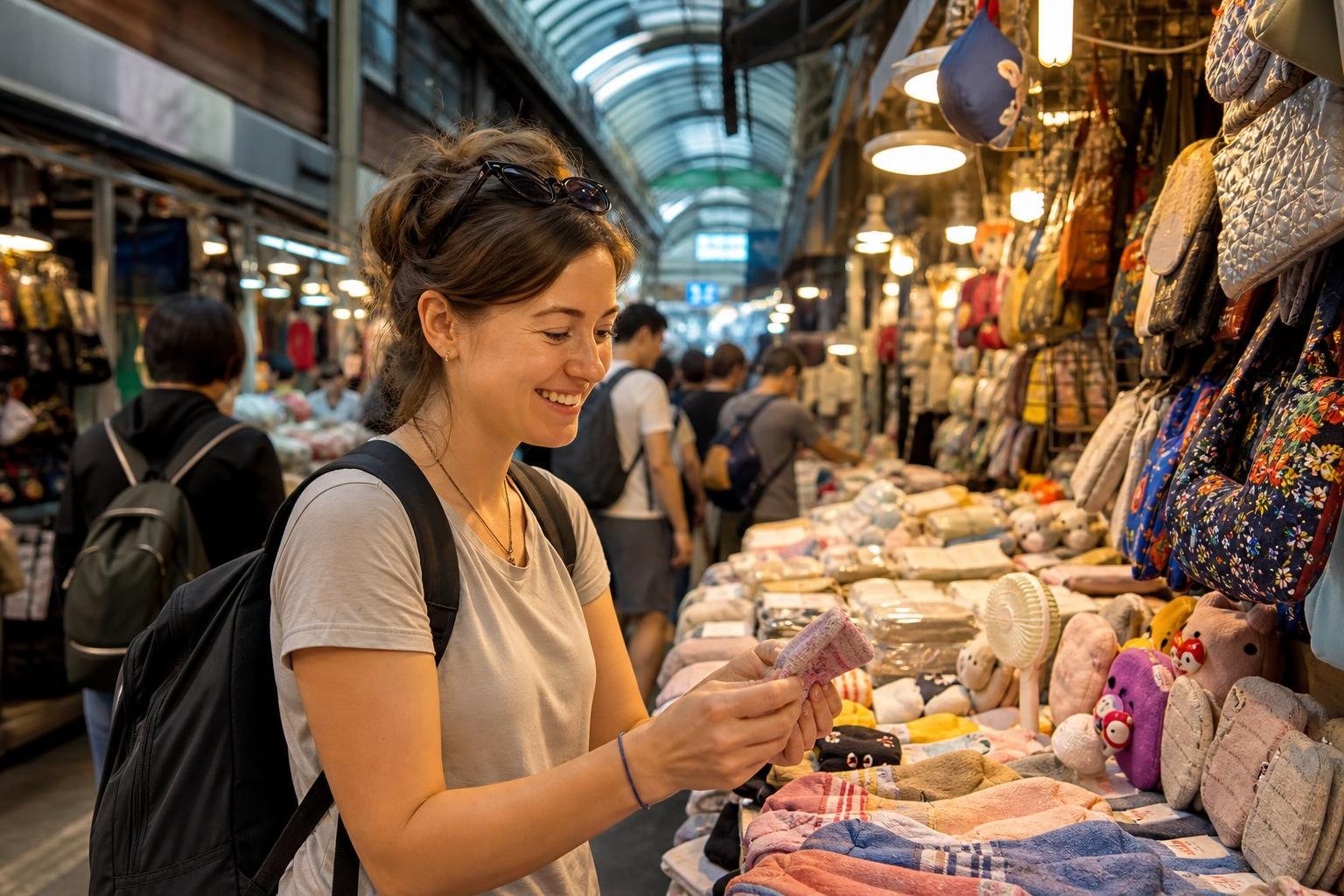
Namdaemun Market is described by VISITKOREA as Korea’s largest traditional market. Its strength is range: clothing, accessories, kitchenware, toys, stationery, mountain gear, flowers, food, imported products, and many other categories are concentrated in a dense market district.
This is not one indoor building. It is a network of lanes, stalls, storefronts, and specialist sections near Namdaemun Gate. You can arrive looking for a souvenir and easily find useful household goods, a snack, or an unexpectedly specific item along the way.
Namdaemun is a good fit for
- First-time visitors looking for one traditional Seoul market
- Travelers shopping for practical gifts rather than only decorative souvenirs
- People who enjoy comparing many product categories
- Visitors exploring central Seoul, including the areas around Myeong-dong or Seoul Station
How to shop at Namdaemun
- Start with one category, such as accessories, kitchen items, stationery, or gifts.
- Walk through more than one lane before choosing between similar products.
- Check the material, finishing, size, and whether an item is intended for regular use.
- Leave time for browsing: variety is the main reason to visit.
When Namdaemun may not be your best choice
Namdaemun can feel overwhelming if you want one specific fashion style or a carefully curated vintage selection. It is strongest for breadth and practical discovery, not for a single fashion mood.
Dongdaemun: best for fashion, fabric, and creative shopping
Dongdaemun is best understood as a shopping district, rather than a single market. It includes fashion-focused buildings, apparel shopping, wholesale-oriented spaces, the Dongdaemun Shopping Complex, and design landmarks. The Official Travel Guide to Seoul highlights the district’s role as a major shopping area.
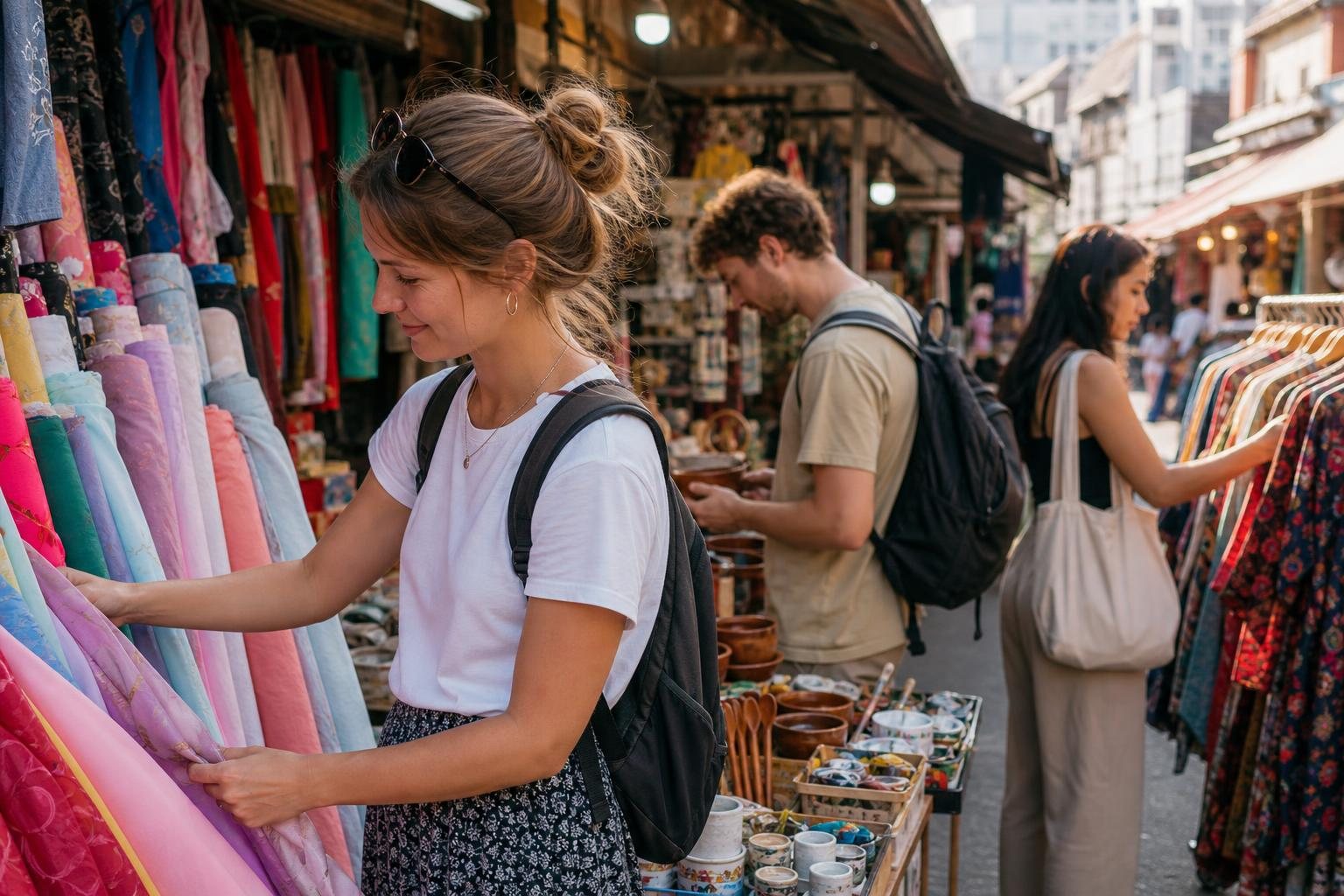
Compared with Namdaemun, Dongdaemun is more focused on fashion and the materials behind fashion. The Dongdaemun Shopping Complex is associated with textiles and hanbok shops, while VISITKOREA also introduces the area as a place to find materials such as fabrics, buttons, ribbons, and accessories for custom projects.
Choose Dongdaemun if you want to
- Browse clothing and fashion accessories
- Buy fabric, trims, buttons, ribbons, or other sewing supplies
- Look for hanbok fabrics and related materials
- Make, alter, decorate, or customize clothing and accessories
- Pair shopping with a design- and architecture-focused walk
Pick the right version of Dongdaemun before you go
- Finished fashion: focus on apparel-oriented malls and fashion buildings.
- Fabric and notions: look for the Dongdaemun Shopping Complex and materials sellers.
- Traditional clothing materials: search for hanbok fabrics and accessories.
- DIY supplies: seek out buttons, ribbons, charms, and craft components.
- Design-focused sightseeing: combine your shopping time with the surrounding design district.
This step matters because a common mistake is expecting boutique-style ready-to-wear clothing, then entering a supply-focused building—or expecting fabric and finding fashion retail instead.
When Dongdaemun may not be your best choice
Dongdaemun is less suited to a relaxed antique hunt or a classic, lane-by-lane traditional market stroll. If you do not care about fashion, textiles, or making things, Namdaemun will often feel more immediately rewarding.
Dongmyo: best for vintage finds and slow browsing
Dongmyo is the most unpredictable option, which is exactly its appeal. Around Dongmyo Shrine, flea-market stalls and nearby shops offer a changing mix of second-hand clothing, books, posters, watches, tableware, toys, vinyl, household goods, and retro objects. The Official Travel Guide to Seoul describes both the flea-market atmosphere and the curated vintage shops in the area.
Go to Dongmyo for the hunt, not for a guarantee. It is not the right place to expect a particular item in a particular size or condition. It is a place to inspect, browse, and occasionally find something memorable.
Dongmyo is a good fit for
- Vintage and second-hand clothing fans
- People interested in old books, records, posters, cameras, or retro objects
- Visitors who like styling outfits from unexpected pieces
- Photographers drawn to dense, character-filled market scenes
- Browsers who are happy to leave without buying anything
Flea stalls or curated vintage shops?
Flea-market stalls are for true treasure hunting. Stock can be mixed, irregular, and loosely organized, so inspect every item carefully.
Nearby curated vintage shops are a better choice if you like the Dongmyo look but prefer selected items in a more organized setting. Trying both gives you the fullest picture of the neighborhood.
When Dongmyo may not be your best choice
Dongmyo is not ideal when you need reliable sizing, pristine condition, easy product comparison, or a specific branded item. Treat it as a browsing destination first and a shopping destination second.
The real differences at a glance
- Namdaemun: practical browsing across many categories.
- Dongdaemun: fashion, textiles, materials, and creative shopping.
- Dongmyo: second-hand finds and unplanned treasure hunting.
- Namdaemun mindset: “I need useful gifts or everyday goods.”
- Dongdaemun mindset: “I want fashion, or supplies to make something.”
- Dongmyo mindset: “I want to see what I can discover.”
Smart shopping tips for all three markets
Know what kind of shopping you are doing
Namdaemun combines everyday retail and wholesale-oriented activity. Dongdaemun includes consumer shopping as well as supply-focused buildings. Dongmyo centers on used and irregular stock. Ask whether an item is sold individually, whether you can inspect it before purchase, and whether the displayed item is the exact item you will receive.
Inspect items before paying
- Check zippers, buttons, seams, and fabric wear.
- For second-hand clothing, look for stains, odors, or damage.
- For electronics or mechanical items, check visible condition closely.
- Use measurements as well as label sizes.
- Confirm whether accessories are sold as a set or individually.
Confirm payment and total at the shop
Payment methods can differ by individual shop or stall. Ask the seller how they prefer to be paid before committing to an item, and confirm the total before it is packed. Prices and payment options vary by seller, so check on site.
Take photos thoughtfully
A photo can help you compare products or remember where you saw an item, but ask before photographing merchandise displays or vendors. A quick polite question is especially useful in compact, busy market lanes.
Do not depend on one exact shop recommendation
Stock and tenants can change. Search for the district, a broad product category, or the Korean name of a building instead of relying entirely on a single social-media post. The best visits leave room for detours.
If you have time for only one market
Choose Namdaemun for the most balanced traditional-market experience.
Choose Dongdaemun when fashion, fabric, accessories, DIY materials, or design are central to your day.
Choose Dongmyo when a strange, personal, used, or vintage find sounds more appealing than a standard souvenir.
If you can visit two, consider Namdaemun and Dongmyo for practical variety plus vintage character, Dongdaemun and Dongmyo for fashion inspiration plus second-hand discovery, or Namdaemun and Dongdaemun for general shopping plus fashion-focused browsing.
FAQ
Is Namdaemun or Dongdaemun better for souvenirs?
Namdaemun is usually the more straightforward choice because it has a broad mix of gifts, accessories, household goods, food-related items, and everyday products. Dongdaemun is better if your souvenir is fashion-related or something you plan to make yourself.
Is Dongmyo worth visiting if I do not plan to buy anything?
Yes. The flea stalls, used goods, clothing piles, and shrine-area streets are part of the experience. Go with curiosity rather than a strict shopping target.
Is Dongdaemun only for clothing?
No. In addition to apparel, the area is known for fabrics, buttons, ribbons, hanbok materials, bedding-related materials, and other fashion or craft supplies. See VISITKOREA’s guide to Korea’s custom-shopping trend for examples of the materials available.
Which market is best for vintage clothes?
Dongmyo is the clearest choice for second-hand and vintage browsing. Explore both flea stalls and nearby curated vintage shops if you want a mix of spontaneous finds and more organized selections.
Can I visit all three in one day?
You can, but it is often more enjoyable to choose one main market and one secondary stop. Each area rewards unhurried browsing, and Dongdaemun is a large district rather than a single quick stop.
Which market feels most local?
Each reflects a different side of Seoul: Namdaemun for broad traditional commerce, Dongdaemun for fashion and materials, and Dongmyo for flea-market and vintage culture. The best choice depends on which kind of local shopping experience interests you most.
Related articles
- Namdaemun Market Guide: What to Buy, Street Food, and How to Get There
- Dongdaemun Night Shopping Guide: Areas, Transport, and Payment Tips
- Dongmyo Flea Market Guide: What to Buy, How to Bargain, and How to Shop Smart
Information current as of: 2026-09-09
Sources and references
- Namdaemun Market (남대문시장)- VISITKOREA
- Dongdaemun Shopping Complex and Shopping Town | The Official Travel Guide to Seoul
- Dongdaemun Shopping Complex (Hanbok Shops) (동대문종합시장 한복상가)- VISITKOREA
- DIY Your Way: Korea's Custom Shopping Trend- VISITKOREA
- Navigating Flea Markets and Vintage Shops: Discovering Lost | The Official Travel Guide to Seoul