Korea Life Guide · 한국생활 가이드

[태그:] Korea travel planning

  • Incheon Airport to Seoul After Midnight: Late-Night Bus, Taxi & Backup Options

    Incheon Airport to Seoul After Midnight: Late-Night Bus, Taxi & Backup Options

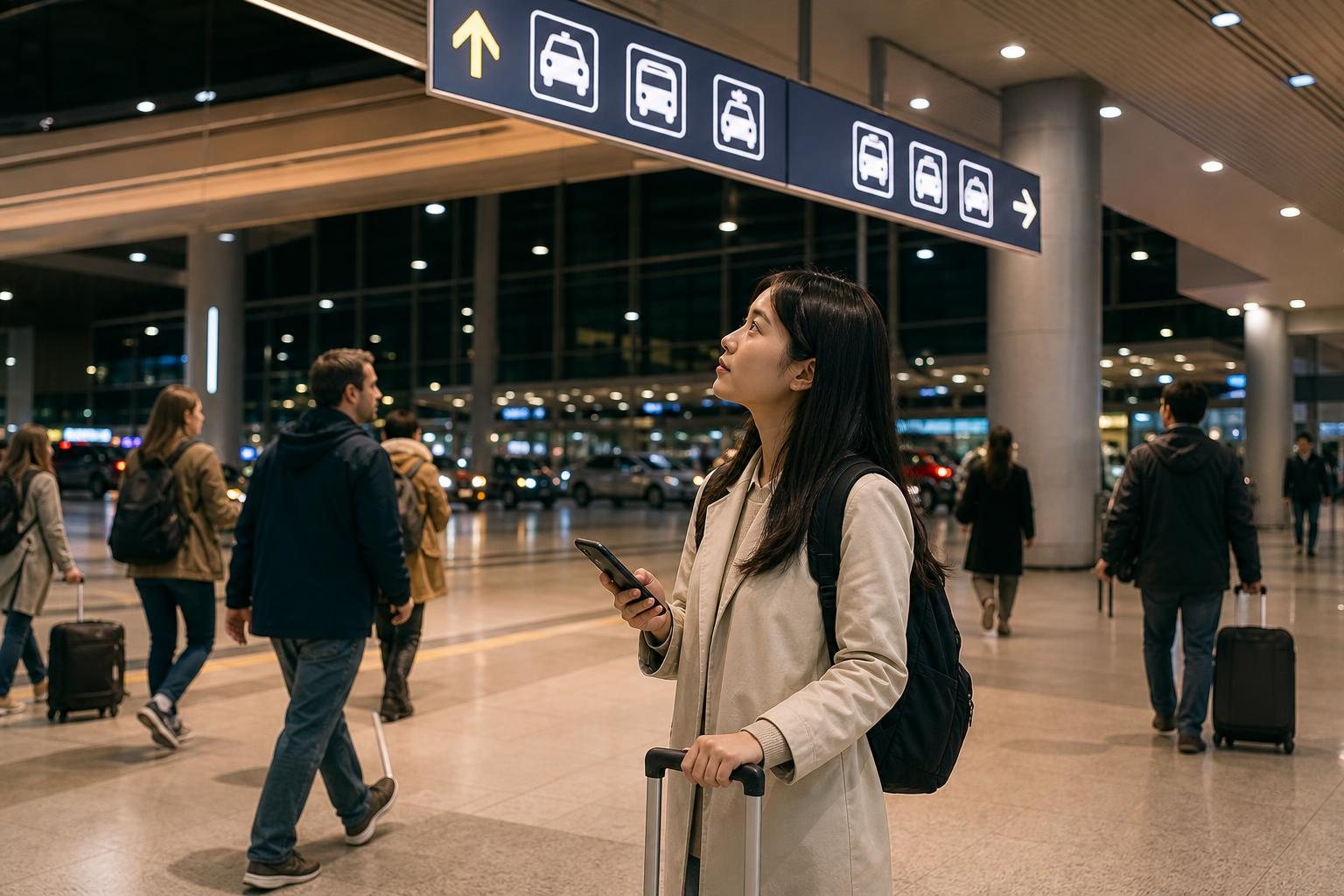
    If your flight reaches Incheon Airport after midnight, make your Seoul transfer decision based on your real ready-to-leave time, not your scheduled landing time. Collect your bags, complete arrival procedures, confirm whether you are at Terminal 1 or Terminal 2, and then check the transport information currently available at the airport.

    The easiest late-night choice is usually the one that reduces uncertainty and transfers. Confirm your exact accommodation address, compare the full door-to-door journey, and keep a backup option in case your original plan is no longer available.

    Current official late-night bus options include N6000 to Gangnam Express Bus Terminal, N6002 to Cheongnyangni via Hongdae, N6701 to Dongdaemun Design Plaza via Mapo and Seoul Station, and N6703 toward Gwangnaru via COEX and Jamsil. Check your terminal and the airport’s live timetable before buying a ticket.

    Late-night buses from Incheon Airport: routes and fares

    Route Useful Seoul stops Adult fare
    N6000 Songjeong · Yeomchang · Gangnam Express Bus Terminal KRW 17,000
    N6002 Hongdae · Four Seasons Hotel · Dongdaemun · Cheongnyangni KRW 17,000
    N6701 Mapo · Seoul Station · Euljiro · Dongdaemun Design Plaza KRW 18,000
    N6703 Seorae Village · COEX · Jamsil · Gangbyeon · Gwangnaru KRW 18,000

    Terminal 1 and Terminal 2 have different departure times. For example, the official airport timetable currently shows N6701 departing Terminal 1 at 23:50, 00:40, 01:40, 03:45 and 04:40, while Terminal 2 departures are 23:30, 00:20, 01:20, 03:25 and 04:20. Timetables can change, so treat these as a planning reference and recheck the official airport page on your travel date.

    Start with your real ready-to-leave time

    Landing is only the beginning of your airport journey. Your practical departure time comes after you leave the aircraft, walk to arrivals, collect checked baggage, complete arrival procedures, and reach the public arrivals area.

    Before heading to a bus stop, rail platform, or pickup point, take a moment to estimate when you can actually leave the terminal. A delay can change whether a planned connection still makes sense.

    Why this check matters

    A route that looked simple before the flight may no longer fit your actual arrival situation. Begin your late-night plan inside the terminal, after you know that you are ready to travel onward.

    Confirm which terminal you arrived at

    Incheon Airport has Terminal 1 and Terminal 2. Boarding points, route information, and pickup instructions can differ by terminal, so confirm your location before following directions from a booking message or an older travel plan.

    • Check your arrival terminal.
    • Compare it with the terminal named in any pickup or transfer booking.
    • Confirm your full accommodation address and destination area.
    • Check whether a person meeting you expects a specific terminal.

    Incheon Airport publishes transport information by terminal, including guidance for public transportation and late-night options. See Incheon Airport public transportation information.

    Do not change terminals without a clear reason

    If a driver, companion, or route is connected to the other terminal, verify that moving will solve the problem before you go. The airport provides inter-terminal transfer guidance, including shuttle-bus and Airport Railroad options. Check inter-terminal transportation guidance.

    With children, heavy bags, or a low phone battery, an unnecessary terminal transfer can add avoidable stress.

    Check your transport options in the right order

    1. Confirm whether a pre-booked transfer still works

    If you arranged an airport pickup, hotel transfer, rental-car collection, or private driver, open the confirmation message before leaving arrivals. Check the meeting location, terminal, flight-number details, and instructions for a delayed arrival.

    • Which terminal does the booking use?
    • Where is the meeting point?
    • Does the provider require a delay update?
    • How will the driver or provider identify you?
    • What should you do if you arrive substantially later than planned?

    Do not walk to a vague meeting place from memory. Match the booking details with the terminal where you actually arrived.

    2. Check current airport transport information

    For a delayed arrival, use information displayed at the airport and the airport’s official transport pages. Incheon Airport provides guidance for airport buses, late-night buses, Airport Railroad, taxis, and call vans. See Incheon Airport ground transportation guidance.

    • Check which services are shown for your terminal.
    • Check the destination area and boarding location.
    • Confirm the next available option rather than relying on an old plan.
    • Consider whether your luggage is manageable for the route.

    Do not rely only on an old blog post, a saved timetable, or a screenshot from a previous trip.

    3. Compare destinations, not only transport types

    “Seoul” is not a single drop-off point. A bus, rail connection, taxi, or pre-booked ride can leave you in very different places. Before choosing, save your hotel name, full address, nearest major station or neighborhood, and accommodation contact details.

    A Korean-language address or a map pin can also make communication easier. The aim is to avoid arriving at a major hub without a clear plan for the final part of the journey.

    Choose the option that reduces transfers

    After a delayed international flight, the fastest-looking route is not always the easiest one. Choose based on the full journey to your accommodation door.

    An airport bus may be simpler when

    • Your accommodation is near a listed stop.
    • You have bulky luggage.
    • You prefer to avoid navigating several stations.
    • You are unfamiliar with Seoul’s rail network.

    The Airport Railroad may be suitable when

    • Your destination connects easily from a rail station.
    • You are comfortable moving through stations with luggage.
    • You have checked the current information at the airport.
    • You have a clear final-transfer plan from the station.

    A taxi or call van may be practical when

    • You are travelling as a group.
    • You have several large suitcases.
    • Your accommodation is difficult to reach from a major station.
    • Your original public-transport plan is no longer available.
    • You want to travel directly to the accommodation address.

    For payment, confirm the accepted method at the official counter, boarding point, or with the driver. Arrangements can vary by service, destination, and provider.

    Prepare your destination before leaving airport Wi-Fi

    Before you leave the terminal, save the details that you may need when your battery is low or connectivity is less convenient.

    • A screenshot of your hotel or accommodation booking
    • Your full destination address
    • The accommodation phone number or messaging contact
    • A saved map pin, if possible
    • A screenshot of any pickup booking
    • A backup route to a major Seoul location
    • A charging cable or power bank, if available

    Use a full address instead of only a hotel name. Similar or abbreviated property names can cause confusion, while a complete address is clearer for a driver or when entering a destination into a map.

    Common mistakes to avoid

    Following the crowd

    Other passengers may be going to another terminal, a different destination, or a different type of transport. Follow signs for your own confirmed option.

    Planning only as far as central Seoul

    Reaching Seoul Station or another major hub may still leave you with a final trip to complete. Decide how you will cover that final leg before leaving the airport.

    Assuming an old timetable still applies

    Late-night travel plans need current information. Check the airport’s displays and official pages rather than depending on information saved before your flight delay.

    Changing terminals before confirming the need

    Changing terminals can add walking and waiting. Do it only when your confirmed booking, companion, or preferred route requires it.

    Leaving without saved accommodation details

    Save essential information while you have time and connectivity in the terminal. This small step can make the rest of the journey much easier.

    Late-night arrival checklist

    • I know whether I am at Terminal 1 or Terminal 2.
    • I have my full Seoul destination, not just a district name.
    • I checked current airport information for my transport option.
    • I know where to board or meet my driver.
    • I have a backup option if my first choice is unavailable.
    • I saved my accommodation details and contact information.
    • I considered the final journey from the Seoul drop-off point to my door.
    • I checked my luggage, phone battery, and payment method.

    FAQ

    Can I still get from Incheon Airport to Seoul after midnight?

    It may be possible, but the practical choice depends on your actual ready-to-leave time, terminal, destination, and the services currently available. Check airport information after you arrive instead of relying only on your pre-delay plan.

    Should I book a taxi before arriving?

    A pre-booked ride can be convenient when you want a planned meeting arrangement, have large luggage, or are staying somewhere difficult to reach. Read the terminal and delay instructions carefully. If you use an airport taxi, follow the airport’s designated taxi guidance.

    Is the Airport Railroad always the best choice?

    No. It can be convenient for some destinations, but several transfers with luggage may be tiring after a delayed flight. Compare the complete door-to-door trip before deciding.

    What if my hotel is near Seoul Station?

    That may make some rail or bus options easier, but it does not automatically make them the best choice. Check the actual hotel entrance, your luggage needs, and the final distance from the stop or station.

    What should I do first after arriving late?

    Confirm your terminal and your real ready-to-leave time. Then check the airport’s current transportation information for that terminal and compare options using your exact destination.

    Related articles

    Information current as of: 2026-09-22

    Sources and references

  • Dongdaemun Night Shopping Guide: Areas, Transport, and Payment Tips

    Dongdaemun Night Shopping Guide: Areas, Transport, and Payment Tips

    Dongdaemun night shopping is not one market with one shared schedule. It is a large shopping district with fashion buildings, wholesale-oriented shops, traditional-market sections, specialist material stores, and outdoor stalls. The easiest way to enjoy it is to choose one goal first—trend fashion, accessories, fabric, or casual browsing—then navigate to the specific building or area.

    For many visitors, Dongdaemun History & Culture Park Station is the most convenient starting point for the fashion-focused side near Dongdaemun Design Plaza (DDP). For fabric and craft materials, Dongdaemun Shopping Complex and the older market side are usually a better fit. Check the current details for your exact destination before leaving, because opening arrangements, rest days, and payment methods vary by building and shop.

    Understand Dongdaemun before you go

    Think of Dongdaemun as a shopping neighborhood rather than a single mall. Seoul’s official tourism guide describes Dongdaemun Market as a large commercial district around Dongdaemun Gate, while the Korea Tourism Organization highlights its mix of traditional market shopping and modern retail complexes.

    The experience can change quickly from one building to the next. One may focus on ready-to-wear clothing, another on business buyers ordering stock, and another on fabric, trims, or DIY supplies. Outdoor stalls offer a more informal browsing experience.

    • Fashion buildings are useful for clothing, shoes, bags, and accessories.
    • Wholesale-oriented stores may have a faster, less service-focused shopping style.
    • Specialist market sections are better for materials, sewing supplies, and custom projects.
    • Outdoor stalls are best approached as discovery shopping, not as a guaranteed source for one exact item.

    Main Dongdaemun shopping areas

    Dongdaemun History & Culture Park and DDP side

    This is an easy starting zone for first-time visitors. It is close to major fashion buildings, DDP, and streets associated with the district’s evening shopping atmosphere. DDP is also a practical landmark for meeting companions and getting oriented.

    Choose this side if you want trend-focused fashion, indoor shopping buildings, street browsing, and a straightforward navigation point. The Korea Tourism Organization identifies DDP as one of Dongdaemun’s defining landmarks.

    The fashion mall cluster

    Large multi-floor buildings around central Dongdaemun sell clothing, footwear, bags, accessories, beauty items, and lifestyle goods. Although the buildings can look similar from outside, individual stores may serve very different customers. Some welcome single-item retail purchases, while others operate mainly with wholesale buyers in mind.

    The Korea Tourism Organization notes that Dongdaemun includes wholesale clothing buildings as well as specialist outlets. Browse with a simple comparison process:

    1. Walk through a full floor before buying the first item you like.
    2. Photograph the shop sign, floor, and unit number when you find a promising item.
    3. Ask whether your preferred size or color is available.
    4. Confirm the final total and payment method before the item is packed.
    5. Keep a receipt or transaction record until you have checked the purchase.

    Dongdaemun Shopping Complex for fabric and DIY supplies

    If you need materials rather than finished clothing, start with Dongdaemun Shopping Complex. Official tourism information lists fabric, garment-making materials, accessories, traditional clothing-related goods, bedding, curtains, and craft components among its product categories.

    This area is especially useful for fabric by length, buttons, zippers, ribbons, patches, jewelry-making parts, sewing materials, and hanbok-related fabrics or accessories. The layout can feel maze-like, so note the shop number when you find a store you may want to revisit.

    A useful phrase: “Can I take a photo of the shop number?”

    Outdoor tented stalls near DDP

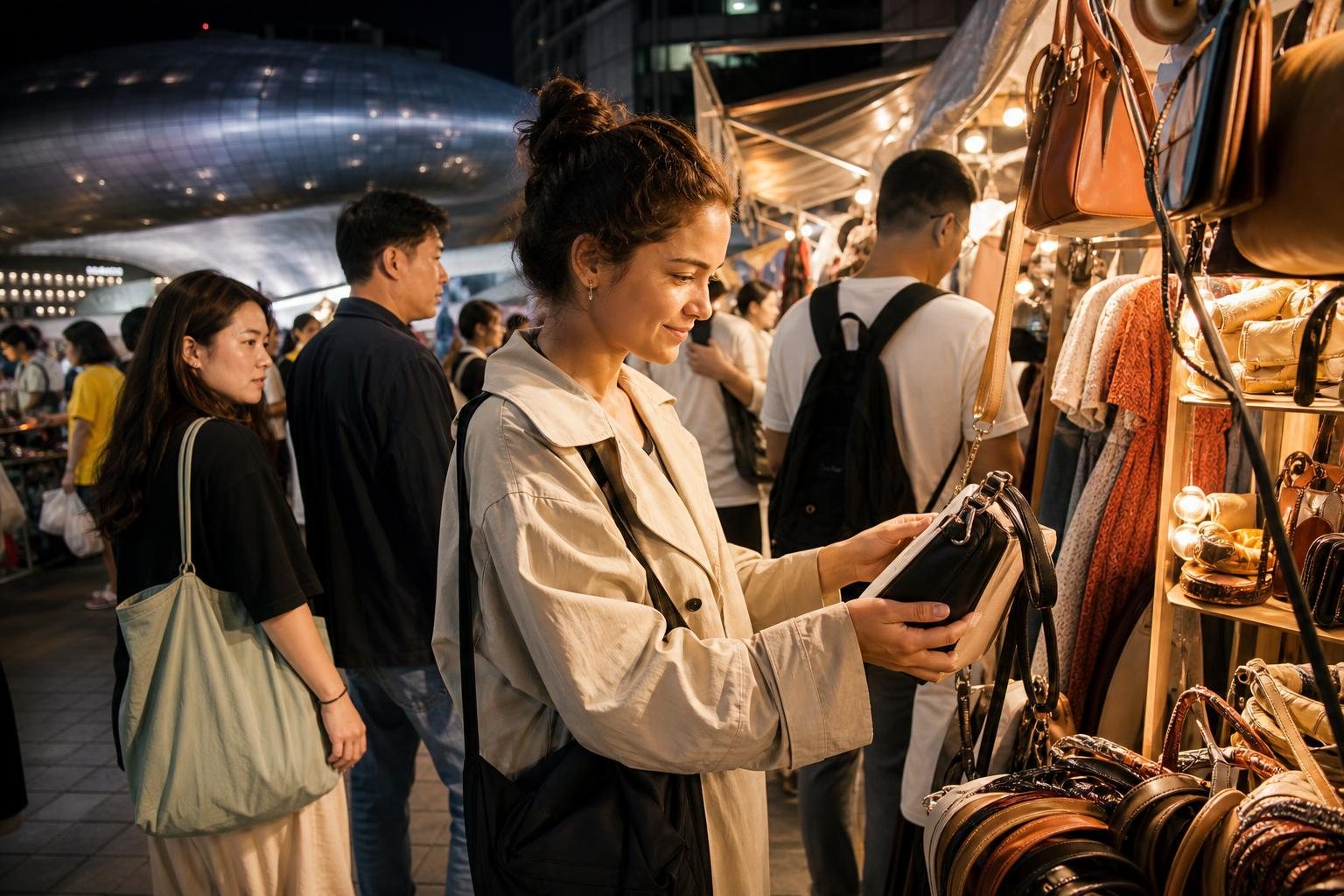
    The outdoor stalls near DDP are widely known as the Yellow Tent Market. Official tourism information refers to this area as Dongdaemun Sebit Market and associates it with tented stalls selling items such as clothing, bags, and accessories.

    Selection can change quickly, so browse with flexibility. Before paying, inspect seams, zippers, lining, fasteners, and both sides of garments or bags. Ask about exchanges for defects, check whether you are receiving a display sample or a new item, and confirm the accepted payment method.

    How to check opening arrangements

    A common mistake is treating a search for “Dongdaemun opening hours” as an answer for the whole district. It is not. Individual malls, market sections, floors, and shops can follow different operating arrangements and rest days.

    Check the exact destination

    Before you leave, identify whether you are going to a fashion mall, Dongdaemun Shopping Complex, a specific store, an outdoor stall area, or a restaurant inside a building. Check that destination’s official channel, current map listing, or entrance notice. If one building is closed, another part of the district may still be active.

    Make a flexible route

    • Plan A: your priority building or shop
    • Plan B: a nearby fashion building or market street
    • Plan C: DDP, a café, or a walk through the area while you choose another destination

    Use older blog posts to understand the character of an area, but do not rely on them as final confirmation for a specific shop’s current schedule.

    Getting to Dongdaemun

    Use Dongdaemun History & Culture Park Station for the fashion side

    This station is a useful main pin for DDP and many fashion-oriented shopping buildings. Seoul’s official tourism guide identifies it as a convenient access point for Dongdaemun Market.

    In a map or navigation app, search for a specific destination instead of only searching “Dongdaemun.” Useful search terms include:

    • Dongdaemun History & Culture Park Station
    • Dongdaemun Design Plaza
    • Dongdaemun Shopping Complex
    • The exact name of your target mall or shop

    Use Dongdaemun Station for the older market side

    Dongdaemun Station can be more convenient for Dongdaemun Shopping Complex and nearby traditional-market areas. The Korea Tourism Organization lists the complex near this station.

    Navigation tips

    • Save your accommodation address in both Korean and English.
    • Save a map pin or route screenshots before leaving.
    • Use the building name, not only the neighborhood name, if taking a taxi.
    • Check the exit number in your map app and compare it with station signs.
    • Allow extra time for large road crossings and for finding the correct building entrance.

    Payment tips for foreign visitors

    Payment practices vary across Dongdaemun. Larger malls may have more standardized checkout systems, while smaller shops and outdoor stalls may handle payment differently. Do not assume that a foreign-issued card, contactless payment, mobile payment, or cash will be accepted by every seller.

    Ask before committing to a purchase

    Before trying on an item, taking it to the counter, or asking staff to pack it, use short questions:

    • “Card okay?”
    • “Cash only?”
    • “Can I pay by foreign card?”
    • “Can I pay by mobile payment?”

    Bring a backup option

    A practical setup is one physical card, a backup card stored separately, a small amount of Korean cash, and a payment app only if you already know it works on your device. The point is not to use one method everywhere; it is to avoid being unable to complete a purchase.

    Confirm the total and exchange policy

    For small independent shops, especially where prices are not clearly marked, confirm the total before paying. If you are buying several pieces, point to each item while the seller calculates. Seoul tourism information notes that fixed or displayed pricing has become more common in parts of the district, so do not assume bargaining is expected.

    Ask about returns or exchanges before payment. Exchange options may be limited for clothing, accessories, sale items, or purchases from small shops. If the answer is unclear, inspect the item carefully before paying.

    A useful phrase: “Exchange possible if there is a problem?”

    Simple shopping plans

    For trend fashion

    1. Arrive at Dongdaemun History & Culture Park Station.
    2. Choose one or two fashion buildings instead of trying to see everything.
    3. Browse a full floor before deciding.
    4. Photograph shop locations for comparison.
    5. Finish with outdoor stalls if you still want to browse.

    For fabric, accessories, or DIY materials

    1. Start at Dongdaemun Shopping Complex.
    2. Write down the material, color, quantity, or item type you need.
    3. Compare several shops before buying.
    4. Confirm how the material is measured or packaged.
    5. Keep small purchases organized if you buy components from several shops.

    For casual evening browsing

    1. Use DDP as a meeting point.
    2. Walk through the nearby fashion-mall streets.
    3. Browse tented stalls if they are operating.
    4. Buy an item because you genuinely want it, not only because the area feels exciting.

    Common mistakes to avoid

    • Trying to see everything: Pick one main purpose and one backup area.
    • Confusing wholesale with regular retail: A store may sell to individuals but still be organized for business buyers.
    • Forgetting where you saw an item: Save photos of signs, floor numbers, and unit numbers.
    • Paying before inspecting: Check for marks, missing parts, loose stitching, scratches, and mismatched sizes.
    • Relying on one payment method: Carry a backup and ask before the item is packaged.

    FAQ

    Is Dongdaemun night shopping suitable for first-time visitors to Seoul?

    Yes. Treat it as a neighborhood with several shopping zones, not one destination. Start near Dongdaemun History & Culture Park Station or DDP, choose one shopping goal, and keep a backup destination in mind.

    What is the best area for fabric and craft supplies?

    Dongdaemun Shopping Complex is a strong starting point for fabric, garment materials, accessories, and DIY components. Official tourism information lists fabrics, clothing materials, bedding, curtains, and accessories among its main categories.

    Is the Yellow Tent Market the same as Dongdaemun?

    No. It is one part of the wider Dongdaemun shopping district. It is commonly associated with Dongdaemun Sebit Market and outdoor tented stalls near the DDP area.

    Can I use a foreign credit card in Dongdaemun?

    Some businesses may accept cards, but accepted methods differ by building and seller. Ask before shopping, bring a backup payment option, and confirm the method before the item is packed.

    Should I bargain in Dongdaemun?

    Do not assume bargaining is expected. Prices may be displayed or treated as fixed in many stores. If you are buying multiple items, you can politely ask whether there is flexibility, then accept the answer without pressure.

    What should I save on my phone before going?

    Save the name of your target building, a map pin, your accommodation address, and photos of shop locations you may want to revisit. These small preparations make navigation much easier among similar-looking entrances and floors.

    Sources

    Related articles

    Information current as of: 2026-09-07