Korea Life Guide · 한국생활 가이드

[태그:] Korea travel food guide

  • How to Order at a Korean Bakery Café: Trays, Tongs, Drinks, and Checkout

    How to Order at a Korean Bakery Café: Trays, Tongs, Drinks, and Checkout

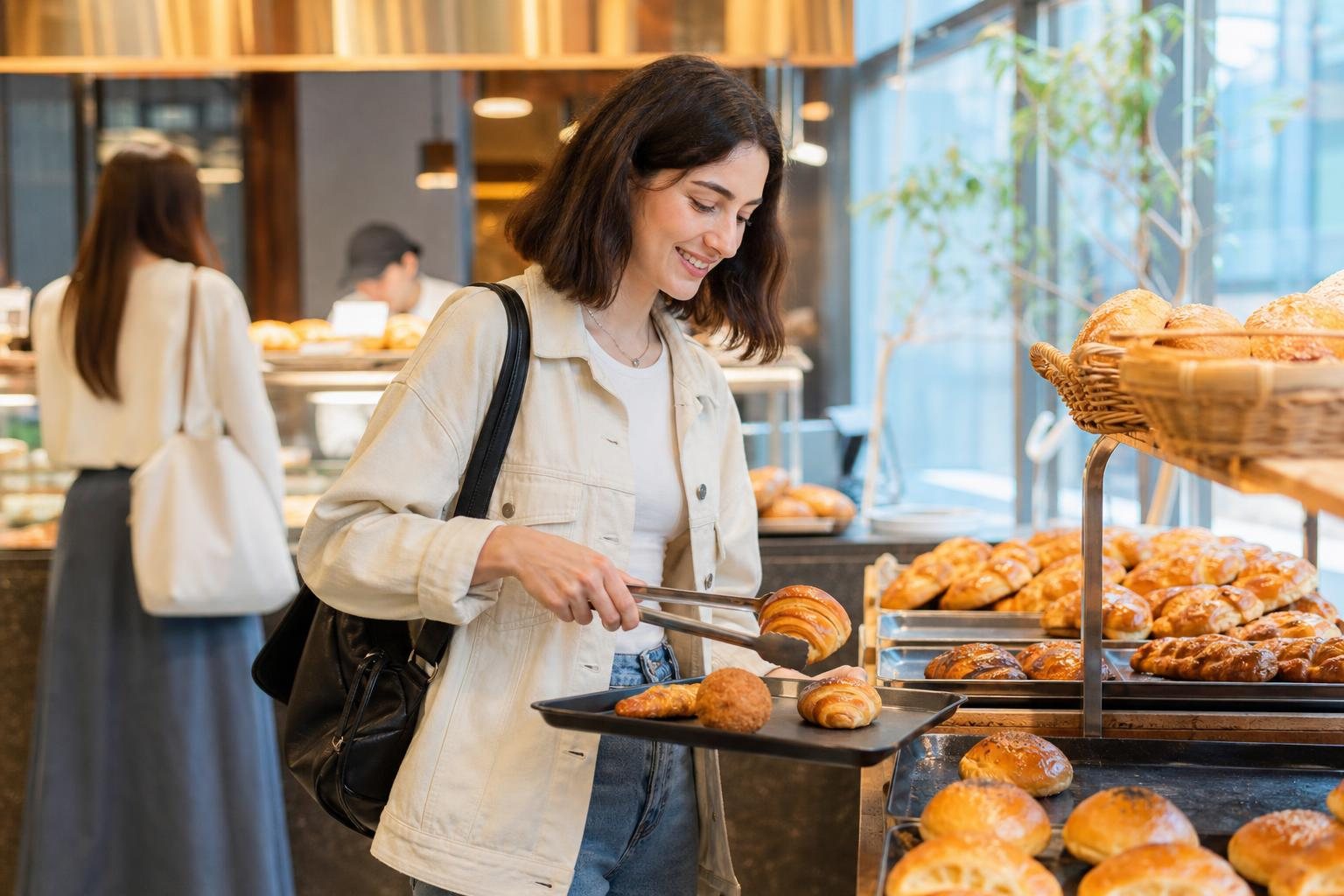
    At many Korean bakery cafés, the usual process is to take a tray and tongs, choose your bread or pastries, then bring the tray to the cashier to order drinks and pay. Drinks are often collected at a separate pickup counter, and reusable trays and dishes are commonly returned to a marked self-service station when you finish.

    The exact system is different at every café. The easiest rule is to follow the signs and the line: look for a tray station, cashier or kiosk, drink pickup area, and tray-return station before you order.

    The usual ordering flow

    1. Take a tray and tongs

    Near the entrance or bread display, you may find stacked trays, tongs, paper liners, small bags, or hand sanitizer. Take one tray and one pair of tongs, then use the tongs for unpackaged bread, pastries, cookies, or sandwiches.

    Do not handle open display items with your hands. If an item is behind glass, difficult to pick up, or individually wrapped in an awkward way, point to it and ask a staff member for help.

    2. Choose pastries before joining the payment line

    It is normal to browse the display before going to the counter. Put heavier breads on the tray first and delicate, cream-filled, glazed, or powdered items last.

    • Use the tongs for each open item.
    • Keep messy or fragile pastries separate when possible.
    • Once an item is on your tray, do not put it back on the display.
    • If you change your mind, ask the cashier whether the item can be removed or look for a designated return area.

    3. Order drinks and pay

    In many bakery cafés, you order drinks after the cashier scans the items on your tray. You may receive a receipt, order number, or vibrating pager. Keep the receipt until you have collected your drinks.

    Some cafés use a touchscreen kiosk for drink orders and payment. Others may have a staffed register, table QR ordering for additional items, or a different sequence. Check the signs rather than assuming that every bakery uses the same system.

    What to say at the counter

    You do not need perfect Korean. Pointing at a menu or display item and using a short English request is often helpful.

    “One iced Americano, please. For here.”

    Staff may ask whether you want your drink hot or iced, what size you want, whether it is for here or to go, whether you need a bag, or whether you would like an item warmed.

    • For here: you plan to eat or drink in the café.
    • To go or Takeout, please: you are leaving with the order.
    • Could you warm this up, please?
    • Can you cut this?
    • Could I have an extra plate?
    • Does this contain nuts?

    If you have a serious food allergy, do not assume an item is nut-free or free from cross-contact. Bakery kitchens may handle several allergens, and staff may not be able to guarantee separation.

    Payment and tipping

    Korea is card-friendly. The Korea Tourism Organization says major international cards can be used at most Korean stores, though carrying some Korean won or another payment option is sensible, especially outside large chains or tourist-oriented areas. VISITKOREA: Shopping in Korea

    Tipping is generally not customary in Korea. Do not add a tip unless the café presents a clear option or instruction. Visit Seoul: Etiquette

    Collecting your order

    After paying, move away from the register so the next customer can order. Look for signs such as “Pickup,” “Drinks,” “Order Pickup,” or “Self-service.” Your drink may be called by order number or drink name, or a pager may vibrate or light up.

    Pastries are often handed to you at checkout, while drinks may be collected separately. If you receive a pager, keep it with you and bring it to the pickup counter when it signals.

    Seating and cleanup

    Check seating rules before settling in

    An empty table may not always be immediately available. Check posted rules for one-drink-per-person policies, minimum orders, time limits, no-laptop zones, outside-food restrictions, or access to terraces and upper floors.

    In most cases, order first and then choose a seat. In a crowded café, one person in a group can check seating while another waits in the ordering line.

    Return trays, cups, and dishes

    Many Korean bakery cafés have a self-return station. Before leaving, look for “Return,” “Tray Return,” or “Self-service” signs.

    1. Discard leftovers and napkins in the appropriate bin, if available.
    2. Separate recycling if the bins are labeled for it.
    3. Return trays, plates, cups, and cutlery to the designated station.
    4. Follow staff instructions if the café asks customers to leave dishes at the table.

    If you cannot find the station, watch nearby customers or ask, “Where do I return this?”

    Common mistakes to avoid

    • Using your hands for open pastries: use the provided tongs.
    • Sitting down before checking the system: some cafés separate bread selection, drink ordering, payment, and pickup.
    • Not stating hot or iced: say your preference clearly.
    • Blocking the pickup counter: collect your drink, then step aside to add lids, straws, napkins, or sugar.
    • Leaving reusable trays behind: check for a return station before you leave.
    • Assuming every café works the same way: chains, large destination cafés, and small independent bakeries can use very different systems.

    Simple example

    If you want two pastries and an iced latte to enjoy inside, your visit may look like this:

    1. Take a tray and tongs.
    2. Select two pastries.
    3. Bring the tray to the cashier.
    4. Say, “One iced latte, for here, please.”
    5. Pay and keep the receipt or pager.
    6. Take your pastries to a table or wait near the pickup area.
    7. Collect the latte when your number is called or the pager vibrates.
    8. Return your tray and dishes when you finish.

    FAQ

    Do I have to buy a drink at a Korean bakery café?

    Not always. However, some cafés have a one-drink-per-person or minimum-order policy for seated customers. Read the posted rules before taking a table.

    Can I share one pastry with another person?

    Usually, yes, unless the café has a specific minimum-order policy. In a crowded café with limited seating, follow the shop’s rules and be considerate of other customers.

    Can staff heat bread or pastries?

    Often they can warm sandwiches, savory pastries, or some breads on request. Not every item is suitable for heating, so ask before paying or at the counter.

    Can I pay with a foreign credit card?

    Often yes, particularly at larger cafés and chains. The Korea Tourism Organization notes that major international cards are usable at most Korean stores, but a backup payment method or some cash is still useful. VISITKOREA: Shopping in Korea

    Should I tip café staff?

    Usually no. Tipping is not customary in Korea. Visit Seoul: Etiquette

    What if I cannot read the menu?

    Use menu photos, point to the display, or use a translation app. Keep your request simple: name the drink, say hot or iced, choose a size if needed, and say whether it is for here or to go.

    Final tip

    The most reliable approach is to copy the café’s own flow. If you see trays and tongs, use them to choose bread; then order drinks, pay, collect your order, and return reusable items as the signs direct. After one visit, the process is usually straightforward.

    Related articles

    Information current as of: 2026-08-31
    Sources and references

  • How to Order Food at a Korean Convenience Store: A First-Time Guide

    How to Order Food at a Korean Convenience Store: A First-Time Guide

    The easiest way to buy food at a Korean convenience store is to choose an item from the shelf, bring it to the cashier, and say “이거 데워 주세요” (igeo dewo juseyo) if you would like it heated. Most meals are not ordered from a menu; convenience stores work more like small supermarkets with ready-to-eat food.

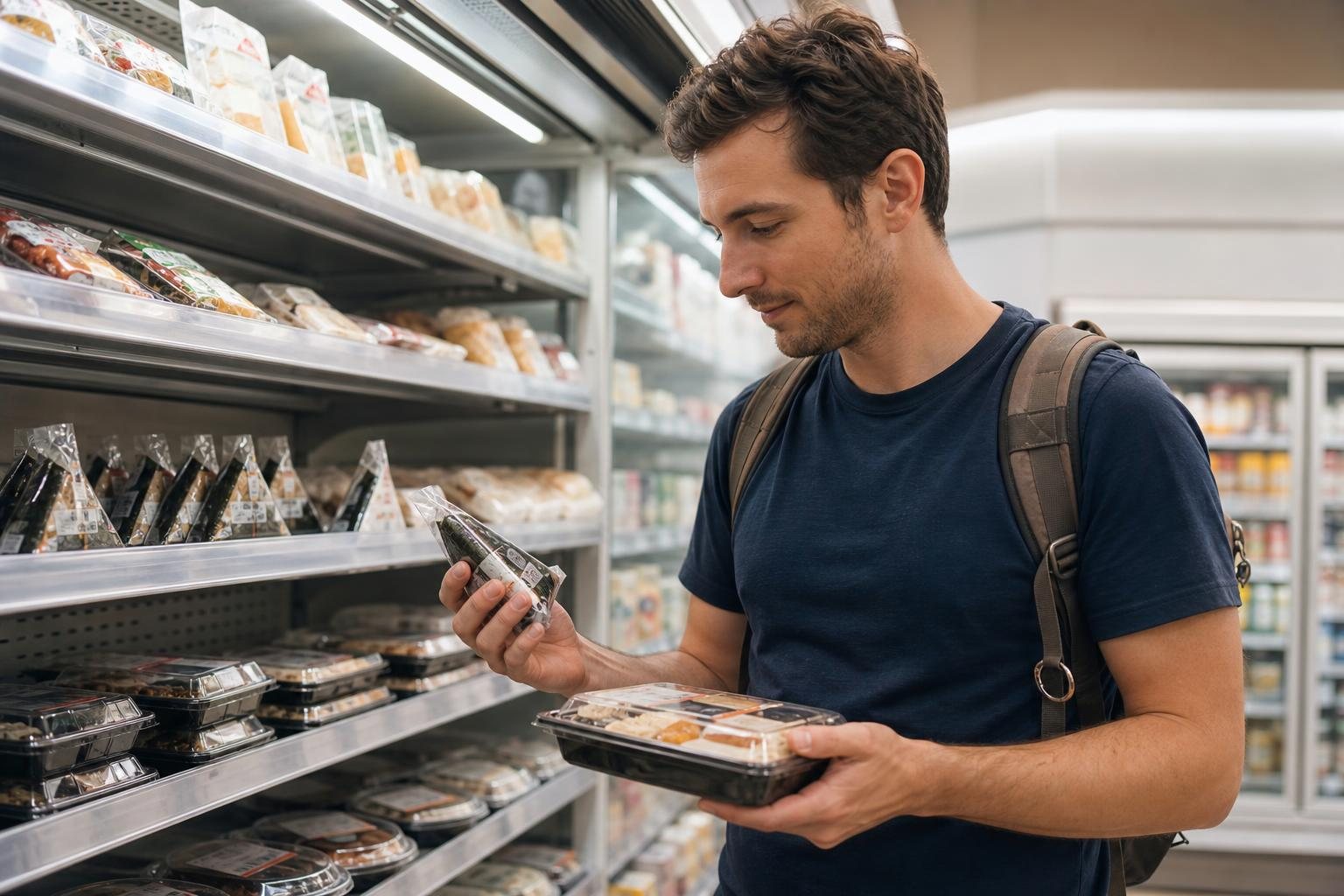
    For a simple first meal, choose a packed rice meal, kimbap, a sandwich, or cup noodles. Before opening cup noodles, check whether that specific branch has hot water. Microwaves, seating, hot-water dispensers, operating hours, and available services can differ by store.

    What to Buy First

    Packed rice meals: the easiest hot option

    Look in refrigerated shelves for these Korean terms:

    • 도시락 (dosirak): packed meal or lunch box
    • 덮밥 (deopbap): rice bowl with toppings
    • 볶음밥 (bokkeumbap): fried rice
    • 파스타 (pasta): ready-made pasta

    Take the meal to the cashier and say:

    이거 데워 주세요.
    Igeo dewo juseyo.
    “Please heat this.”

    Do not microwave the item yourself unless the store permits self-service use and the package instructions allow it. Staff may heat it, direct you to a microwave, or tell you that heating is unavailable.

    Kimbap and sandwiches: easy with no preparation

    • 김밥 (gimbap): seaweed rice roll
    • 삼각김밥 (samgak gimbap): triangle-shaped rice snack
    • 샌드위치 (saendeuwichi): sandwich
    • 샐러드 (saelleodeu): salad

    Triangle gimbap and cup noodles are a well-known Korean convenience-store pairing. VISITKOREA highlights convenience-store foods including this type of combination.

    Diet note: kimbap and sandwiches often contain egg, tuna, meat, mayonnaise, fish cake, or sauces. A product with “vegetable” in its name is not automatically vegetarian or vegan.

    Cup noodles: check for hot water first

    Before buying cup noodles, look for a hot-water dispenser or ask:

    뜨거운 물 어디 있어요?
    Tteugeoun mul eodi isseoyo?
    “Where is the hot water?”

    If there is no hot-water station, do not open the cup until you have another safe way to prepare it. Ready-to-eat meals, kimbap, sandwiches, burgers, and instant foods are among the fresh-food ranges sold by major chains, although exact stock varies by branch. See an example of a convenience-store fresh-food range from emart24.

    Step-by-Step: Buying a Meal

    1. Read the package before checkout

    For chilled or ready-to-heat food, check the heating directions, date information, allergens, ingredients, and any sauce or topping packets inside. For lunch boxes, kimbap, burgers, and sandwiches, date information deserves particular attention.

    Korean food-labeling rules require allergen information for specified ingredients and may include cross-contact warnings. Read the Ministry of Food and Drug Safety’s food-labeling information. Food-safety guidance also advises consumers to check date information on prepared foods. See the Food Safety Korea guidance.

    For a severe allergy or medically necessary diet, do not rely only on photos, a product name, or a translation app. Read a label you can fully verify, and do not eat the item if you are unsure.

    2. Ask for heating and utensils

    Place the food on the counter, point to it if helpful, and use these phrases:

    • 이거 데워 주세요. Igeo dewo juseyo. — Please heat this.
    • 젓가락 주세요. Jeotgarak juseyo. — Chopsticks, please.
    • 포크 주세요. Pokeu juseyo. — Fork, please.
    • 숟가락 주세요. Sutgarak juseyo. — Spoon, please.
    • 봉투 주세요. Bongtu juseyo. — A bag, please.
    • 여기서 먹어도 돼요? Yeogiseo meog-eodo dwaeyo? — Can I eat here?

    Some shops provide utensils near the counter or microwave area, while others give them to you at checkout. The cashier may heat the meal before payment or ask you to pay first; follow their direction.

    3. Confirm the branch setup

    Do not assume every location is open 24 hours or has seating, a public microwave, or hot water. Store services and hours can vary by branch. An emart24 store locator is one example of how chain stores list branch-specific information.

    How to Prepare Common Foods

    Cup noodles

    1. Open the lid only partway.
    2. Add powder, flakes, oil, or sauce only as the package directs.
    3. Pour hot water to the marked fill line.
    4. Close the lid and wait for the printed time.
    5. Stir carefully before eating.

    Common mistakes to avoid:

    • Do not microwave cup noodles unless the package explicitly says they are microwave-safe.
    • Do not fill above the line; hot liquid can spill while you carry the cup.
    • Do not accidentally use a cold-water dispenser.
    • Do not put unopened sauce packets into the noodles.

    If you do not handle spicy food well, be cautious with labels such as 매운맛 (spicy flavor), 불닭 (fire chicken), 마라 (mala), and 핵불닭 (extremely spicy fire chicken).

    Triangle gimbap

    Most triangle gimbap wrappers are marked 1, 2, and 3. Pull strip 1 down first, then remove sides 2 and 3. The design keeps the seaweed separate from the rice until opening. Removing the entire wrapper at once can tear the seaweed or leave plastic caught in the food.

    Microwave meals

    There is no universal microwave rule. Depending on the meal, you may need to peel back a film lid, remove a sauce packet, leave the lid partly attached, or heat only one compartment. Follow the instructions on that exact package.

    Simple First-Time Meal Plans

    A warm and filling meal

    • One packed rice meal or rice bowl
    • One bottled drink
    • Optional yogurt or fruit cup

    이거 데워 주세요. 젓가락도 주세요.
    Igeo dewo juseyo. Jeotgarakdo juseyo.
    “Please heat this. Chopsticks too, please.”

    A quick late-night snack

    • Cup noodles
    • Triangle gimbap
    • Water or a milk drink

    Confirm that hot water is available before buying the noodles. If it is not, choose a sandwich, bread, or another ready-to-eat snack instead.

    A no-microwave breakfast

    • Sandwich
    • Banana, yogurt, or salad
    • Coffee or juice

    This is a practical choice if you are leaving early, do not have access to a microwave, or prefer not to eat in the store.

    Promotions, Safety, and Etiquette

    Understand 1+1 and 2+1 offers

    • 1+1: buy one, get one free
    • 2+1: buy two, get one free

    Check that the exact flavor, size, and brand match the shelf label. Promotions may change by month, chain, and branch. If you have limited luggage, no refrigerator, or no need for extras, buying one item can be the better choice.

    Choose refrigerated food carefully

    Select food that appears properly chilled and has clear date information. Avoid packages that are swollen, leaking, damaged, or left outside refrigeration when they appear intended to be cold. Heat only what you plan to eat soon, rather than saving a heated meal for later without safe storage.

    Clean up after eating

    • Use designated bins if the shop provides them.
    • Do not leave wrappers, cups, or utensils on counters or outside the store.
    • If you use a table, clear your space promptly.
    • Be careful carrying hot food through narrow aisles and near entrances.

    FAQ

    Can I ask the cashier to microwave any food?

    No. You can ask, but follow both the package instructions and the staff member’s answer. Some food is meant to be eaten cold, some packaging is not microwave-safe, and some branches do not offer microwave access.

    Do I need to speak Korean?

    No. Pointing at the food and saying “dewo juseyo” is often enough to request heating. The short phrases above cover many basic situations.

    Can I make ramen inside every Korean convenience store?

    No. Some stores have hot water, microwaves, and seating, while others do not. Check before opening the noodles.

    Are all Korean convenience-store meals spicy?

    No, but spicy choices are common. If you are unsure, choose a sandwich, plain kimbap, a rice meal, salad, yogurt, or bread, and check the label before buying.

    Can I eat inside the store?

    Ask first: “여기서 먹어도 돼요?” Some stores have tables, while others have no seating or very little space.

    Final Tip

    On your first visit, keep it simple: buy one meal you understand, one drink, and the utensils you need. After you learn how a particular branch handles microwaves, hot water, and packaging, trying more Korean convenience-store food becomes much easier.

    Information current as of: 2026-08-26

    Sources and references