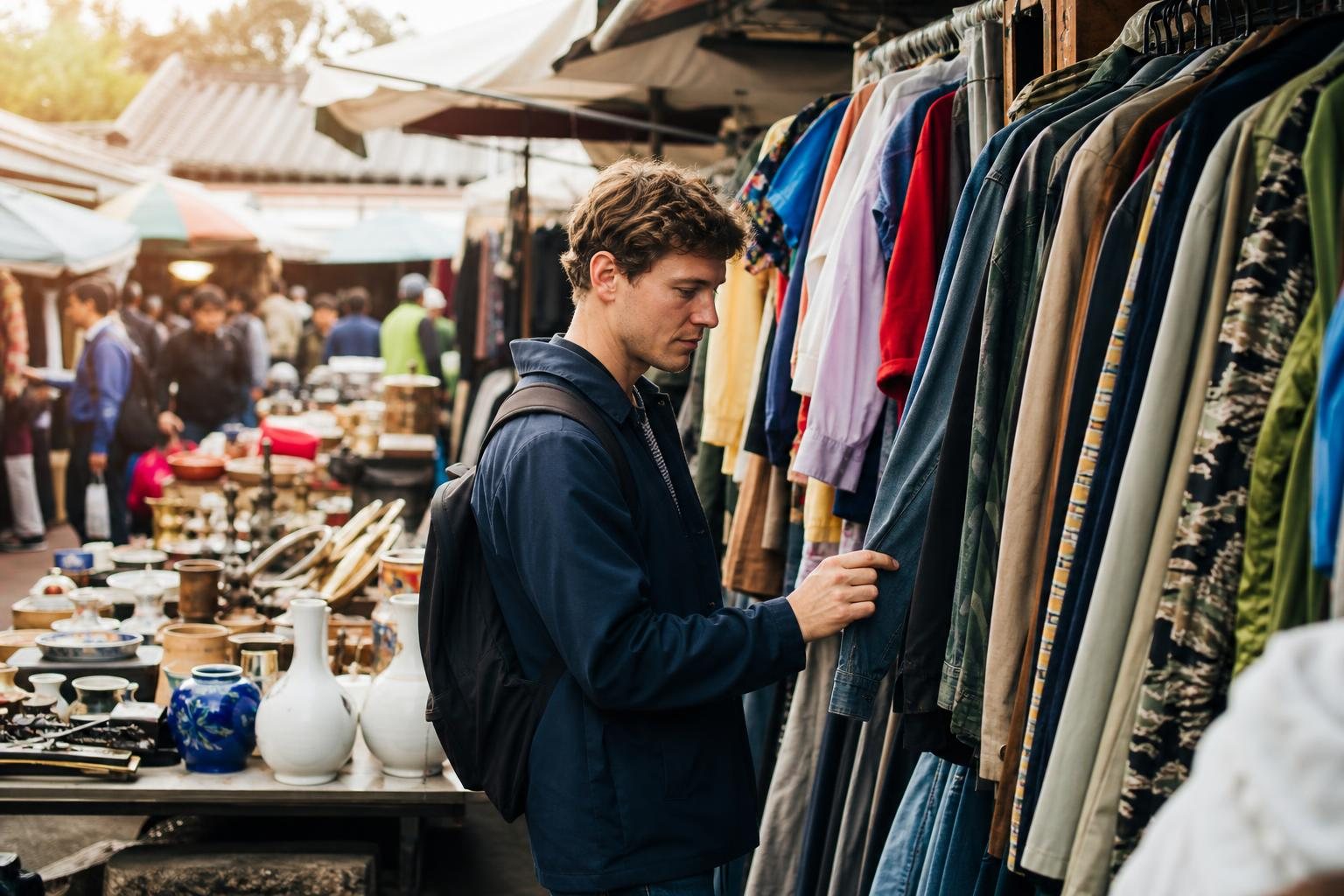
Dongmyo Flea Market is best for patient treasure hunting rather than quick, polished shopping. Go with one or two item types in mind—such as vintage clothing, records, old books, cameras, tools, or unusual home objects—but leave room for unexpected finds. A smart approach is to walk through the area once without buying, compare similar items, and then return to the stalls that stood out.
The market is a good fit if you enjoy searching through mixed second-hand goods and judging condition for yourself. For the best experience, inspect every item carefully, bargain calmly only when appropriate, and buy only what you can comfortably carry home.
What makes Dongmyo Flea Market different?
Dongmyo Flea Market is a second-hand shopping area in Jongno, Seoul, near Dongmyo Station. Unlike a curated vintage store, it is known for an unpredictable assortment of used goods. Seoul tourism information describes items including antiques, old books, records, cameras, clocks, jewelry, machines, tools, furniture, and household objects.
That unpredictability is part of the appeal. You might find something memorable within minutes, or spend a long time looking through racks and boxes without finding the right item. Treat the visit as a browsing experience first and a shopping mission second.
Seoul Metropolitan Government: Dongmyo Flea Market
What to buy at Dongmyo
Vintage clothing
Dongmyo is widely associated with second-hand clothing. You may come across shirts, jackets, knitwear, workwear-inspired pieces, caps, and garments with an older Seoul street-market character.
- Check for thinning fabric, stains, odors, loose seams, and missing buttons.
- Look closely at cuffs, collars, underarms, pockets, and linings.
- Do not rely only on the size label. Older and imported clothing can fit differently from current sizing.
- If trying an item on is not possible, hold it against yourself or compare its measurements with clothing you already own.
- Ask before unfolding tightly packed displays or removing items from hangers.
Buying tip: Choose a garment because its fit and condition work for you, not simply because it looks vintage.
Records, books, cameras, and collectibles
Dongmyo can reward visitors who enjoy physical media and objects with a history. Official Seoul information specifically includes old books, records, cameras, tools, and other collected items among the goods found in the area.
- Records: Look for warping, deep scratches, mold, and damaged sleeves.
- Books and magazines: Check for missing pages, water damage, heavy yellowing, and writing inside.
- Cameras: Treat untested film or electronic cameras as display pieces unless key functions can be demonstrated.
- Watches and electronics: Assume repairs may be needed unless you can inspect and test them carefully.
- Decorative antiques: Check for cracks, repairs, loose parts, and signs that an item may be a reproduction.
If authenticity, working condition, or collectibility matters a great deal, use Dongmyo mainly for browsing, comparing, and asking questions rather than making an immediate impulse purchase.
Seoul Metropolitan Government: Dongmyo Flea Market information
Homeware, tools, and unexpected objects
Part of Dongmyo’s charm is finding objects that are difficult to find in modern chain stores: old kitchenware, frames, containers, lighting, small furniture, hardware, figurines, and everyday objects from another era. Nearby vintage and antique shops also carry furniture, lighting, industrial-style objects, and LP records from Korea and abroad.
These can be especially appealing for residents who can transport items safely. If you are visiting Seoul, think about luggage space, fragility, and whether the item will travel well before buying it.
Visit Seoul: Manmulsangdan Dongmyo Vintage Antique Shop
How to bargain without making it awkward
Bargaining works best when it is calm, brief, and respectful. It is not expected at every stall, and some sellers may prefer to keep the stated price.
- Inspect the item first. Do not negotiate before deciding that you genuinely want it.
- Ask for the price clearly. If there is no label, point politely and ask.
- Set your own limit. Decide the maximum you are comfortable paying before the conversation starts.
- Make one reasonable counteroffer. A modest request is generally better than an extreme low offer.
- Accept the answer gracefully. If the seller declines, either buy at the stated price or thank them and move on.
Useful Korean phrases
- 얼마예요? (Eolmayeyo?) — How much is it?
- 조금 깎아 주실 수 있어요? (Jogeum kkakka jusil su isseoyo?) — Could you lower it a little?
- 이걸로 할게요. (I geollo halgeyo.) — I’ll take this.
- 감사합니다. (Gamsahamnida.) — Thank you.
You do not need perfect Korean. A polite tone, clear gestures, and patience are more useful than memorizing many phrases.
Bargaining mistakes to avoid
- Do not negotiate aggressively over a low-cost item.
- Do not ask for a discount after the seller has packed the item.
- Do not describe an item as worthless simply to lower the price.
- Do not compare every item with online resale listings in front of the seller.
- Do not assume that a discount is expected.
When to visit: choose your goal
There is no single best moment for every visitor. The experience can change with crowd levels, weather, vendor setup, and whatever items happen to be available. Instead of chasing a perfect time, plan around the kind of visit you want.
For more focused shopping
Allow enough time for a full first pass before you purchase anything. Seeing several stalls helps you understand the range and condition of similar items, reducing the chance of buying the first thing you see.
For slower browsing
Do not schedule the visit immediately before another reservation or attraction. Dongmyo rewards wandering, and interesting items can be mixed into crowded racks, stacked shelves, and tables that need careful searching.
For a more comfortable conversation
If you want to ask about an item or make a counteroffer, speak with the seller when they are not helping several customers at once. A short, direct conversation is usually easier than trying to negotiate in a crowd.
For photography and atmosphere
Ask before taking close-up photographs of vendors, merchandise, or transactions. Dongmyo is a working market for sellers, not only a backdrop for social media.
A practical Dongmyo shopping plan
1. Start with a short wish list
Choose no more than two categories. For example:
- A vintage jacket
- A Korean-language magazine or old book
- A record
- A compact home object
- A small souvenir with character
A short list gives your visit some focus while leaving room for spontaneous finds.
2. Do a no-buy first lap
Use your first walk to notice which stalls seem to focus on clothing, media, tools, or antiques. Compare the general condition of similar items, see whether your category appears in several places, and note vendors who seem knowledgeable about a particular type of object.
3. Inspect before you negotiate
Condition matters more than appearance. A faded label may add character, but a broken zipper, severe mildew smell, missing component, or warped record may make an item a poor choice.
4. Buy what you can carry
For travelers, compact and durable purchases are often easiest: a cap, scarf, shirt, small print, book, postcard-sized artwork, or lightweight record sleeve. Large furniture, fragile goods, and untested electronics require more planning.
5. Keep expectations flexible
Dongmyo is not the place to demand a specific brand, color, size, or collectible model. If you need an exact item in reliable condition, a specialist shop may be a better match. If you enjoy the search itself, Dongmyo can be much more memorable.
Dongmyo Flea Market vs. curated vintage shops
Choose Dongmyo if you enjoy digging through mixed racks, discovering unexpected records or books, and assessing an item’s condition on your own. It is also a good choice for unusual souvenirs and one-of-a-kind home objects.
Choose a curated vintage shop if you want sorted sizes, clearer presentation, a particular title or genre, more consistent condition information, or specialist guidance about provenance and restoration.
Important things to remember
- Inventory changes constantly, so avoid planning around one exact item.
- Used goods can have wear, repairs, odors, missing parts, or unknown histories.
- Check clothing, media, and mechanical items carefully before paying.
- Payment methods and purchase conditions can vary by stall, so confirm directly with the seller.
- If you are unsure, walk away and return after another lap. Extra thinking time often leads to a better decision.
FAQ
Is Dongmyo Flea Market good for first-time visitors to Seoul?
Yes, especially for visitors who enjoy second-hand shopping, vintage fashion, old media, and street-market atmosphere. It is less suitable for people looking for a polished, mall-like shopping experience.
Can I find authentic vintage items?
You may find genuinely old and interesting pieces, but authenticity and condition vary. Inspect carefully and do not assume that every old-looking item is rare or collectible.
Is bargaining required?
No. You can ask politely, but a seller may keep the original price. Decide based on the condition of the item and how much you personally want it.
What is the safest type of item to buy?
Clothing and small decorative objects are often easier to inspect than complex electronics or mechanical items. Whatever you buy, check its condition closely before paying.
Is Dongmyo only for clothes?
No. Official tourism information describes a broader selection that can include antiques, records, books, cameras, tools, furniture, household goods, and collectible objects.
Related articles
- Namdaemun Market Guide: What to Buy, Street Food, and How to Get There
- Dongdaemun Night Shopping Guide
- Eating Alone at a Korean Traditional Market
Information current as of: 2026-09-06