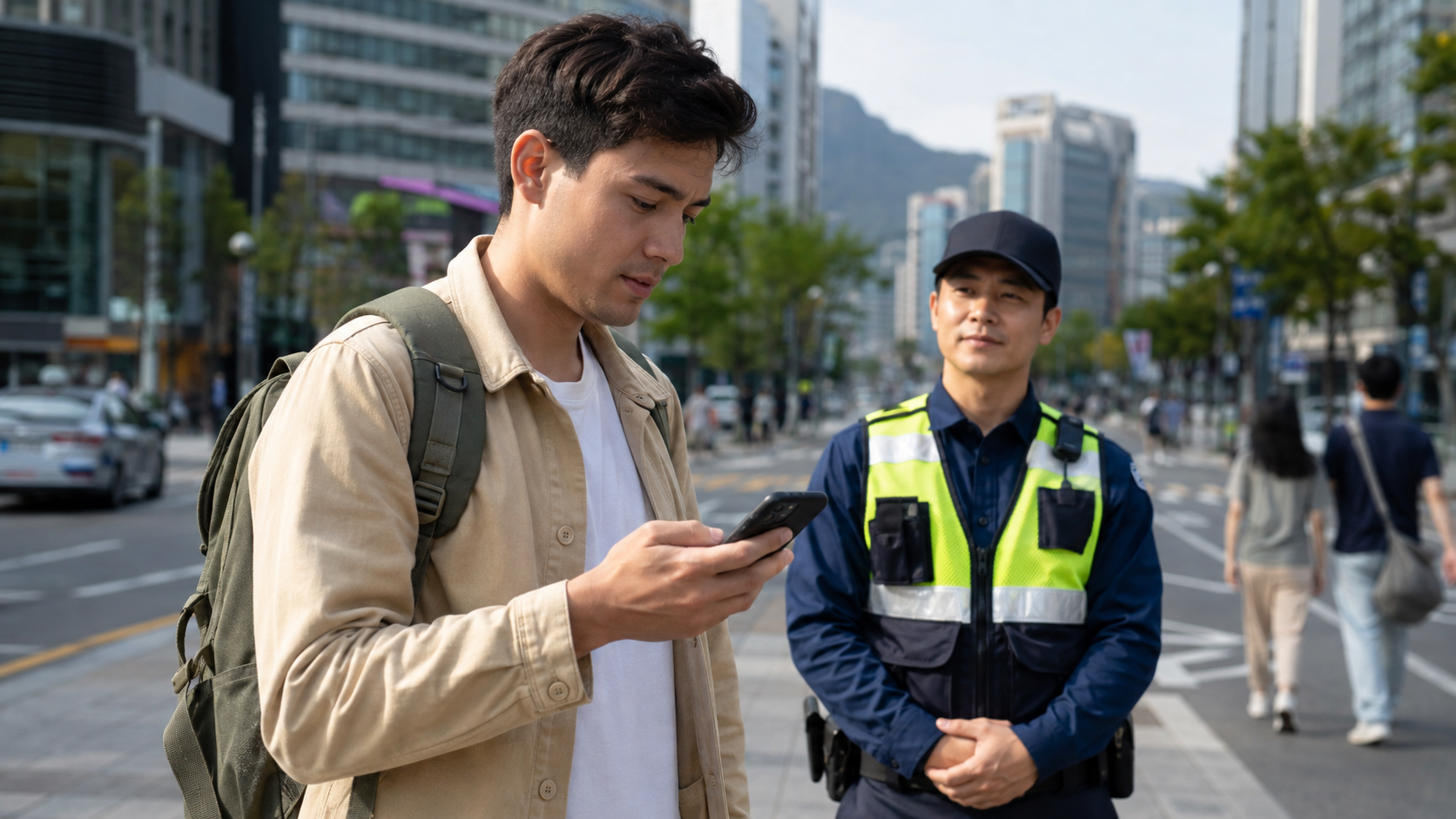
Save three numbers before traveling in South Korea: 112 for police, 119 for fire and medical emergencies, and 1330 for non-life-threatening travel information and interpretation support. Choosing the right number helps you get the right response faster.
Which number should you call?
- 112 — Police: crime, violence, immediate personal danger, theft in progress, stalking or another situation requiring police response.
- 119 — Fire and medical emergency: fire, serious injury, sudden severe illness, rescue or ambulance assistance.
- 1330 — Korea Travel Hotline: travel information, interpretation and help with non-life-threatening travel problems.
- 1339 — Infectious-disease emergency information: listed by VISITKOREA for infectious-disease emergencies.
If life, safety or a serious medical condition is at immediate risk, call 112 or 119 first. Do not delay an emergency call while searching for a translation app or contacting 1330.
Can you call without speaking Korean?
VISITKOREA advises foreign visitors who connect to 112 or 119 to say “English please” or “Interpreter please.” The operator can connect interpretation support. Speak slowly, use short sentences and give the location before a long explanation.
“English please. I need police.”
“English please. I need an ambulance.”
“My location is …”
For 1330, the official tourism guide lists support in Korean, English, Japanese, Chinese, Russian, Vietnamese, Thai and Indonesian. Availability and connection methods can change, so review the current hotline page before travel.
What information should you give?
- Your exact location: street address, station name, exit number, building or nearby landmark.
- What happened and whether the danger is continuing.
- How many people need help.
- Whether anyone is unconscious, bleeding, unable to breathe or trapped.
- Your name and reachable phone number if requested.
Open your map and copy the Korean address. If you cannot identify the address, photograph a nearby street sign, shop sign or building number and describe what you can see. Do not end the call until the operator tells you to do so.
Before an emergency happens
- Save your accommodation name, Korean address and phone number offline.
- Keep passport and travel-insurance details securely accessible.
- Download offline maps and a translation tool.
- Share your itinerary with a trusted person.
- Learn how to display emergency information on your locked phone.
- For medication or allergies, keep a short English and Korean note if possible.
Lost property is not always an emergency
If an item is already lost and there is no immediate danger or crime in progress, start with the transport operator, venue, accommodation or a lost-property service. Use 1330 when you need travel guidance or interpretation. Call 112 when theft, threat or another police matter requires a report or urgent response.
Medical care after the immediate danger
Many large hospitals operate international health-care centers, but hours and interpretation availability vary. For a serious condition, use 119 rather than trying to select a hospital alone. For non-emergency care, your insurer, accommodation or 1330 may help identify an appropriate facility.
Related guides
A working data connection helps you share a map pin and use interpretation tools. Compare SIM, eSIM and pocket Wi-Fi options before arrival. For your first transfer, see Incheon Airport to Seoul.
Official sources
VISITKOREA: Emergency Situations
VISITKOREA FAQ: 1330 Korea Travel Hotline
Reviewed on September 27, 2026. Hotline languages, hospital information and service availability can change. In an immediate emergency, call 112 or 119.